A modern duel is decided inside one long turn. Here is how that turn is built, exactly where it snaps, and what to do when it's pointed at you.
▸ WHERE THE TURN SNAPS
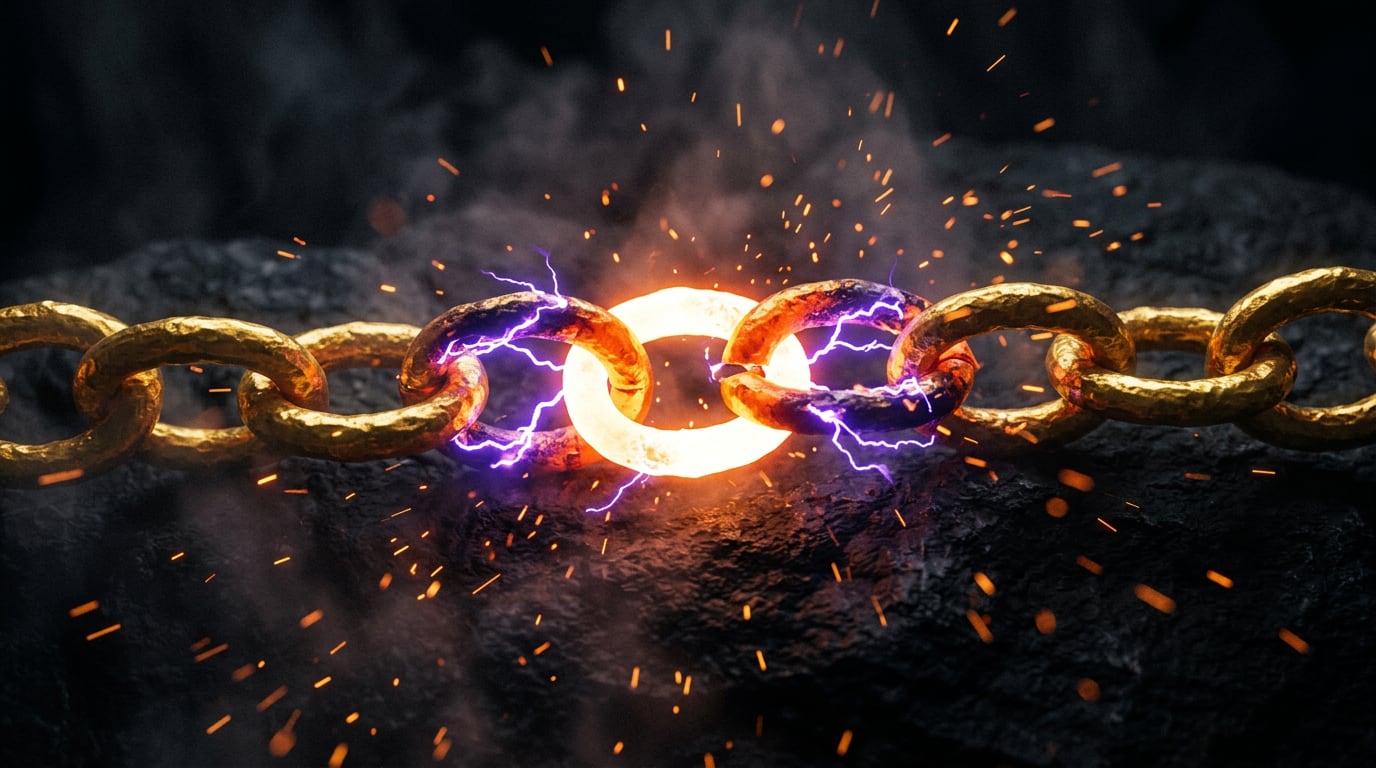
A combo turn is a chain of links. Break the first one and the whole thing never happens.
One card finds the next, which summons the next, which builds the board. That is the whole engine, and it is why decks run so many copies of the same few effects. It also means the card you use to stop it — a monster whose effect you activate straight from your hand, on your opponent's turn — is worth wildly different amounts depending on when you use it. Same card. Same cost. Two different games.
◆ CUT AT THE FIRST LINKBEST CASE
The turn never starts.
Stop the card that finds everything else and there is nothing behind it. They are left holding a hand of pieces that only work together, and none of them work alone.
1 CARD SPENT · A WHOLE TURN GONE
◆ CUT AT THE LAST LINKWORST CASE
They lose one piece.
Wait until the board is nearly built and the same card removes a single monster from it. Everything that came before is already on the table and staying there.
1 CARD SPENT · ONE PIECE GONE
◆ DIAGRAM IS AN ABSTRACTION — REAL CHAINS BRANCH UNEVENLY. THE EARLIEST CUT IS USUALLY THE BEST ONE, BUT ONLY IF IT CUTS SOMETHING THE DECK CANNOT SIMPLY REPLACE. THAT JUDGEMENT IS THE HARDEST THING IN THE GAME.
Three ways in.
BUILD IT · HOLD IT · BREAK IT
01
HOW IT CHAINS
How a Combo Deck Actually Chains
Every combo turn is the same shape: a card that finds a card that summons a card. Learn the shape and the turn stops being magic.
▸What a starter actually is
▸Why decks run so many copies of one effect
▸Where the turn is fragile
◆ GUIDE COMING SOON
02
THE BOARD
Building a Board That Holds
Five monsters that do nothing is not a board. A board is a set of answers pointed at what your opponent is about to do.
▸What each piece is actually stopping
▸Overextending, and how to tell
▸Holding something back on purpose
◆ GUIDE COMING SOON
03
BREAKING IT
Breaking a Board on Your Turn
You went second and they built a wall. There is almost always a seam — the trick is finding it before you commit.
▸Reading a board before you touch it
▸Which piece to remove first
▸What to do when there is no seam
◆ GUIDE COMING SOON
▸ THE HARDEST DECISION
Everyone knows to hold the answer. Almost nobody knows when to spend it.
▸ ONE DECK, TWO GAMES
Going first and going second are not the same game — and most decks are secretly built for one of them.
◆ GOING FIRST
You build the wall.
No draw, no attacks — the whole turn is setup. You spend it turning one Normal Summon into as many answers as you can leave standing, then pass.
WINS BY BEING UNBREAKABLE
◆ GOING SECOND
You take it down.
You get the extra card and the first attack, and you need both. Your hand is built to remove things — and to survive the turn you just watched happen.
WINS BY FINDING THE SEAM
Who goes first in the opening duel is settled at random — the rulebook says rock-paper-scissors or a coin flip — and the winner chooses. After that, the loser of the previous duel chooses. So a deck that only knows how to go first is exposed in game one, and then hands the choice to its opponent every time it wins. That is what the side deck is for.
▸ FROM THE ARCHIVIST · IAN
"New players hold their answer all the way to the end because it feels safer. It isn't. You didn't save the card — you paid full price for it and got nothing."