 HOWTO: GAMING

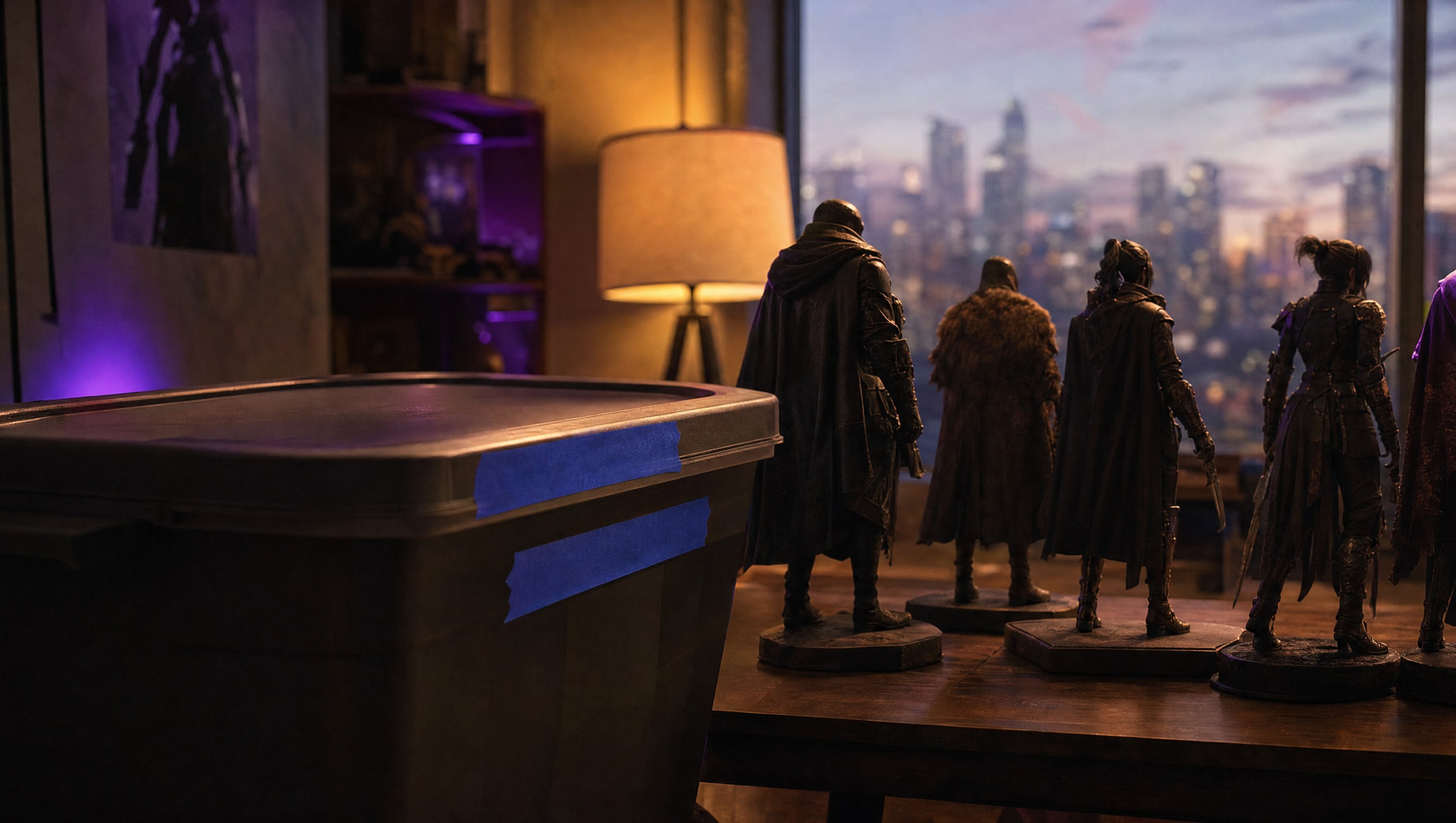
Nobody warns you that collections have a second half: the part where some of it, someday, needs to go. Maybe the shelf is full, maybe your taste changed, maybe the collection needs to fund the next grail. I've sold pieces I was sure I'd mourn and felt nothing but lightness — and I've sold one figure I still think about, which is exactly why this article has a quarantine step. Selling well is a skill, and the emotional part is the actual hard part, so we'll do that part properly.
THE PLAN, IN ONE BREATH
- 01 Run the regret test
- 02 Quarantine the maybes
- 03 Photograph everything
- 04 Price from sold listings
- 05 Match piece to venue
- 06 Pack like a collector
- 07 Give the money a job
Run the regret test on every candidate
Pick up each piece — actually hold it, this doesn't work as a mental exercise — and ask three questions. When did I last genuinely look at this? Not dust it, look at it. If this broke tomorrow, would I replace it? And does it represent who I was or who I am? That last one is the knife: collections quietly become museums of former selves, and it's okay to let a previous era graduate.
Instant keep: anything tied to a person or a moment — the figure someone brought back from a trip, the first thing you ever painted. Sentimental value doesn't convert to money at any exchange rate worth taking. If you hesitate on all three questions, it's not a "sell," it's a "maybe," and maybes get their own step.
Quarantine the maybes for 30 days
Box up every "maybe" and put the box somewhere out of sight, sealed, dated. Thirty days. Anything you physically went and retrieved from the box, keep — that's your heart voting with its feet, and that vote is final. Everything still in the box after a month has already left your life in every way except legally. Selling it now is paperwork, not loss.
This one step is most of the article. Regret comes from fast decisions on slow feelings, and the quarantine forces the feelings to reveal themselves on their own schedule. My one true regret-sale happened before I used this system. Zero since.
Photograph everything before it goes
Before a single listing goes up, give each piece a send-off shoot — and I mean beyond the sales photos. Sales photos are documentation; these are memory. The figure in its display spot one last time, the group shot with its shelf-mates, the detail you always loved.
It sounds precious until you understand the mechanism: most selling regret isn't about the object, it's about the memory access the object provided. A good photo keeps the access and releases the shelf space. I keep an album called "graduated" and flipping through it feels like yearbook pages, not funerals. This is also, conveniently, the step where you produce great listing photos — clean the piece with a microfiber cloth, shoot in a small light box against a plain background, capture every flaw honestly up close.
☆ THE MECHANISM
"Sales photos are documentation; these are memory."
☆ THE ALBUM
"an album called 'graduated' … yearbook pages, not funerals"
ASKING PRICES, DEFINED
"Asking prices are fan fiction — that one seller wanting $400 for the figure you own tells you nothing except what didn't sell."
Price from sold listings, not asking prices
Open your marketplace of choice, search the exact item, then filter to sold and completed listings only. Asking prices are fan fiction — that one seller wanting $400 for the figure you own tells you nothing except what didn't sell. Recent solds, ideally the last 90 days, same condition, with or without box noted, are the truth. Price at the middle of that range for a normal sale, or slightly under it if you want it gone this week.
Condition honesty is regret-prevention too: describe the sun-fade, photograph the repaired joint, disclose the missing accessory. Returns and disputes are how a clean goodbye turns into a six-week haunting.
Match each piece to the right venue
Three lanes, roughly by value. High-value pieces — the $80-and-up figures, sealed grails, anything rare — go to eBay, where the audience is biggest and sold-listing pricing is most reliable; fees take a bite around 13%, so fold that into your floor price. Mid-tier goes to Mercari or similar, lighter-weight listing flow, great for the $15-60 crowd. And the long tail — the bulk lot of blind box dupes, the prize figures, the shelf-fillers — often does best as one local move: a lot listing, a collectibles meetup table, or your local game store, which pays wholesale (expect 40-60% of market) but pays it today with zero shipping.
Don't drip the long tail out as fifteen $8 listings. Time is a cost, and regret math includes the weekends you spent packing peanuts.
☆ THE THREE LANES
eBay: "around 13%" fees
Mercari: "the $15-60 crowd"
LGS: "40-60% of market"
…but "pays it today"
Pack like the buyer is a collector, because they are
Whoever bought your figure loves it the way you did — land it in their hands the way you'd want a grail landing in yours. Boxed figures get bubble wrap around the box, then a shipping carton with 2 inches of padding on every side. Loose figures get soft-wrapped in cling film to hold accessories, then bubble wrap, never newspaper against paint. Weigh the packed box on a kitchen scale before buying the label; guessed postage is donated money.
A good arrival also closes the emotional loop in a way people underestimate — the buyer's "arrived safe, it's beautiful!" message is the actual last chapter of your ownership, and it's a genuinely nice one to get.
Give the money a job before it arrives
Unassigned selling money evaporates into groceries and you end up with no figures and nothing to show — the one outcome that guarantees regret. So decide the money's job before the first sale: it funds a specific grail, or the display upgrade, or the game night shelf, or something real outside the hobby entirely. Every dollar from the graduated shelf should point somewhere.
My last purge — eleven figures and a shoebox of blind box dupes — became one grail-tier figure and a glass cabinet to keep her in. When I look at that shelf I don't see eleven goodbyes. I see the trade I'd make again this afternoon.
✿ WHAT I USED
The graduation kit
Everything below has packed a real goodbye box. Links help fund what stays!
SOME LINKS EARN POPPY A LITTLE COMMISSION. THE GRAIL FUND THANKS YOU.
Quick answers
What if something I sold spikes in value later?
Let it sting for a minute, then remember you didn't own a price chart, you owned an object you'd stopped looking at. You sold at a fair price for the joy it held then; the alternative was a museum of maybes. This happens to everyone who sells anything, ever.
Should I sell the whole shelf at once or piece by piece?
Sell the high-value pieces individually and the long tail in lots. Emotionally, batching also helps — one deliberate graduation weekend hurts less than months of drawn-out goodbyes, and the quarantine box naturally creates the batch for you.
How do I know I'm not making a panic decision?
Panic sales skip the quarantine — that's the tell. If money pressure is real and immediate, still photograph everything and still check sold prices; those two steps take one evening and they're the difference between a hard week and a lasting regret.
Collections are rivers, not monuments — let some of it flow on to the next person, and go love what stays.
— POPPY ✿ QUEST 07 COMPLETE

▸ PULL RATE · THE COMPANION BOARD
Price it right — see what moved today before you list a single card.