 HOWTO: GAMING

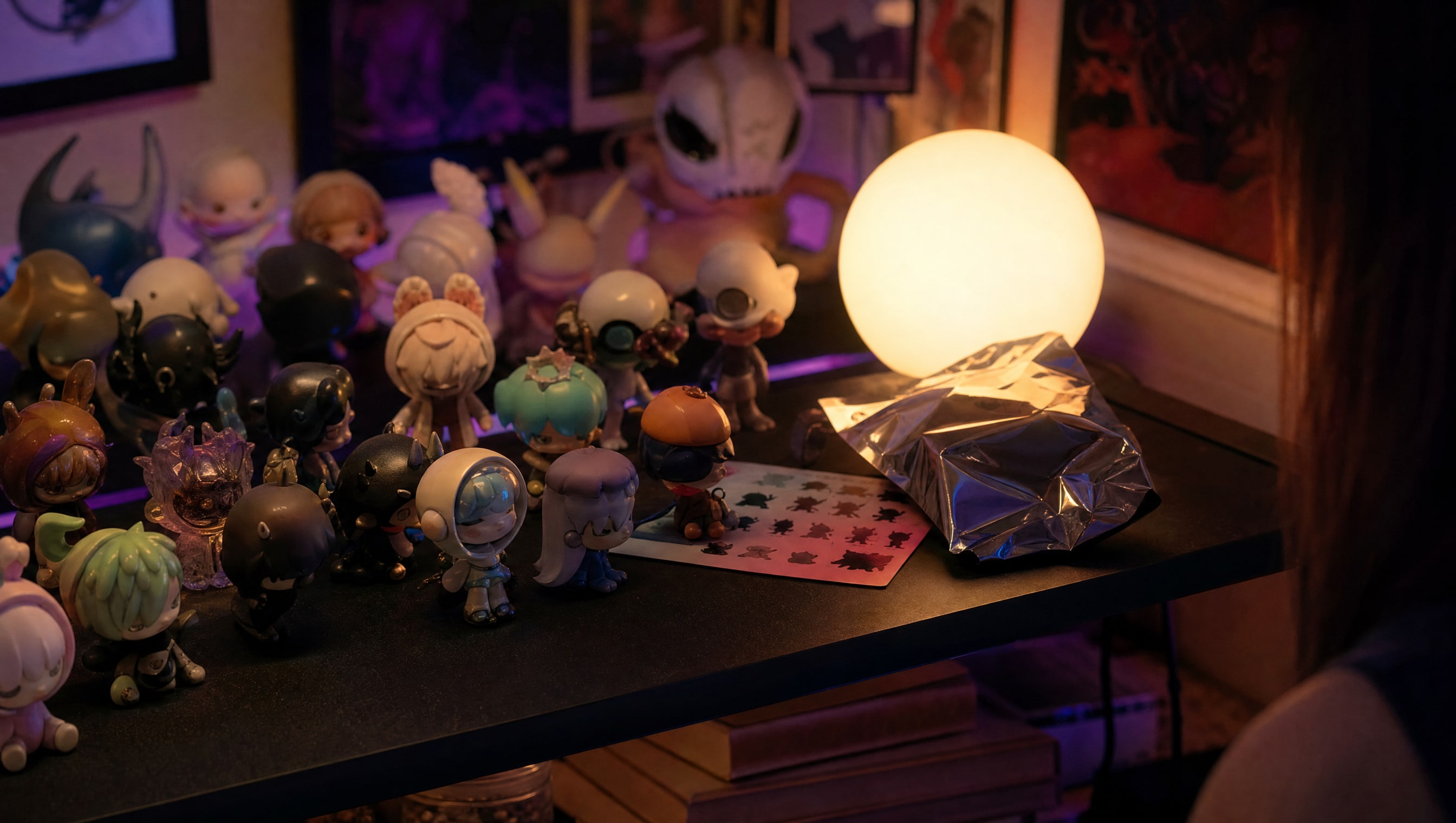
I love blind boxes with my whole chest — the crinkle of the foil bag, the little reveal moment, the crowd of tiny friends accumulating on my shelf. But I've also watched people feed forty dollars into a display stand chasing one specific figure and walk away with four duplicates and a thousand-yard stare. The difference between a treat and a trap isn't the box. It's whether you did the math before you paid.
THE MATH, IN ONE BREATH
- 01 Find the actual odds
- 02 Do the case math
- 03 Price-per-pull your target
- 04 Compare against confirmed
- 05 Check the fake risk
- 06 Apply the treat rule
- 07 Dupe plan + stop line
Find the actual odds before you buy
The odds are not a secret — they're usually printed right on the box or the series insert. A standard designer-toy series has 12 regular designs at roughly 1:12 each, plus a secret (chase) figure that replaces a regular at stated odds, most commonly 1:144. Some series run rarer secrets at 1:288, and some have multiple secrets at different rates.
Read those numbers like they're the price tag, because they are. A box that costs $15.99 with a 1:144 secret is a very different product from the same box with a 1:72 secret, even though they look identical on the shelf.
Do the case math
Blind boxes ship to stores in cases — typically 12 boxes for a 12-design series. Here's the useful part: a factory-sealed case usually contains one of each regular design with no duplicates, and 1:144 odds literally means one secret per 12 cases.
That unlocks the two big plays. If you want the full regular set, buying a sealed case (often $170-190 for a $15.99-per-box series) gets you all 12 with zero duplicate risk — versus buying 12 loose boxes from an opened display, where duplicates are almost guaranteed because other people already cherry-picked. And if you're chasing the secret, understand what 1:144 means physically: eleven of the twelve cases at your local shop don't contain it at all.
Calculate your price-per-pull for the figure you actually want
This is the sentence that saves you money, so I'll make it big and friendly: multiply the odds by the box price to get your expected cost for a specific figure.
Want one specific regular from a 12-figure series at $15.99 a box? Expected cost pulling blind: 12 × $15.99 = roughly $192. Want the 1:144 secret? Expected cost: 144 × $15.99 = about $2,300. That is not a typo. That is the honest average price of pulling that secret from retail boxes, and the display stand will happily let you pay it eight dollars of hope at a time.
☆ STICKY-NOTE MATH
12 × $15.99 = roughly $192
144 × $15.99 = about $2,300
That is not a typo.
☆ BLIND VS CONFIRMED
~$192 expected blind
versus ~$25 confirmed
THE TRAP, DEFINED
Buying blind to get that figure is a trap wearing a cute little outfit.
Compare against buying it confirmed
Now check what your target actually sells for, already pulled and confirmed, on the secondary market — recent sold listings, not asking prices. Typical pattern for a popular series: regular figures resell for $10-25, the popular regulars for $25-40, and secrets for $80-250 depending on hype.
Hold those against your expected pull costs. A specific regular: ~$192 expected blind versus ~$25 confirmed. The secret: ~$2,300 expected blind versus maybe $150 confirmed. When the confirmed price is a tiny fraction of the expected pull cost — and it almost always is — buying blind to get that figure is a trap wearing a cute little outfit. The only figures where ripping blind is mathematically defensible are ones you'd be happy pulling any of.
Check the fake risk before the odds even matter
None of the math helps if the box is counterfeit, and popular series get faked hard. Buy from official stores, official brand webshops, or established retailers — not marketplace listings at suspiciously friendly prices, and be careful with "guaranteed secret" listings, which are frequently fakes or reseals. Real boxes have crisp printing, correct-weight foil bags, and matching authentication codes where the brand uses them; fakes often give themselves away with muddy paint apps and wrong-texture packaging.
A fake "secret" isn't a bad deal, it's a zero. Factor the source into treat-or-trap before you factor anything else.
Apply the treat rule
Here's the whole framework in one line: a blind box is a treat when you'd be genuinely happy with most outcomes, and a trap when you'd only be happy with one.
Love the whole lineup and have $16 of fun money? Treat — the reveal moment is the product and every result is a little friend. Buying the full-set case because you adore the series? Treat, and efficient. Feeding boxes into the void because you need the secret, feeling relief instead of joy when the bag opens? Trap. The feeling of relief is the tell — treats end in delight, traps end in "finally."
☆ THE TELL
treats end in delight,
traps end in "finally."
Set your dupe plan and your stop line
Before the first box, decide two things. Dupes: mine go in a trade bag, and blind box trade meetups plus online trade threads turn duplicates back into figures I want — a dupe is only dead money if you let it sit. Stop line: pick your number of boxes for a series and stop there, no negotiation with the display stand.
My standing rule is three boxes per series I love, then singles-only on the secondary market for anything specific my heart demands. My shelf is thriving. My wallet speaks to me again. Everybody wins!
✿ WHAT I USED
The blind-box shelf
Everything below earns its spot next to the trade bag. Links help fund the next pull!
SOME LINKS EARN POPPY A LITTLE COMMISSION. THE GRAIL FUND THANKS YOU.
Quick answers
Are "guaranteed secret" listings ever legit?
Occasionally, but the category is a minefield of fakes and reseals, and legit ones price the secret at full secondary value anyway. If you want the secret, buying it confirmed from a seller with real photos and sold-item history is safer for the same money.
Is buying a full sealed case cheating myself out of the fun?
You still open every box, and you open them knowing no duplicates are coming — honestly the best version of the reveal. Case-buying only kills the fun if the gamble itself is what you're buying, in which case go in eyes open about what that costs.
What about weighing or shaking boxes in the store?
Some older series could be weighed; most current ones ship with inserts or randomized packing that defeat it, and stores increasingly frown on it. The reliable strategies remain the boring ones — sealed cases for sets, secondary market for specifics.
Open the box because the opening is the treat — the moment you're only in it for one figure, go buy that figure and keep your joy.
— POPPY ✿ QUEST 04 COMPLETE