 How To: Gaming
THE HOW TO CO. — EDITION 10
How To: Gaming
THE HOW TO CO. — EDITION 10
How To: Gaming
THE HOW TO CO. — EDITION 10
How To: Gaming
THE HOW TO CO. — EDITION 10
Nothing here opens all at once. Turn as few wards as you need and leave the rest shut.
You want to be told, and you want to have beaten it. Both wishes cannot be answered at full volume.
A fight you keep losing feels enormous while you are inside it. Written down, it is four or five moves — and one of them you have never survived on purpose, only by accident, in a way you could not repeat. Whatever gouged this floor only knows how to swing in an arc.
You have lost this fight nine times. What is the first thing to change?
Not your gear. Try a smaller question first: can you name every move it has, out loud, without looking at it?
The move that is killing you is almost never the one you remember afterwards. It is the one whose beginning you have never actually watched, because by the time you notice it you are already reacting to it. You are missing an opener, not a reflex.
Spend one whole attempt attacking nothing. Circle, survive, and name each attack out loud as it starts — not as it lands. Somewhere in there is a move you have been treating as random. It is not random; you have simply never seen its wind-up, because you were always mid-swing when it began. Learn that one opener and a third of the fight disappears. Only after you can describe the whole repertoire is it worth touching what you brought.
Where two lights overlap you cannot say which one you are standing in. Losing feels identical whichever cause it is.
Every loss reads as personal failure while it is happening, which is why people answer all three of these the same way and only one of them improves. Ninety seconds of diagnosis is worth twenty more attempts.
How do you tell which one you have, without twenty more attempts?
Stop thinking about your average attempt. Think about your best one — what ended it?
Your best attempt is the diagnostic, and nothing else on the list is. Average attempts are noise; the run where you got further than ever before is the only one carrying information, because it is the only one where every earlier problem was already solved.
Go once more with a single goal — last longer than last time — then write down the exact thing that ended it. If you never saw it coming, that is preparation: you are missing something you were supposed to bring, and you can lose to it fifty times in a row without ever improving. If you saw it, knew it, and were late, that is execution, and repetition genuinely fixes it. And if your cleanest attempt and your sloppiest one end at roughly the same place, it is the build — the fight is not asking you to be better at it, and no amount of trying harder is going to be heard.
There is no honour in bouncing off the same wall for a week, and no shame in reading. There is a way of reading that costs you the fight and not the story — and a way that quietly costs you both before you have clicked anything.
What do you type, and where do you stop reading?
Search the mechanic, never the moment. So: what is the mechanic here, in your own words?
A search that names the fight returns everything that happens after the fight. A search that names the behaviour — a guard that will not break, a phase nobody reaches — returns only the behaviour.
Describe what is happening to you without naming who is doing it, and read words rather than watch video: a page hands you one paragraph, a video hands you the whole room and the thing standing at the far end of it. Then stop at the sentence that makes you want to go and try it. That impulse is the receipt — it means you got the piece you were missing. Everything past it is somebody else’s summary of an ending you were three attempts away from earning.
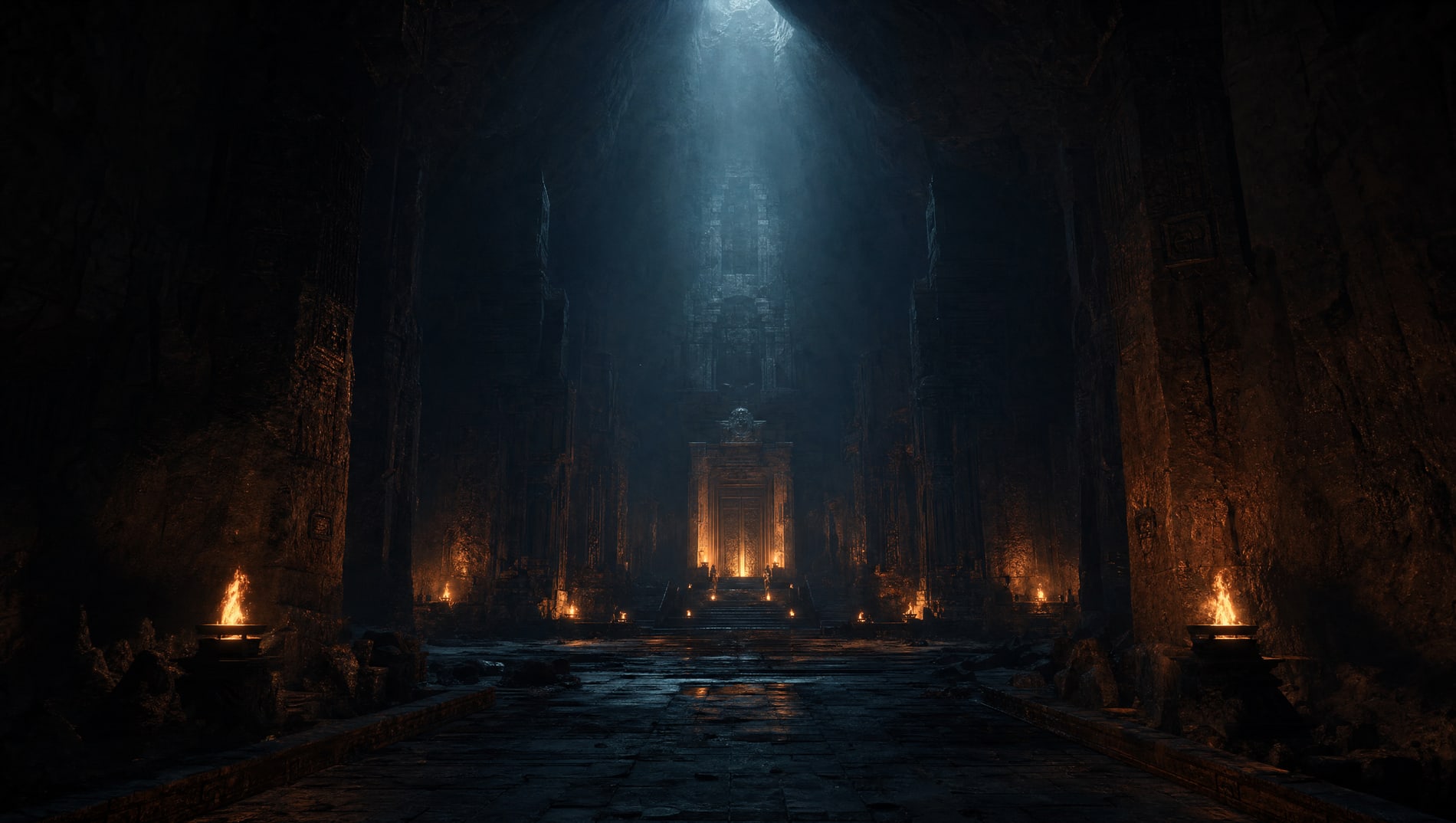
From back here it is small, and lit, and still shut.
Nothing about it changed.
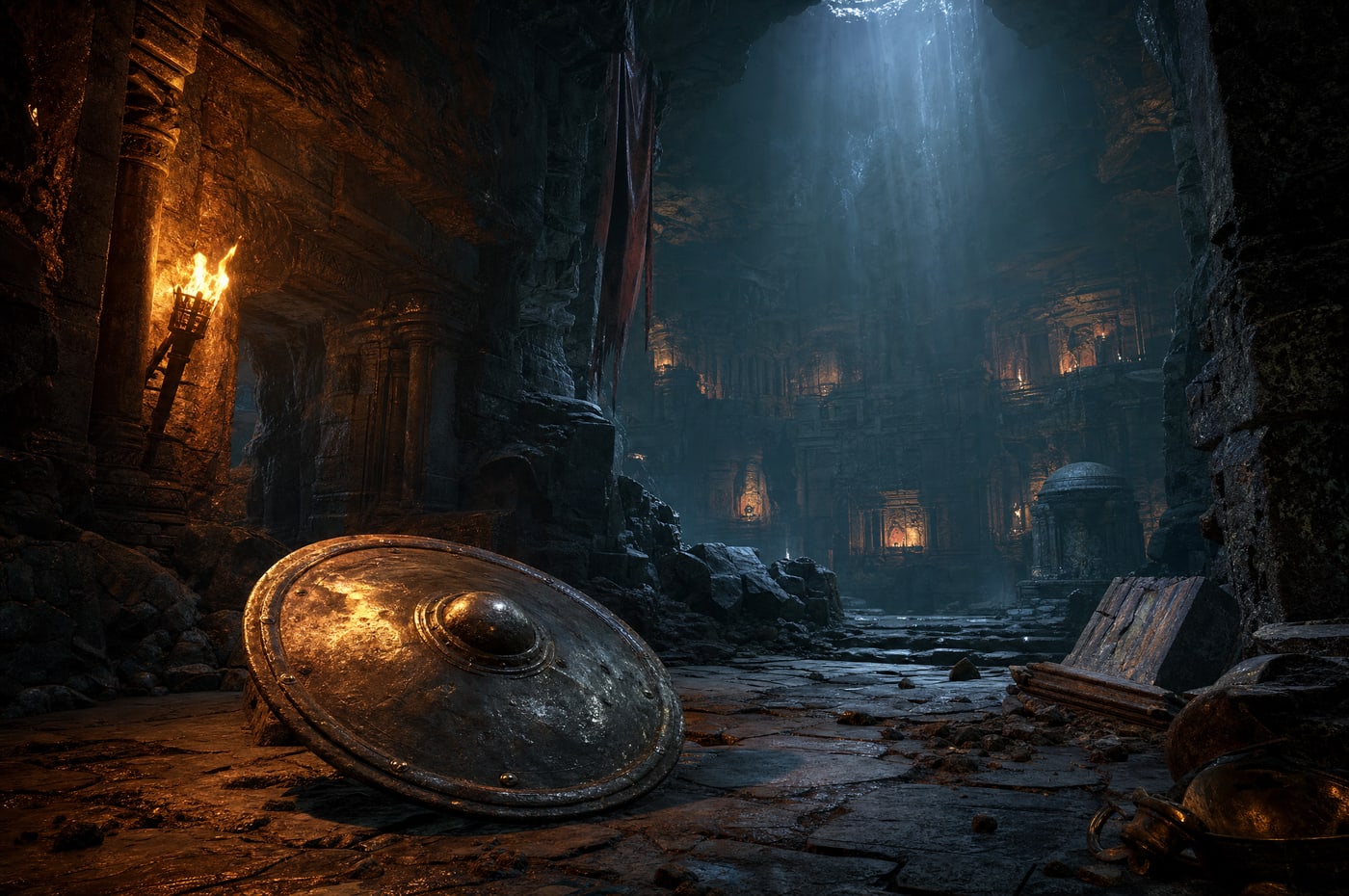
“Somebody put that shield down exactly where you are standing — that is not a warning, it is company. I have never beaten a fight by getting angrier at it. I have beaten plenty by going away, writing down what the thing actually does, and coming back bored.”