 How To: Gaming
THE HOW TO CO. — EDITION 10
How To: Gaming
THE HOW TO CO. — EDITION 10
How To: Gaming
THE HOW TO CO. — EDITION 10
How To: Gaming
THE HOW TO CO. — EDITION 10
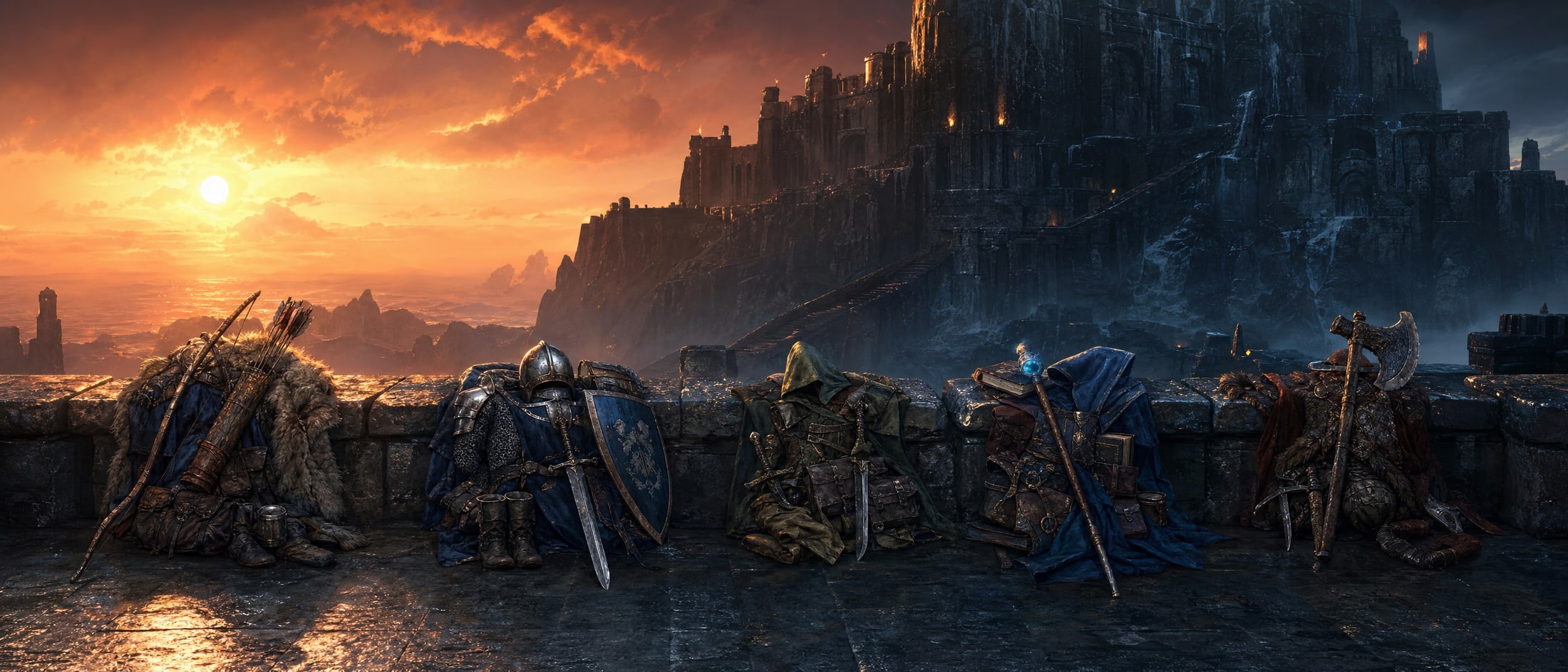
One person crosses a rung by stopping a mistake. Five people cross it by agreeing which mistake to stop — and that conversation, not anybody’s hands, is the skill this page is about.
Upstairs, a line is a ceiling from below and a floor from above — one hairline, two names, depending which side of it you stand on. Lay that line flat and you get a bench. From the team’s side, a place is a job: work that has to get done, and someone who agreed to do it. From inside the place, it is labour: what doing that job all night actually costs, which nobody outside the seat pays and almost nobody outside it notices. Teams argue about the top name and come apart over the bottom one.
Somebody picks before there is enough to pick on. The job is not being right — it is that four other people get to stop deciding and start moving.
First contact is information, and it is paid for with whatever the person making it was still holding. Worst‑looking night on the bench. Most useful one.
Nothing this place does well ever looks like anything. It is the only seat where a perfect night and a wasted one are indistinguishable from outside it.
Said late it is useless; said early it sounds like nothing. This seat gets talked over, then quoted back an hour after it stopped being worth anything.
Most of this job is not acting while four other people are. Every instinct that made someone good on their own is the thing this seat has to sit on.
Nobody chooses the bottom name. It arrives with the seat, it is invisible from every other seat, and it is what people are actually tired of on the night they say they are tired of the team.
Play a single night a person short and you will learn more about the shape of your group than a month of full ones will teach you. Something quietly stops happening, and nobody planned for it, because nobody had ever named it.
Whatever went missing is what that place was actually doing, and it is almost never the thing written on it.

A rung crossed alone is a result. Crossed by five, it is an agreement.

The row only works because no two rolls are packed alike. Five people who think identically have one idea and four echoes, and they will lose to any group that can argue properly and still start the next round on time. So the thing worth screening for is not skill — and it is certainly not agreeableness.
The ten minutes after a loss are the highest-leverage ten a group owns, and the very first sentence decides what the other nine will be. Open with a person’s name and you have started a trial — everyone else now knows their turn is coming and is drafting a defence instead of listening. Open with a decision and you have started a review.

A team ending is not a failure, and treating it as one is exactly why so many of them end badly — in a group chat that simply stops, with four people privately deciding it was the fifth. Groups form around a shared appetite, and appetites move at different speeds. Two of you still want the thing everyone wanted in the spring. Three of you are being polite about Tuesdays.
“Every team I have been on ended. The good ones ended on a night all five of us could see coming. The bad ones ended in a group chat that just stopped, and I still do not know which of us stopped it.”