 How To: Gaming
THE HOW TO CO. — EDITION 10
How To: Gaming
THE HOW TO CO. — EDITION 10
How To: Gaming
THE HOW TO CO. — EDITION 10
How To: Gaming
THE HOW TO CO. — EDITION 10
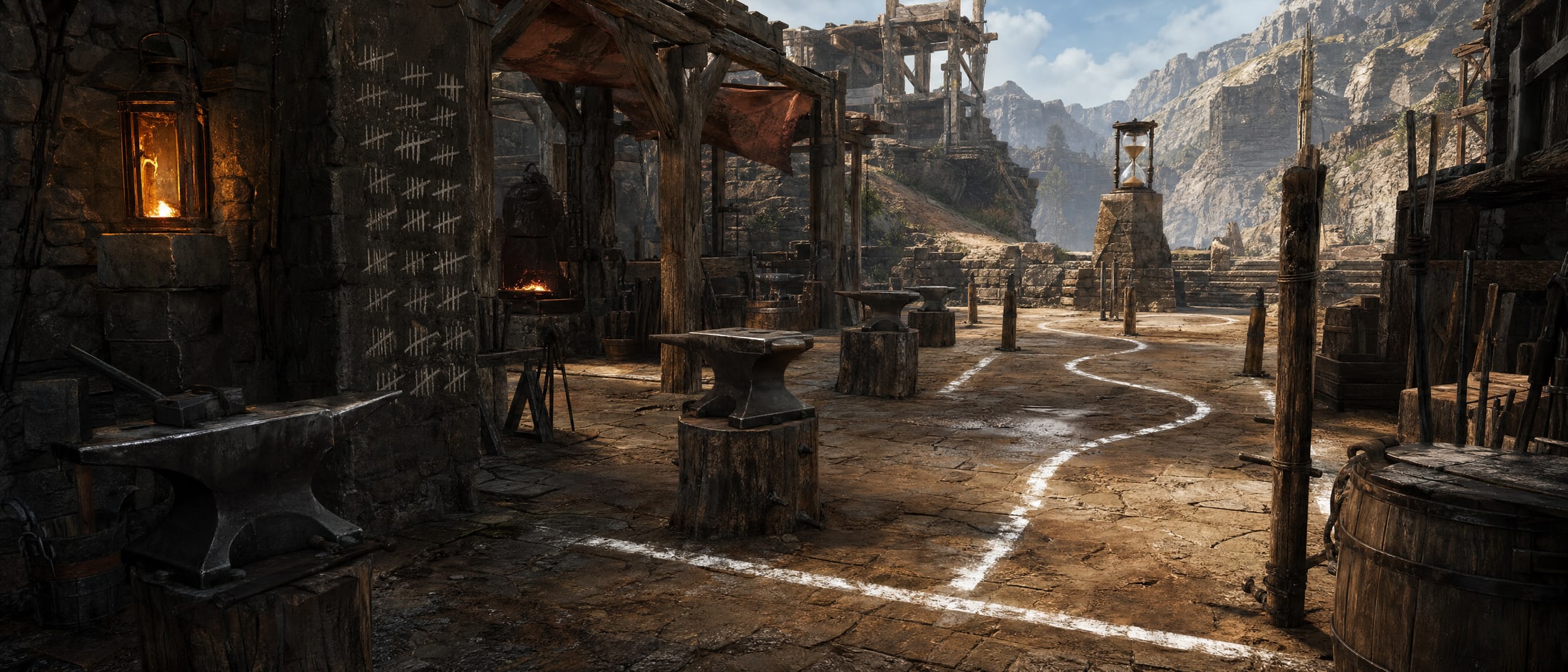
Somebody chalked a line across this yard and started crossing it. The route between the anvils was never obvious — it is the leftover of every crossing before this one, and most of those ended before the sand was halfway down.
You are not getting better at the game. You are getting better at one line through it.
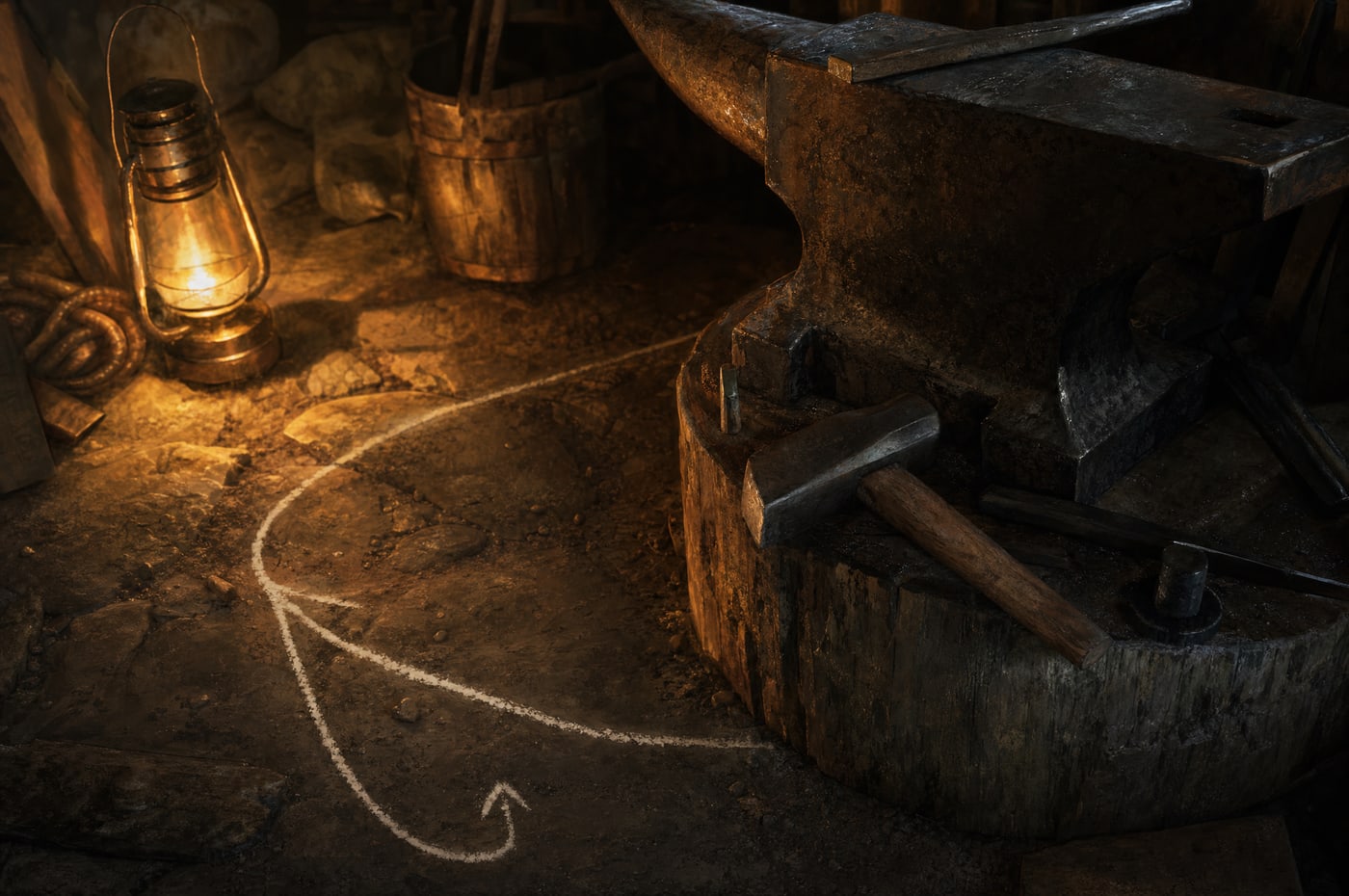
Playing well means being ready for whatever the game does. Playing fast means the opposite: you decide in advance exactly what will happen, in what order, and then you remove your own ability to react to anything else. A route is that decision, written down and then worn into the floor.
Which is why good players are often slow at first. Being adaptable is the skill you have to put down. The line around the anvil is not clever — it is just the one somebody stopped changing.
You will run the first minute more times than everything after it put together.
Not what you do. What you do first, and what that leaves you standing next to.
The movement that works most of the time, which is not the same as working.
Menus, walking, a door that opens slowly. It never fails and it is never free.
Everyone routes around it for a year and then admits it has to be learned.
Hands you did not know were shaking, on the only attempt that had gone right.
Six pieces, one wall, and the scratches never thin out — you keep running the parts you have already learned to get to the part you have not. That is not the price of the run. That is the run.
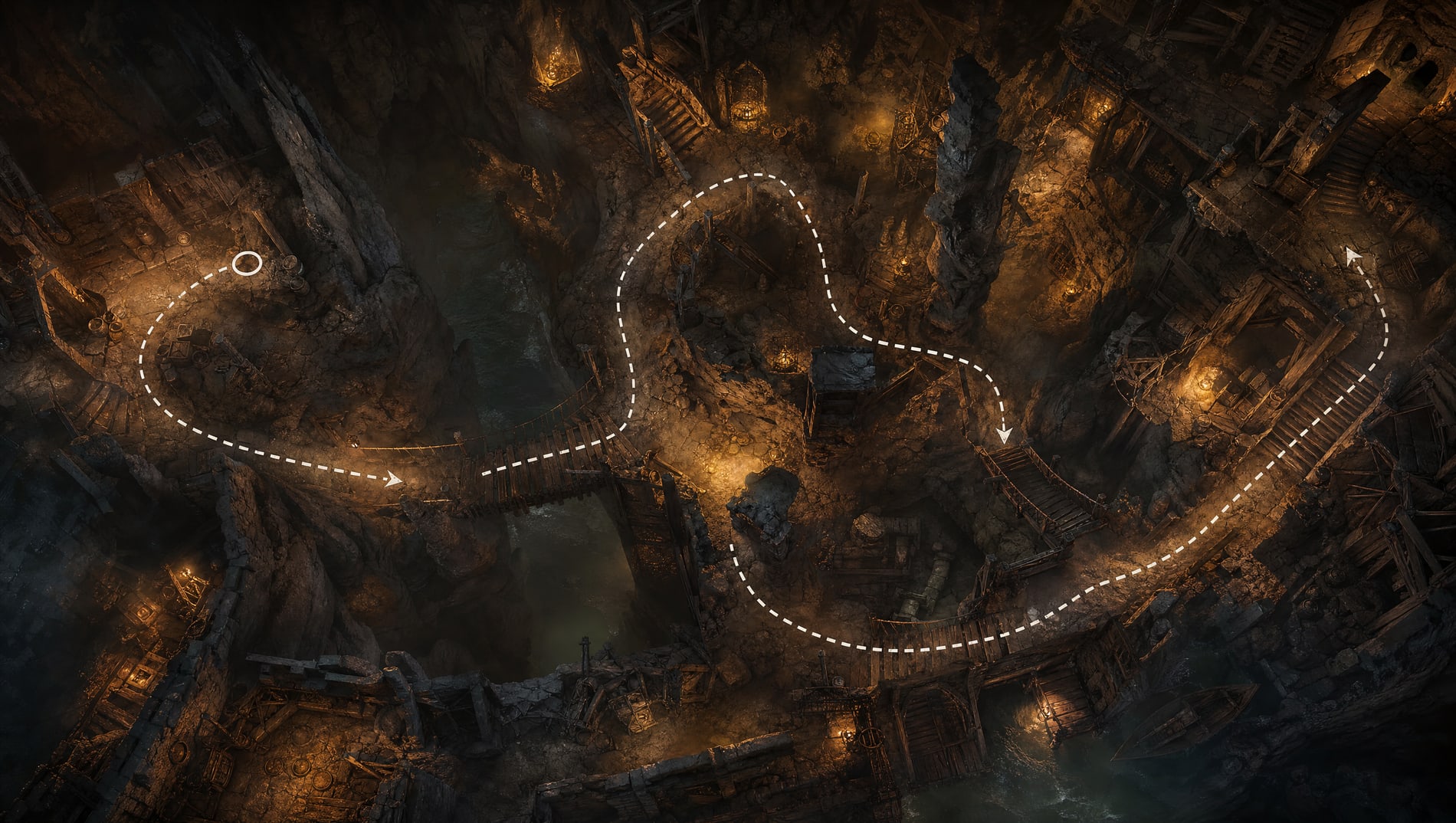
THE WHOLE LINE FROM ABOVE. NOBODY WHO RUNS IT EVER SEES IT THIS WAY — THEY SEE THE FIRST TURN, OVER AND OVER, AND THEN THE FLOOR.
Plays every attempt out, because stopping feels like giving up. Knows the back half of the route better than anyone who has beaten the time.
Gets very good at a run that was already lost in the first minute.
Starts again the moment it is not perfect. The opening is immaculate; everything past it is still a rumour.
Has done the opening more than anyone alive and the ending not once.
Starts again when the loss is cheap to redo. Plays it out when the next piece is one they are worse at — a spoiled run is still the only way to practise the end.
The only one of the three getting faster at the whole thing.
The first half-minute went badly and everything after it is still untouched. This is the cheapest thing on the page to throw away.
Something you needed early is behind you now. Go back for it and lose the time, or run the rest of it short.
Nothing you did. The run is worse and the route itself is completely intact, which is exactly what makes this one hard to sit with.
A single movement out of hundreds. Everything after it still has to be played to be practised, and it is still all in front of you.
You are doing the right things in the wrong sequence. Most of the run is already behind you when you notice.
Not a mistake. The thing that makes mistakes. Every attempt from here is worse than the one before it and none of them teaches you anything.
THE PINK NAME IS THE ONE THAT JUST CHANGED SIDES · IT HAPPENS TWICE, TO THE SAME PERSON
None of the three is wrong, and only one of them is learning the route. Throwing a start away is a skill, and it is the one nobody practises.
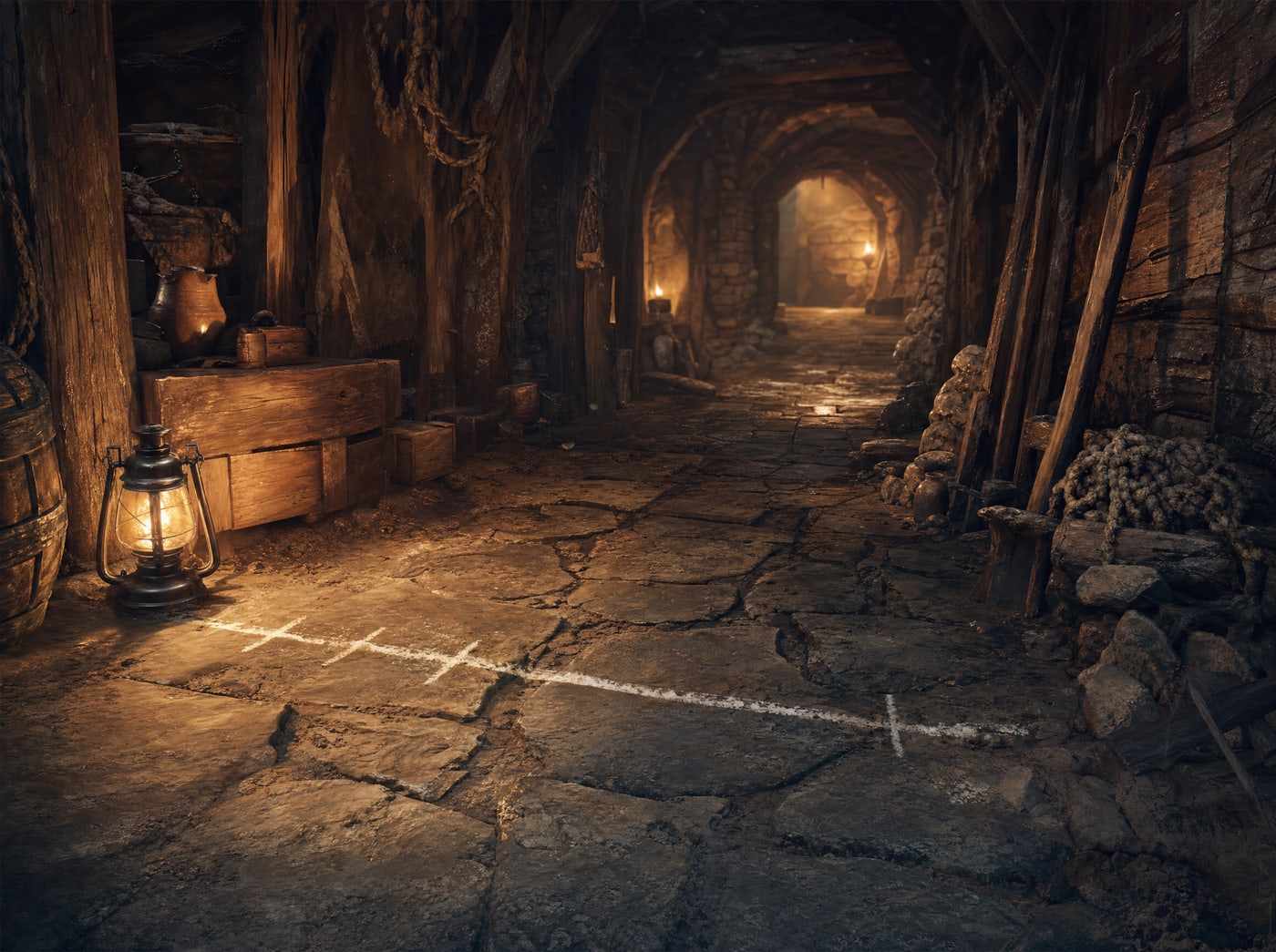
Scuffed pale in the middle. Nobody wears a line out by crossing it once.
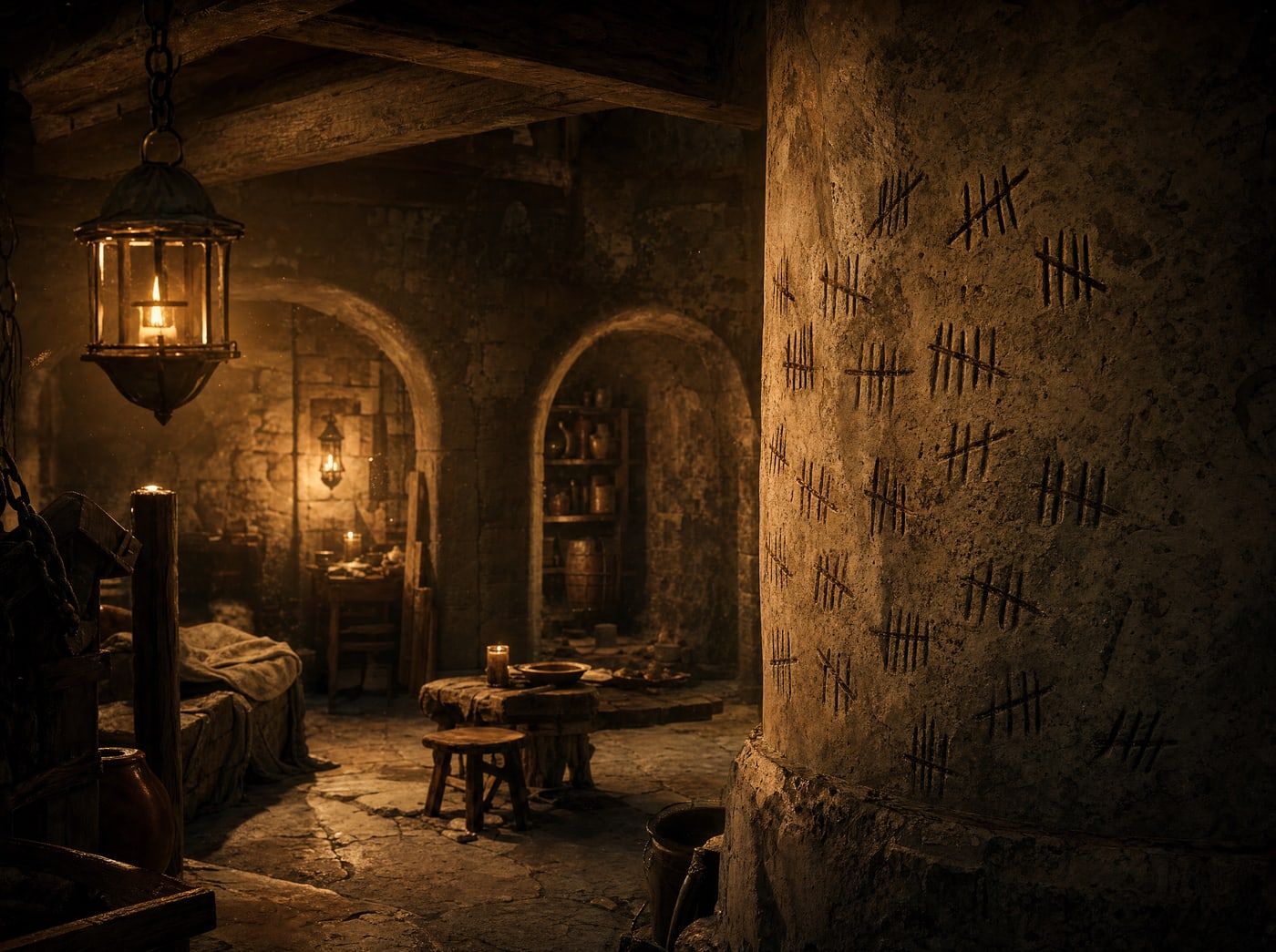
Scratches in fives, plenty of them struck out. Those were attempts too, and they still count as work.
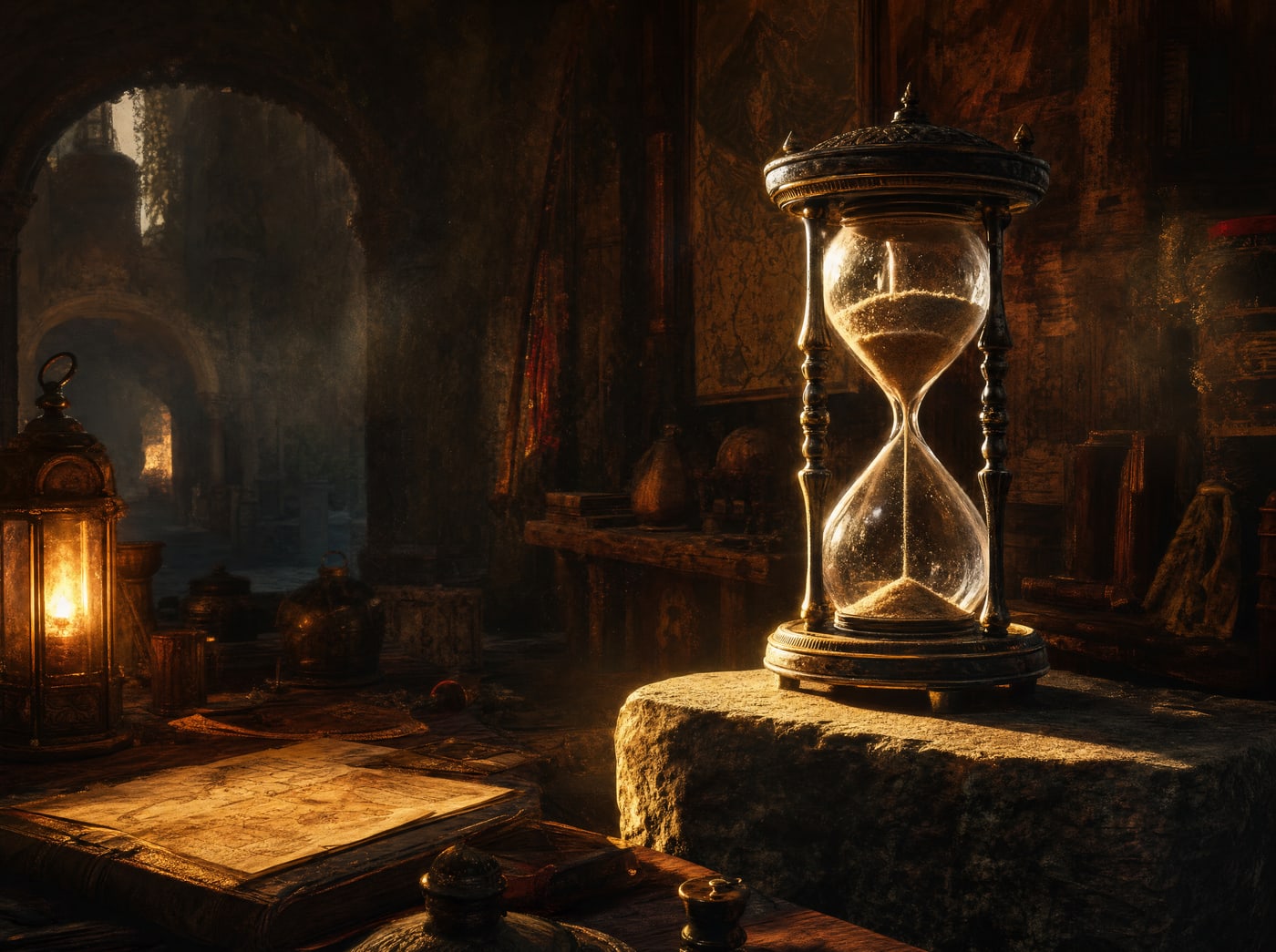
At the far end, visible from the line. Part run through, which is the only state it is ever in.
One piece practised, one full attempt from the line, then stop while the sand is still moving — that is how you do this without it eating your life. Nobody does it for the finish anyway. They do it because crossing the same line again, very slightly better, is the part they like.
“I kept every run I threw away before the first turn in one folder, and the finished one in another. The first folder is enormous and it is the one that taught me anything. The second one is just the receipt.”