 How To: Gaming
THE HOW TO CO. — EDITION 10
How To: Gaming
THE HOW TO CO. — EDITION 10
How To: Gaming
THE HOW TO CO. — EDITION 10
How To: Gaming
THE HOW TO CO. — EDITION 10

Twelve loops in the leather and thirty things on the bench behind you. Everything that makes a loadout good happens in the gap between those two numbers.
A hoard is everything you own. A loadout is everything you can reach.
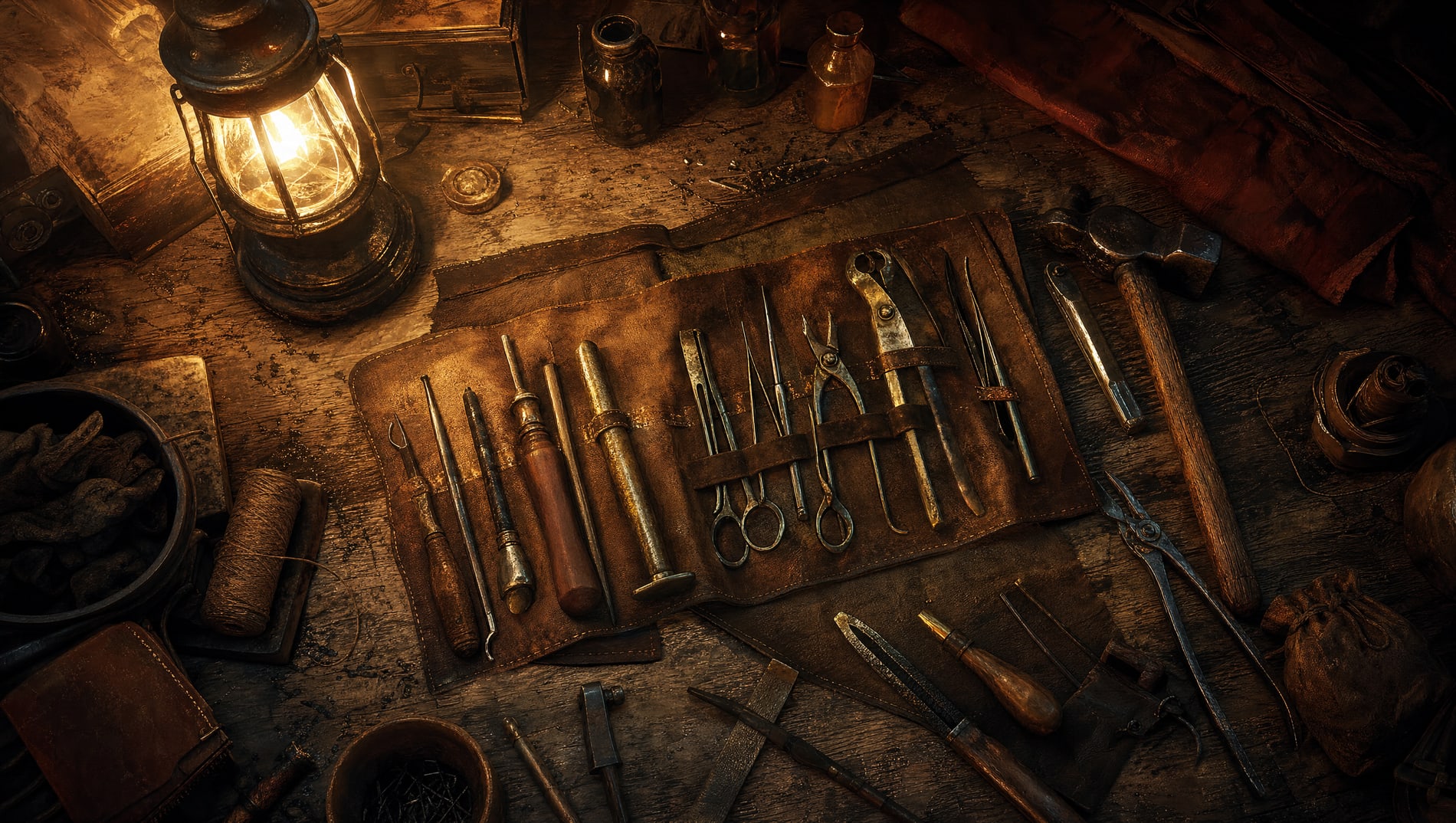
ONE ROLL AT THE CENTRE. EVERYTHING AROUND IT ON THE BOARDS IS THE HOARD IT WAS CHOSEN OUT OF.
What is in the leather on a night you know nothing about yet.
Pry, reach and spare are not oversights. They are the only reason you can answer a night you did not plan for.
The same roll, marked once for every loop that actually came out.
Five of the nine never left the leather. That is not a kit. That is luggage with a strap.
You know what tonight is before you start it. Two loops change.
The count did not move. Only the contents did — that is the whole of what a swap is.
Something short and strange. You take less than you are allowed to.
Going light is a decision, not an oversight. Seven open loops is a roll that can still change its mind.
Nothing left behind, and a second bag under the bench for the rest.
Nothing is missing, so nothing can be added. A full roll is not a finished roll. It is a closed one.
Five rolls, one field, and the only one with nothing missing from it is the one you cannot play out of. A loadout is the shape of the space you left.
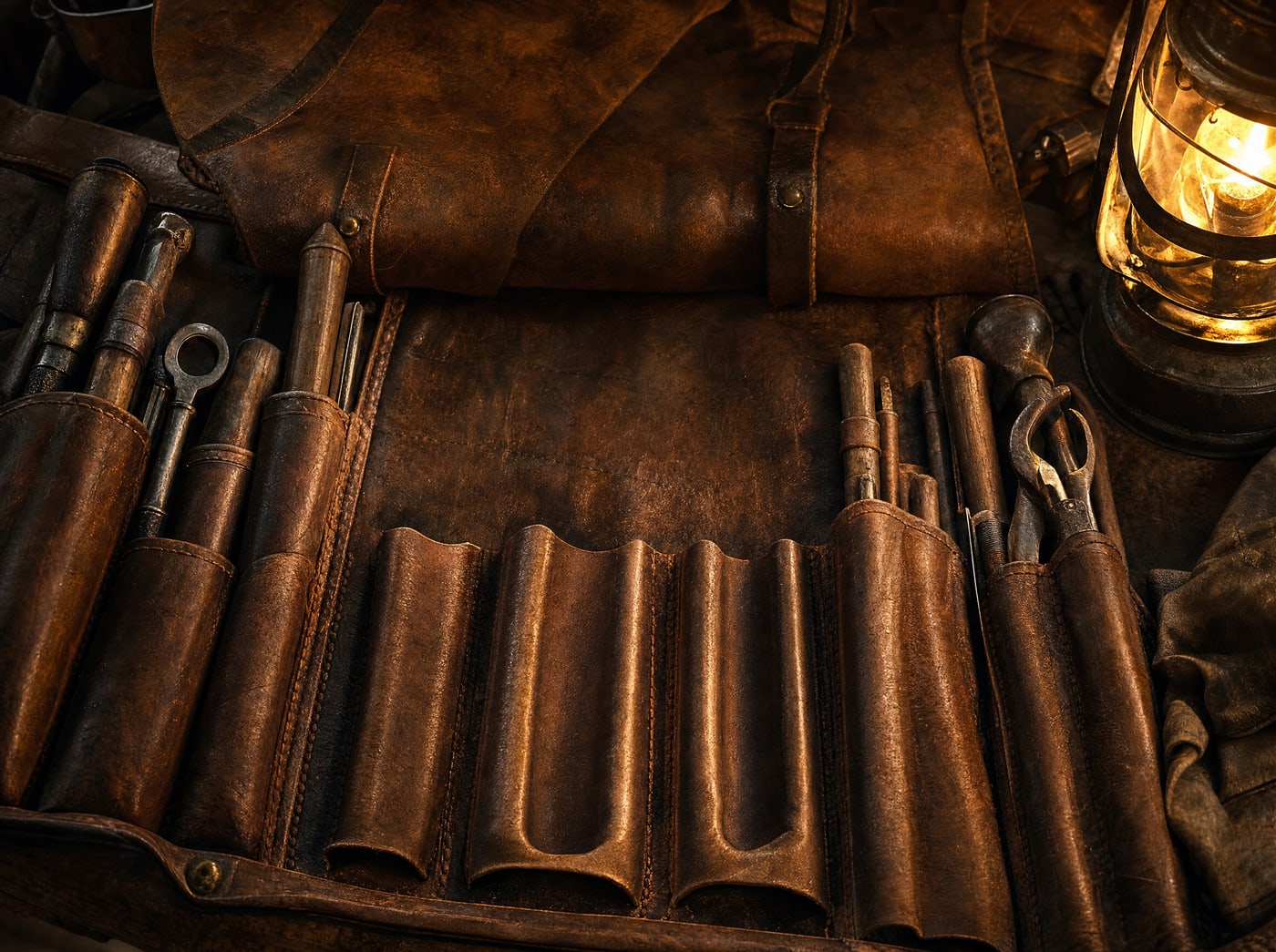
An open loop looks like laziness and works like a hand. It is the only part of the roll that can hold whatever tonight turns out to need, and it stops existing the moment you fill it with something merely good. The reserve is the part of the plan that covers the plan being wrong, which is the part of any plan that gets used most.
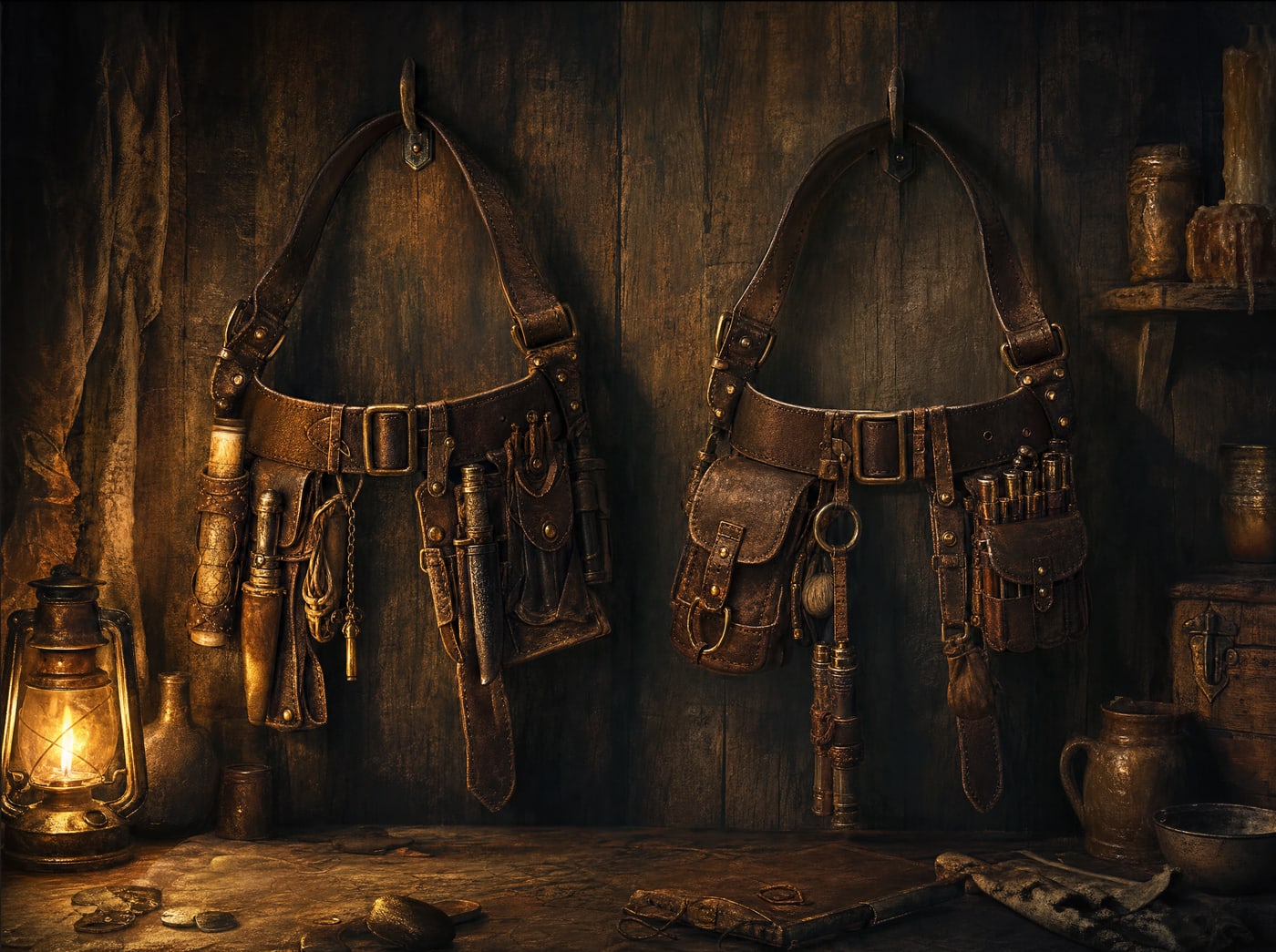
Two identical belts on two hooks, fitted for two different nights, and nobody looking at them would call them the same kit. The leather was never the decision. Swap for the night you know is coming, never for the one you are losing — a swap made mid-loss is not a plan changing, it is a plan being abandoned by someone tired.
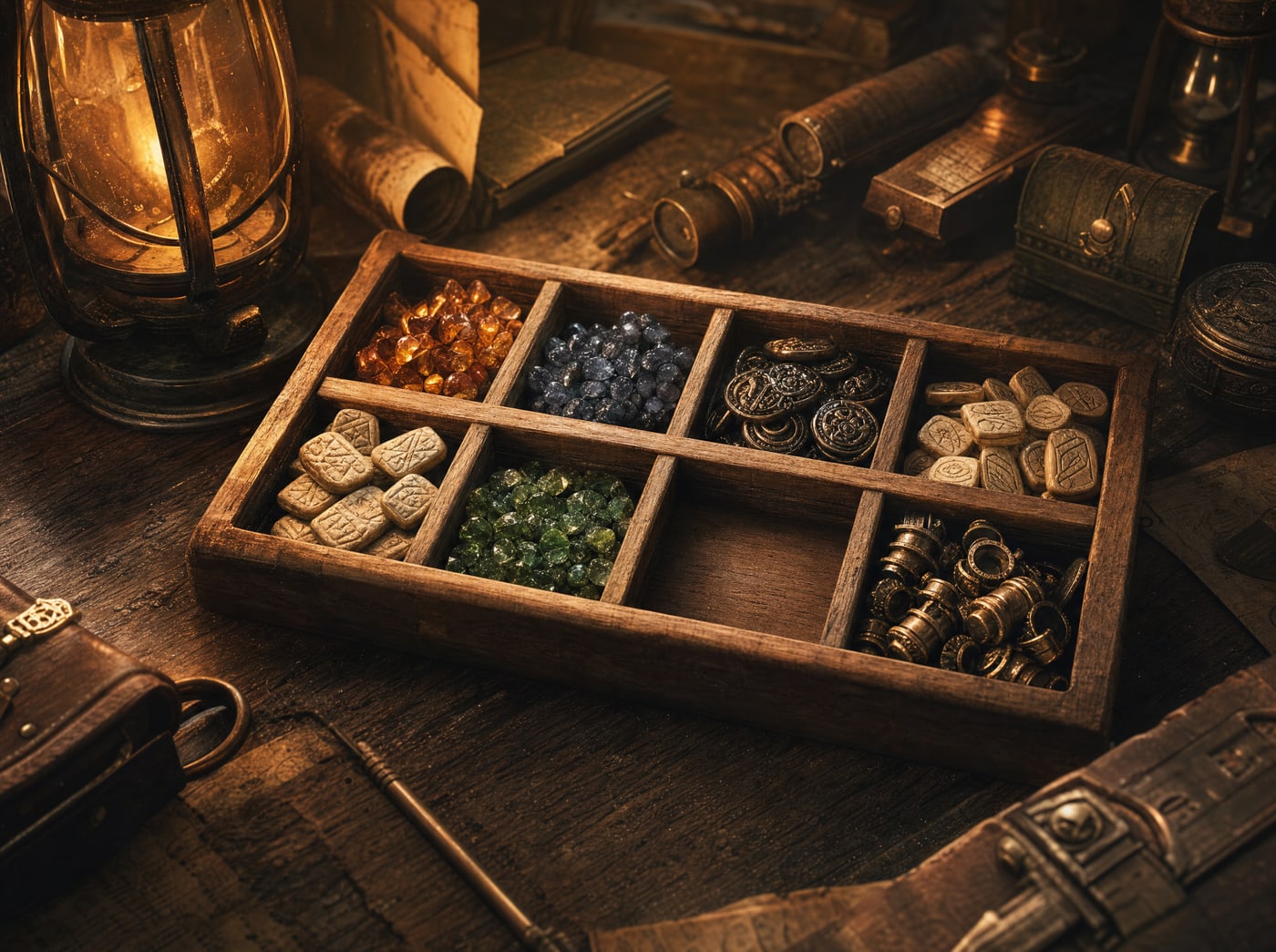
This is the trap that catches careful people. A tray with every compartment labelled and every piece in its place feels like the opposite of a mess, so it never gets audited — but sorting is not selecting. The test is reach: a loadout is what you can put a hand on without thinking. Everything else is inventory, and inventory belongs on the bench.

Every roll has one nobody questions, and it is always the oldest thing in it. Habit and use look identical right up until the thing is gone.
Upstairs in the yard, a trade sits somewhere along a rail. Down here it does not: the loop is full or the loop is open, and there is nowhere in between to hide.
Nobody remembers a full roll. They remember the night there was a loop free for the thing that mattered.
“I spent years asking what my kit was for. The night I started asking what it was in the way of, three things came out and never went back.”