 How To: Gaming
THE HOW TO CO. — EDITION 10
How To: Gaming
THE HOW TO CO. — EDITION 10
How To: Gaming
THE HOW TO CO. — EDITION 10
How To: Gaming
THE HOW TO CO. — EDITION 10
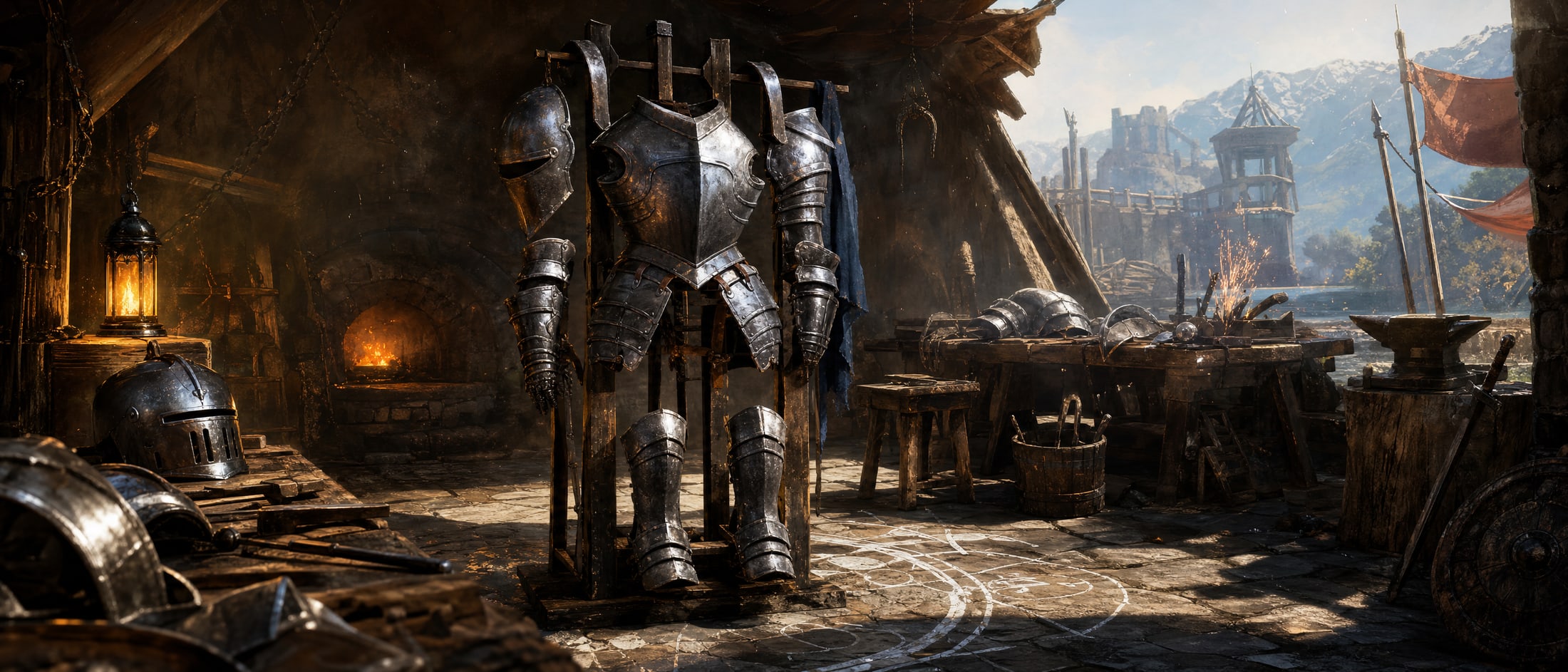
A build is not a list you copy down. It is a stand you load one plate at a time — and the plate that was cut for somebody else’s hands has to be beaten out again for yours.
Every plate you fit decides the shape of the next one. You are not choosing pieces. You are choosing an order.
ONE STAND, SEVEN STATIONS, THE SAME THREE PLACES ON EVERY ROW · RAW LIES ON THE BENCH · WAITING HANGS FROM THE RAIL · FITTED SITS ON THE STAND · NOTHING MOVES RIGHT UNLESS SOMETHING PAYS FOR IT
The first seconds, decided in advance so you are not deciding them live.
The one button that undoes a mistake. You know exactly which plate it is.
What stops a bad night becoming a bad week. Boring, and load-bearing.
How it ends when it goes long. Not shaped, not measured, not hung.
Whatever pays for the rest. Every other station spends what this one earns.
The thing you keep losing to, with nothing on the stand shaped for it.
The piece that only helps in the fights you were already winning.
Three on the stand, two on the rail, two still on the bench — and it has been out every night this week.
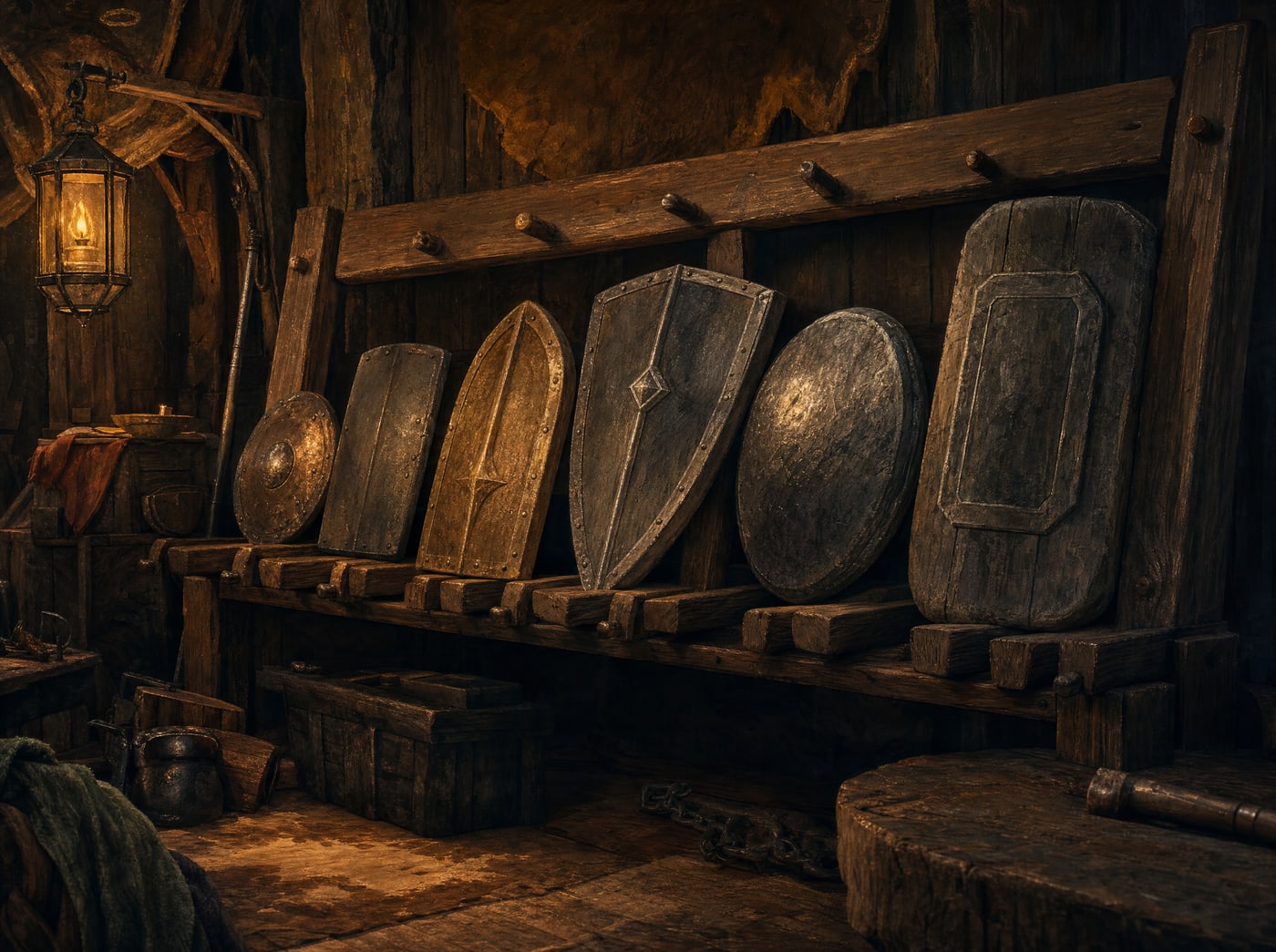
Six pieces on the rail, all cut for the same stand, all a different weight, and not one of them doing anything. That is what most people have when they say they have a build. It is an inventory.
A build is the pieces you agreed to carry at once, in an order you can say out loud. Until you can say the order, there is nothing to test and nothing to fix.
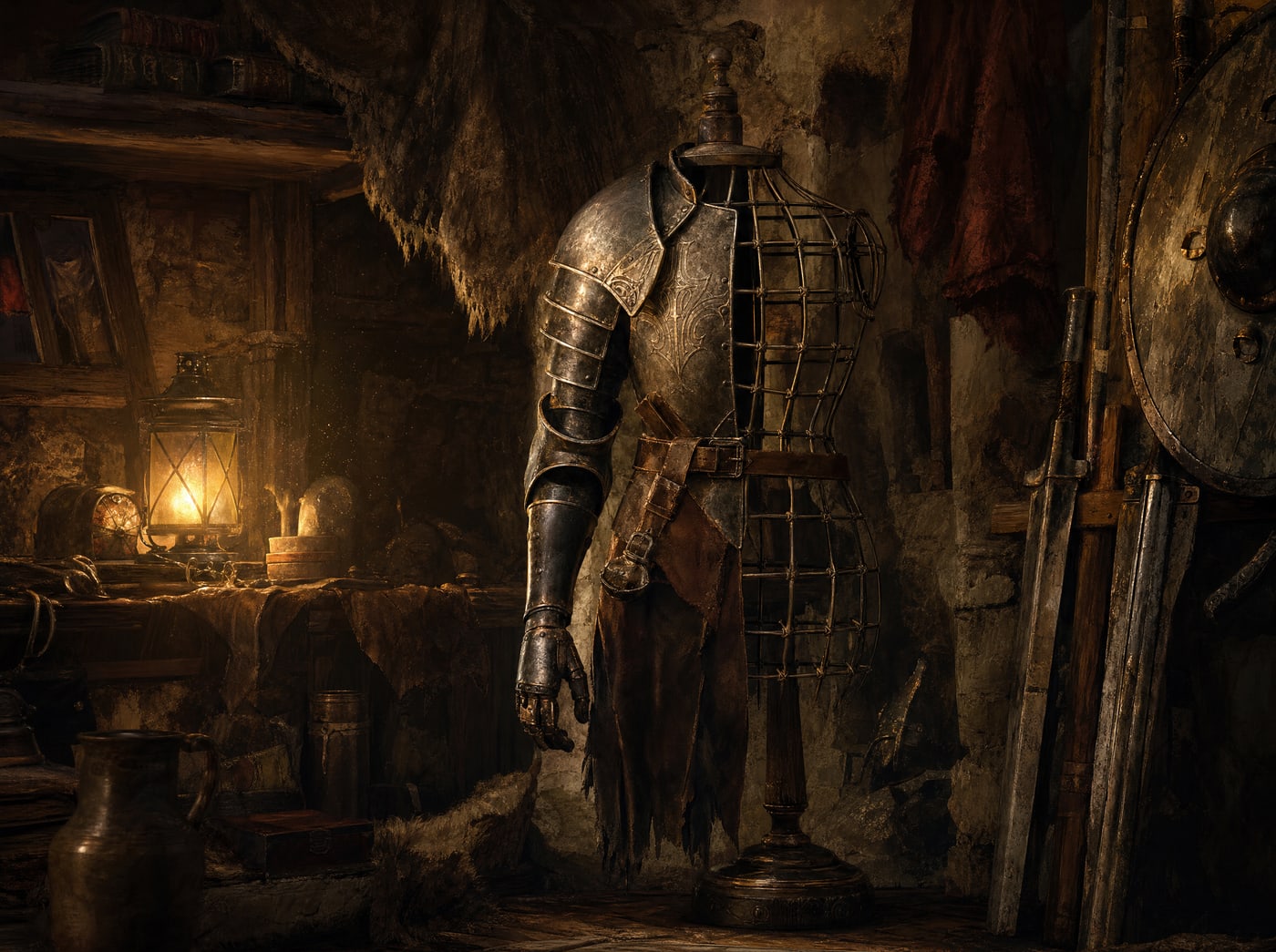
Plated down one side, bare down the other, three days like that on purpose. One change at a time is the only way a change tells you anything.
Fit two at once, find the stand is better, and you have learned nothing about either one. Assembly is fit, play, keep or strip — and the playing is where the information is.
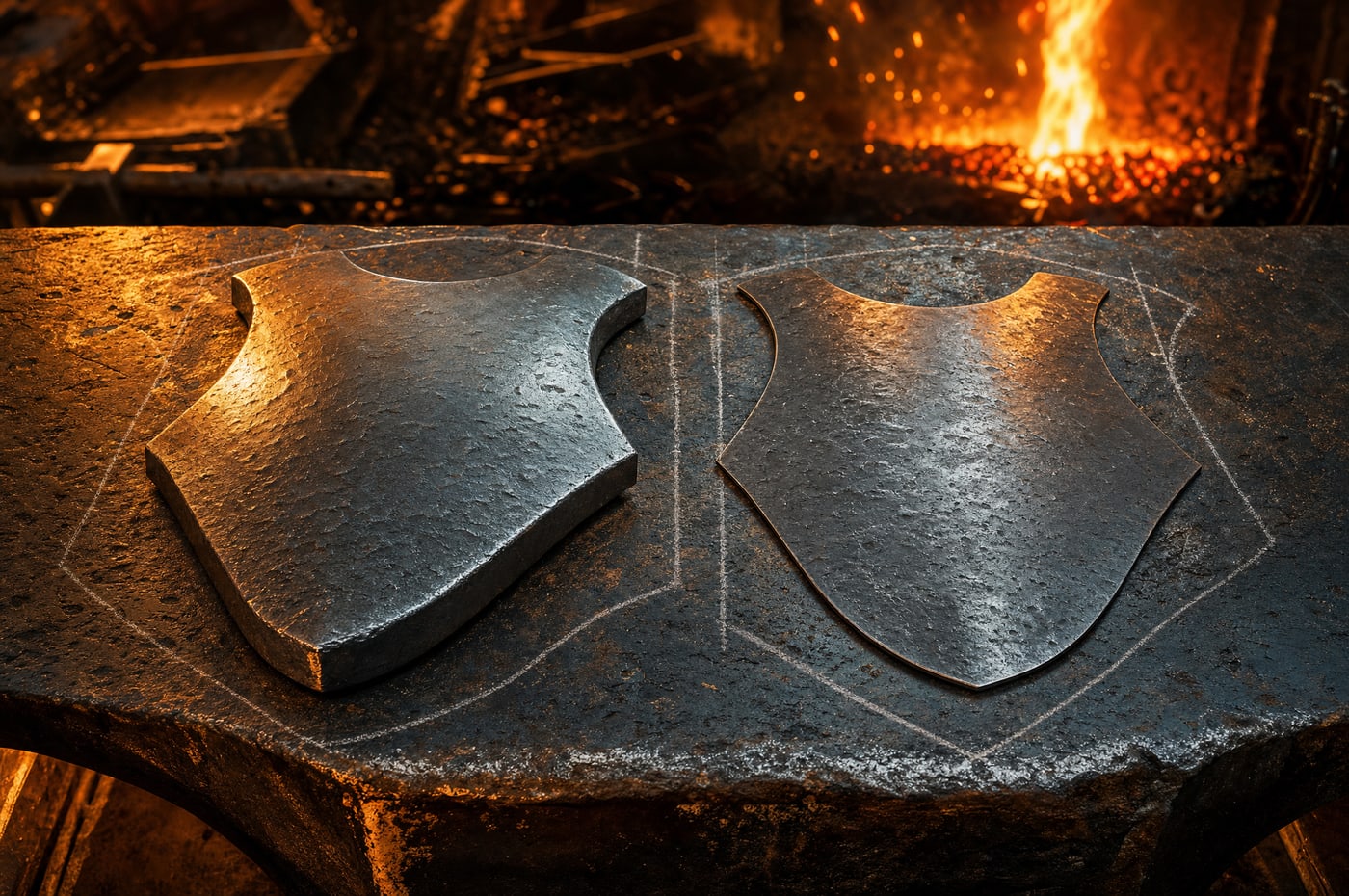
Beaten heavy. It assumes you will stand in the hit and answer it, because the hands it was cut for do that without being asked. Every other station on their stand was chosen after that assumption.
Beaten light, because you will not be there when the hit lands. Also right — and it needs a different station finished first, which is the part that never survives being copied down.
The pattern travels. The thickness never does.
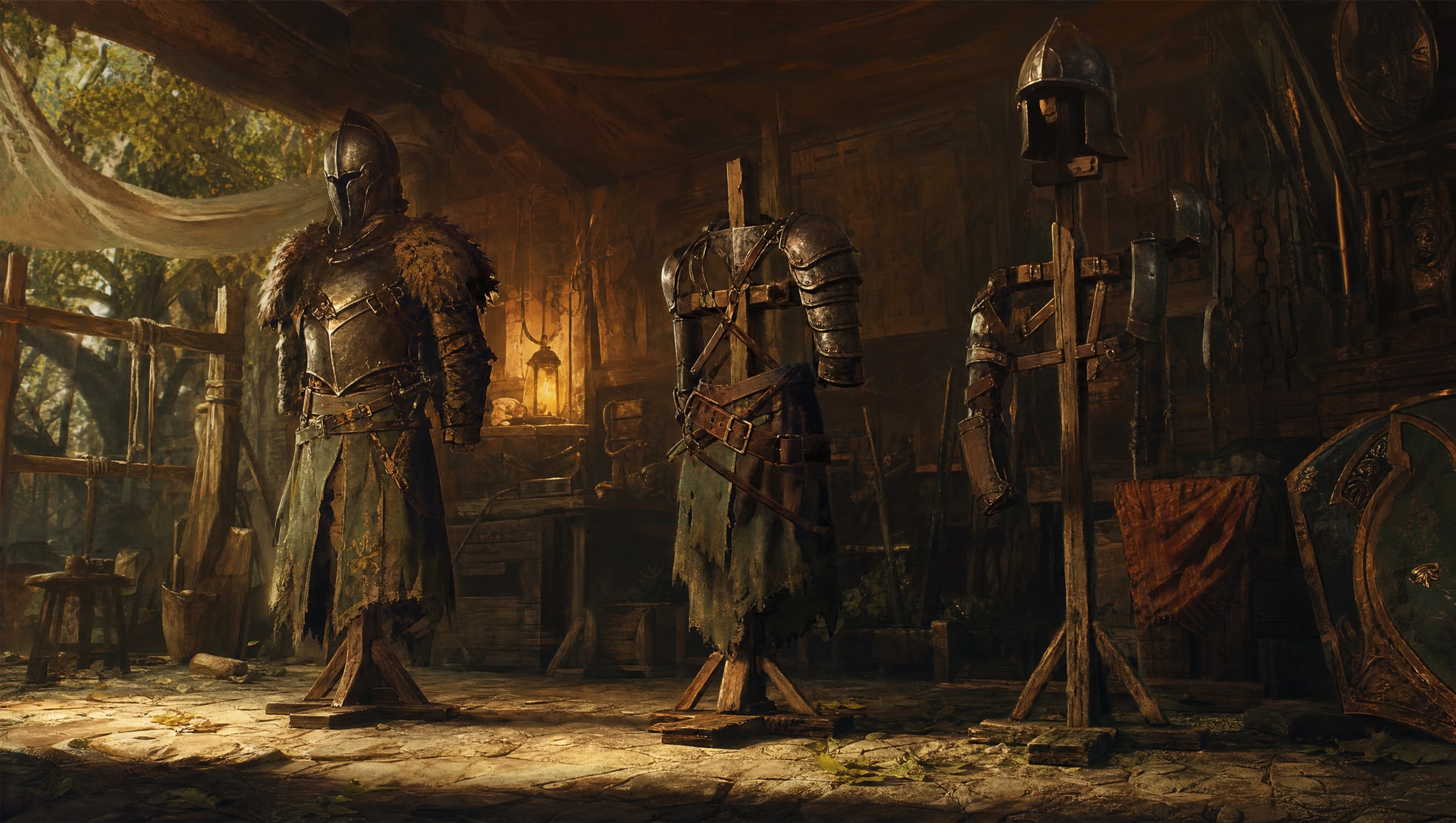
Three stands in one bay, not one of them finished, two of them out tonight. Finished is not a state. It is a night you stopped changing things.
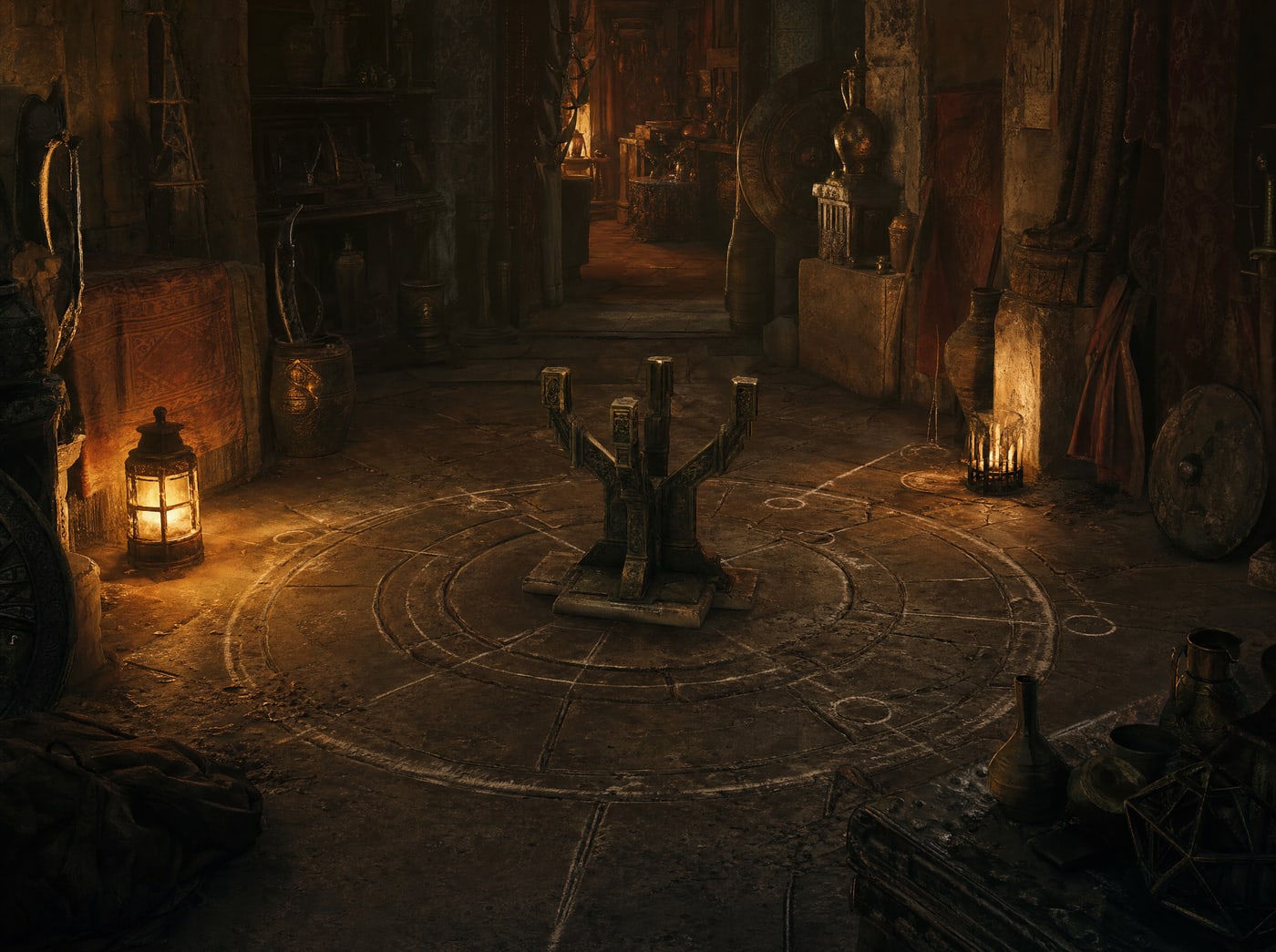
Around every stand here there is a ring of fitting-marks: where the last plate sat, what came off, what moved a thumb’s width and stayed. Nobody chalks a stand they have stopped thinking about.
Take the pattern. Take all of it. You will still be the one holding the hammer.
“Every build I have ever copied worked on the third night. The first two nights were me cutting it down to my own hands and calling it broken.”