 HOWTO: GAMING
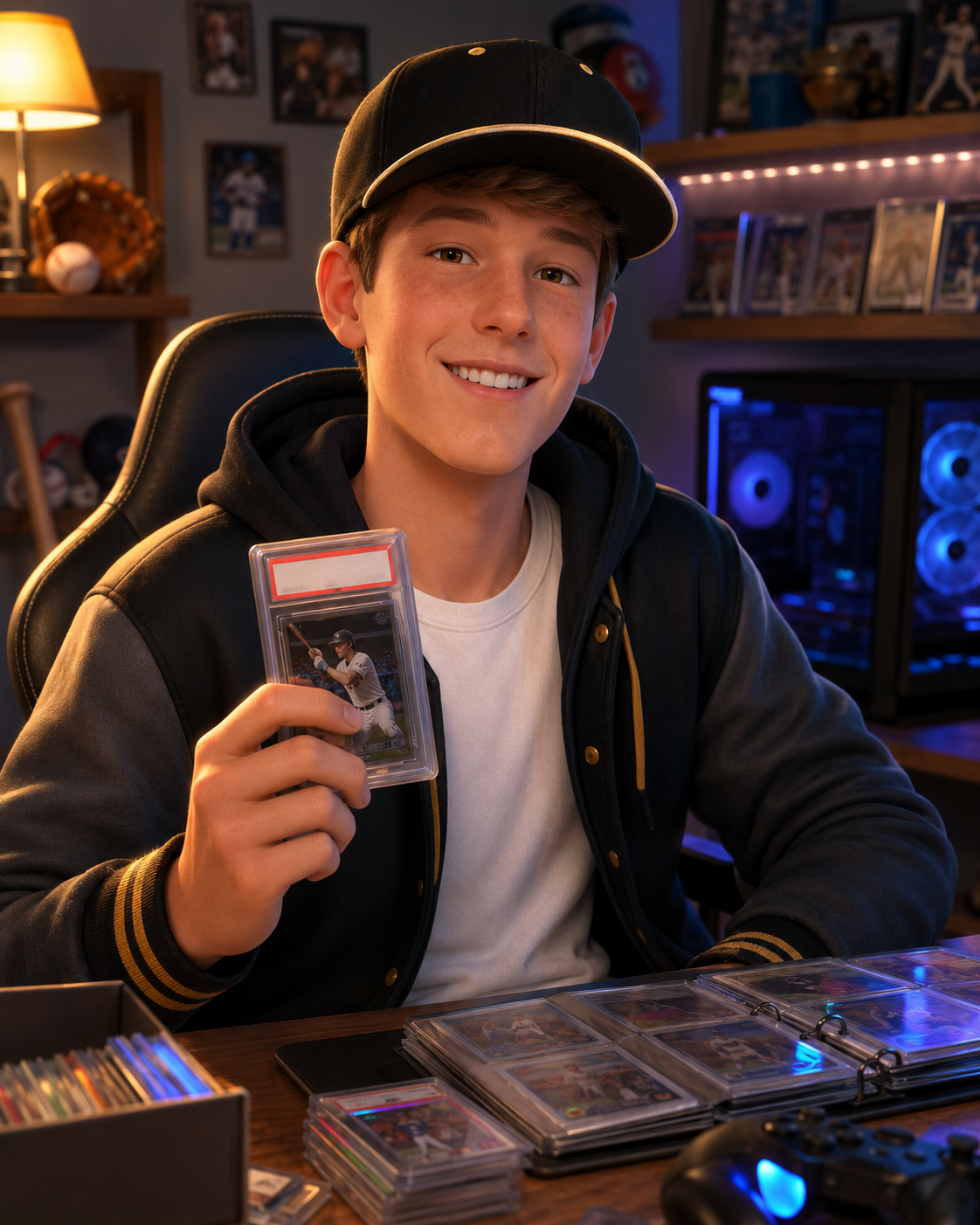
The postal service processes packages with machinery that does not know or care that there's a gem mint card inside. Rollers, sorters, drops of four feet onto conveyor belts — your envelope will experience all of it. I've shipped and received thousands of cards, and every damaged arrival I've ever seen traces back to packaging, not bad luck. Pack for the machine, not for the buyer.
THE STACK, IN ORDER
- 01 Build the sandwich
- 02 Obey the tape rules
- 03 Choose the right mailer
- 04 Ship slabs like raw glass
- 05 Weatherproof the inside
- 06 Photograph everything
- 07 Track, communicate, confirm
The sandwich and the seal
STEPS 01 – 03Build the sandwich
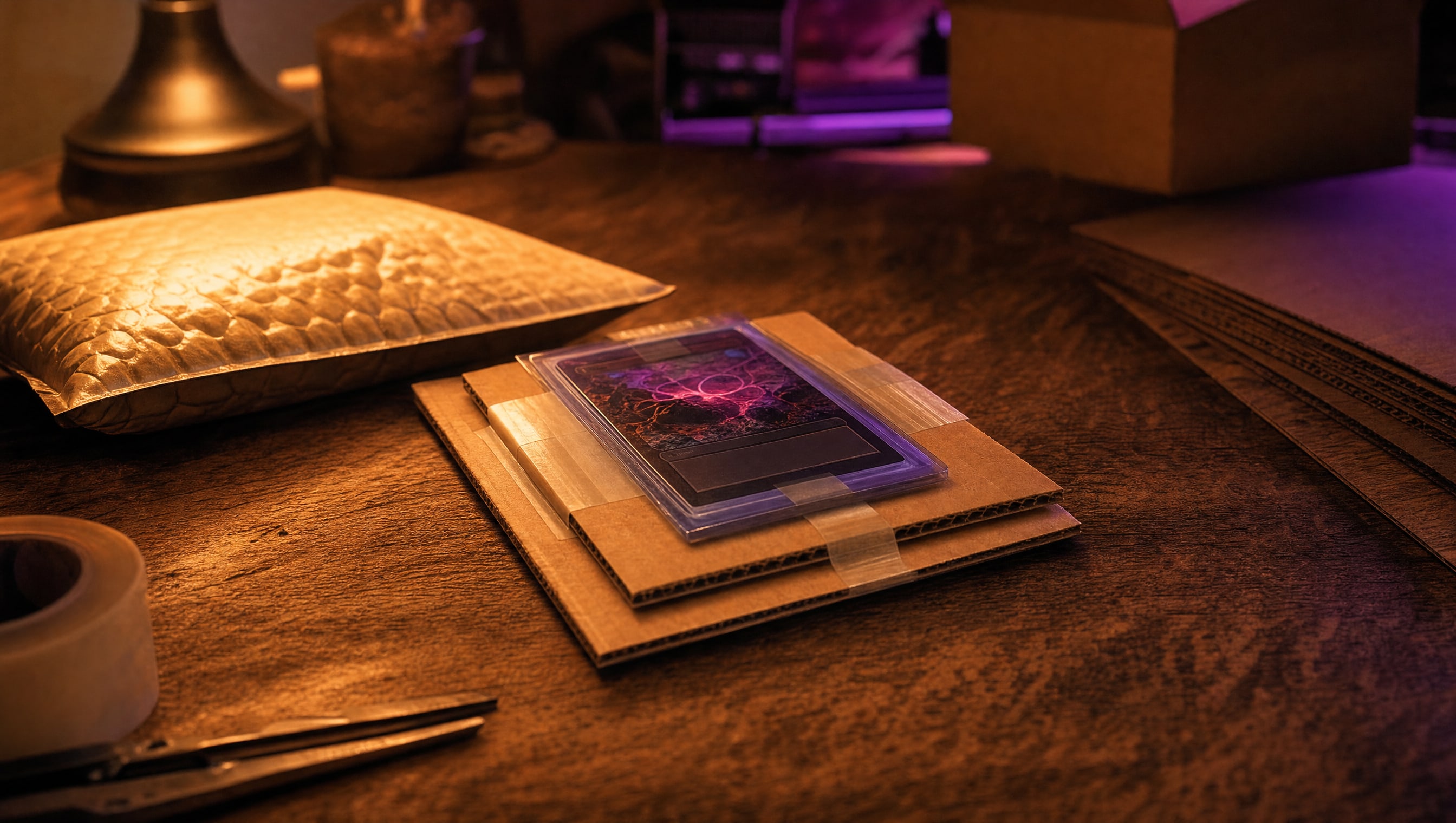
The core of safe card shipping is three layers. Card goes in a penny sleeve. Sleeved card goes into a 35pt toploader or Card Saver 1. That protected card gets taped between two pieces of rigid cardboard cut slightly larger than the toploader — the sandwich. The cardboard takes the bend force; the toploader takes the impact; the sleeve takes the friction.
A cereal box is not rigid cardboard. Use corrugated stock or chipboard pads. The test: try to flex the finished sandwich with your thumbs. If it flexes, the sorting machine will fold it.
Obey the tape rules
Tape is where good shipments go to die. Rule one: painter's tape or blue masking tape anywhere near the card holder, because buyers need to open it without a knife fight. Rule two: never, ever tape the toploader opening shut with packing tape — cards have been torn in half by buyers trying to free them. Tape the flap of a team bag over the toploader instead: the card slides into a team bag, the bag's adhesive strip seals it, done. Rule three: seal the outer mailer with real packing tape, generously, because that's the layer weather attacks.
Choose the right mailer for the value
My tiers. Under $20: sandwich inside a #000 bubble mailer, 4x8 inches, which costs about 25 cents in bulk. $20 to $250: same, plus tracking, always. Over $250: box, not mailer — a small corrugated box with the sandwich suspended in bubble wrap, because high-value cards deserve crush protection from all six sides. Over $750: box, signature confirmation, and insurance for the full sale amount.
Plain white envelopes are for bulk commons and absolutely nothing else. The moment a card matters, the machine-sorting risk of a PWE stops being worth the postage savings.
Slabs and weather
STEPS 04 – 05Ship slabs like they're raw glass
Graded cards crack. A slab arriving with a chipped corner or a cracked case is a returns nightmare even though the card inside is fine. Wrap the slab in one full layer of small-bubble wrap, then a second, tape it into a snug cocoon, and box it with padding on every side so it cannot shift. Two slabs never touch each other directly — bubble between them, always. I've received a One Piece Manga rare in a cracked case because someone shipped two slabs kissing in one mailer. Both cases cracked. Fifty cents of bubble wrap would have prevented it.
Weatherproof the inside
Mailers sit on porches in the rain and in trucks in August. The team bag over the toploader is your humidity seal; for anything over $100 I add a zip-top bag around the whole sandwich. It costs three cents and it means a soaked mailer delivers a dry card. Heat is the sneakier enemy: never leave outgoing packages in a hot car or mailbox for hours, because toploaders can warp and press texture into card surfaces at dashboard temperatures.
CASE FILE · THE TAPE RULE
"Rule two: never, ever tape the toploader opening shut with packing tape — cards have been torn in half by buyers trying to free them."
SPEC · THE MAILER TIERS
under $20: #000 bubble mailer
$20 – $250: plus tracking, always
over $250: box, not mailer
over $750: signature + insurance
The paper trail
STEPS 06 – 07Photograph everything before it ships
Before the mailer seals: photo of the card front and back in the holder, photo of the packed sandwich, photo of the sealed mailer with the label visible. Thirty seconds of camera work. This is your evidence for any dispute — condition claims, swap scams, damage claims with the carrier. In several years of selling across Magic, Pokémon, and sports cards, my photo folder has ended every dispute it entered, usually within one message.
Track, communicate, and confirm
Upload tracking the moment the label prints, message the buyer when it actually ships, and check delivery a day after it lands. Sellers treat this as customer service; it's actually risk management. Fast tracking uploads and proactive messages are what marketplaces look at when a claim gets filed, and buyers who feel informed almost never escalate. A twenty-second message has saved me from more headaches than any packaging material ever has.
+ THE KIT
The packing bench
Pack for the machine, not for the buyer.
SOME LINKS EARN IAN A COMMISSION. IT FUNDS THE REFERENCE BINDER.
Quick answers
Is a plain white envelope ever acceptable?
For a $3 card where the buyer paid a dollar for shipping, a sleeved card in a taped sandwich inside a PWE is a defensible standard, and half the hobby's bulk moves this way. Just know PWEs get machine-sorted, bent, and lost with no tracking. Value over $20, PWE is the wrong answer every time.
Do I really need insurance?
Carrier insurance is worth it above a few hundred dollars, and some marketplaces bake protection in below that. Read what your platform already covers before paying twice. For four-figure cards, insure for full value and require a signature — the $4 fee is nothing against the loss.
How do I ship internationally without disaster?
Same packaging, plus honest customs forms and buyer awareness that import fees are theirs. Tracking that hands off to the destination country's postal system is the minimum; for anything valuable, use a service with true end-to-end tracking. Budget two to six weeks and say so in the listing.
Every card you ship is your reputation in a 25-cent mailer — pack it like the machine is trying to grade it back down.
— IAN + CASE 05 CLOSED