 HOWTO: GAMING
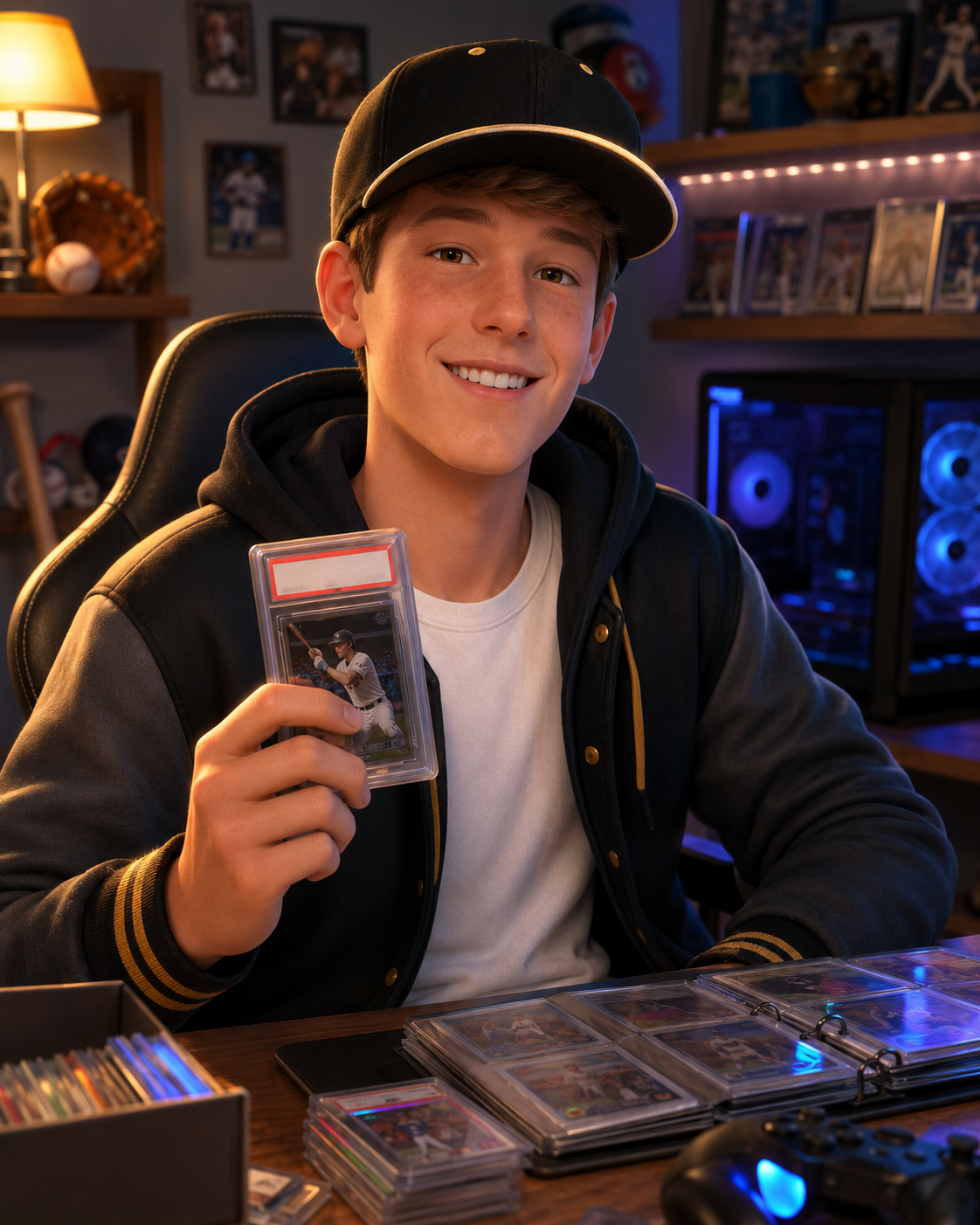
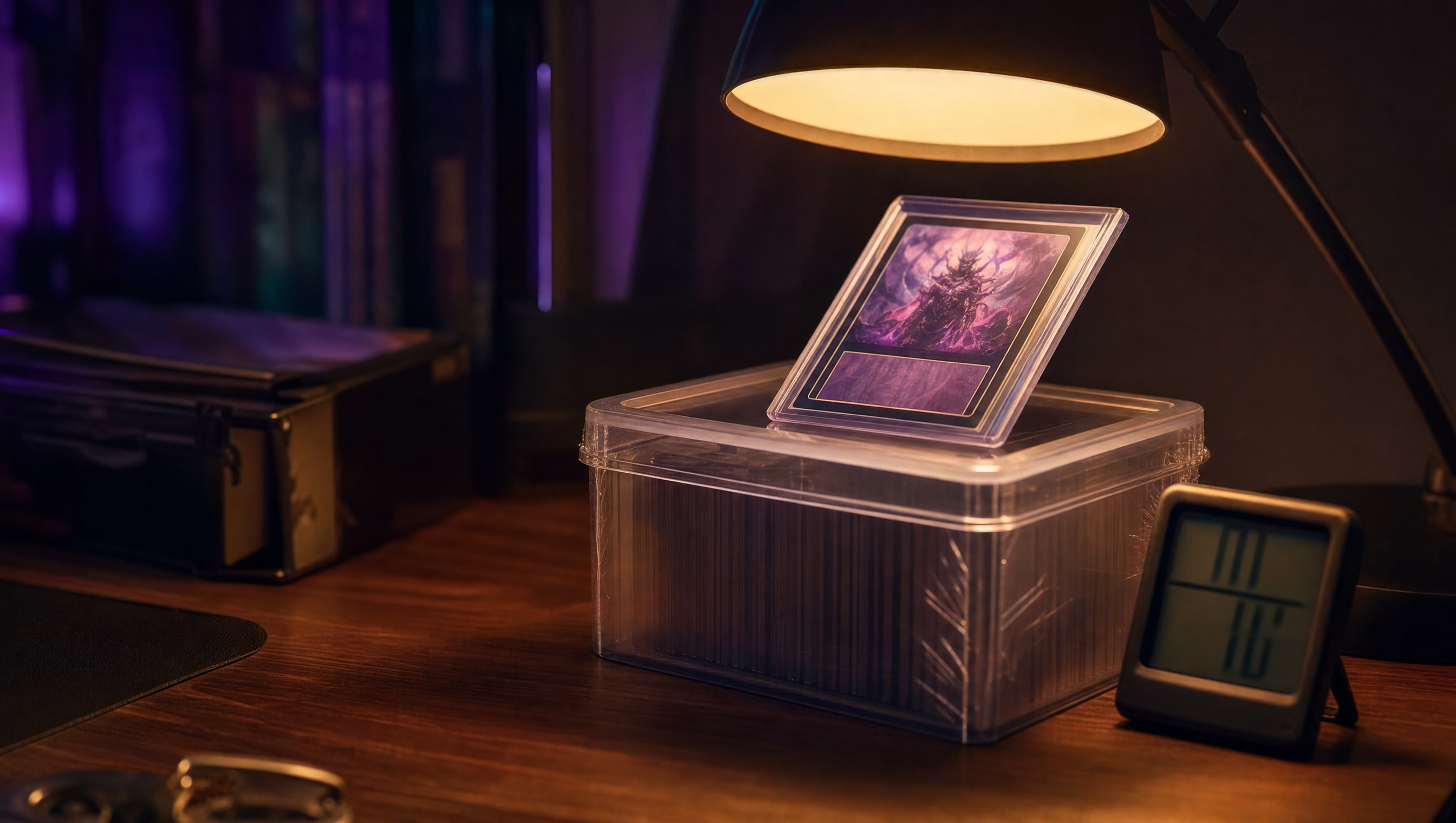
Cardboard is paper, and paper has enemies: water, light, heat, and friction. I've opened storage boxes from the 90s where a $400 card had fused to its neighbor because somebody stacked raw cards in a garage for two decades. Every card I care about sits in a protection stack that costs less than a dollar per card, and it will outlast me. Here's the whole system.
THE SYSTEM, IN ORDER
- 01 Sleeve everything, immediately, always
- 02 Match the holder to the card's value
- 03 Use binders correctly or not at all
- 04 Control humidity before it controls you
- 05 Keep light off your cardboard
- 06 Box the bulk with a system
- 07 Handle cards like a grader watches
The protection stack
SLEEVE → HOLDER → BINDERSleeve everything, immediately, always
The penny sleeve is the foundation of civilization. A hundred of them cost about two dollars, which prices protection at two cents per card. Any card worth more than a quarter goes into a penny sleeve the moment it leaves the pack, before it gets set on the table, before it gets shown to a friend. Surface scratches from a single slide across a tabletop can cost a modern holo two grade points, and grade points are money.
Sleeve orientation matters: opening up if it's going into a toploader, so the card can't slide out of both at once.
Match the holder to the card's value
My tiers, refined across six thousand cards:
Under $5: penny sleeve, into a sorted box. $5 to $50: penny sleeve plus a standard 35pt toploader. $50 to $200: penny sleeve plus a 35pt magnetic one-touch, which looks better and seals tighter. Over $200: that's a grading conversation, and until it ships, it lives in a Card Saver 1 inside a team bag.
Thickness matters more than people think. Standard cards are 35pt. Patch cards and some sports relics run 55pt to 180pt, and jamming a thick card into a thin holder creases edges. Measure once, buy the right point size.
Use binders correctly or not at all
Binders are for collections you actually look at: set builds, your Lorcana ink-color pages, the Yu-Gi-Oh deck history you'll never sell. Two non-negotiable rules. First, side-loading pages only — top-loading pages let cards slide out and guillotine themselves on the pocket edge. Second, zippered or strap-closed binders stored upright on a shelf like books, never stacked flat, because stacked binders press pocket texture into card surfaces. That texture transfer is a real grade-killer on soft vintage stock.
D-ring binders beat O-rings if you must use a ring binder at all, but honestly: buy a proper side-loading zip binder, nine pockets, and stop donating grade points to gravity.
Water, light, heat
PAPER'S ENEMIESControl humidity before it controls you
Cards want 45% to 55% relative humidity. Above 65%, they absorb moisture, warp, and invite mold. Below 35%, they dry out and get brittle, and holofoil layers can start to separate on older cards. A $10 digital hygrometer tells you what your storage room is doing. If the number scares you, silica gel packs inside sealed bins pull it down, and rechargeable silica canisters last years.
The classic failure is the attic or garage, where humidity swings 40 points between seasons. Cards ride those swings by curling. Interior closet, main floor, steady temperature — that's the address your collection wants.
Keep light off your cardboard
UV fades ink, and it doesn't announce itself; it just quietly steals saturation over months. Direct sunlight can visibly fade a card in a single summer. Display cases near windows are how vintage Magic cards end up with washed-out borders. If you display, use UV-blocking one-touches or UV acrylic cases, keep displays away from windows, and rotate what's out. My display shelf gets a rotation every quarter; the binder-dwellers take their turn in the light. My colleague Poppy has an entire guide on dust-and-UV-proofing display shelves from the figure side of the house, and every word of it applies to slabs too.
Box the bulk with a system
Bulk deserves respect too, because today's bulk is sometimes tomorrow's spike. Cardboard storage boxes — 800-count, 3200-count — are cheap and stackable. Sort by set, label the end of every box with set and date, and store boxes off the floor. Off the floor is non-negotiable: the floor is where water goes when a pipe fails. A plastic shelf riser costs $15 and has saved entire collections.
For long-term bulk, plastic bins with gasket lids beat cardboard in any room where humidity wanders, and a silica pack per bin finishes the job.
CASE FILE · THE GARAGE BOX
I've opened storage boxes from the 90s where a $400 card had fused to its neighbor because somebody stacked raw cards in a garage for two decades.
SPEC · THE NUMBERS
standard cards: 35pt
patch + relics: 55pt – 180pt
humidity target: 45% – 55% RH
danger: < 35% or > 65%
In your hands
THE LAST TEN SECONDSHandle cards like a grader watches
Storage includes the ten seconds a card spends in your hands. Clean, dry hands, card held by the edges, over a table, never over a floor. When friends want to see the good stuff, it stays in the one-touch. Nobody's feelings have ever been hurt by "you can hold the case." The oil from one thumbprint on a raw holo surface is permanent.
SPEC · WHAT THE STACK COSTS
penny sleeve: 2¢ per card
digital hygrometer: ~$10
plastic shelf riser: $15
fire-rated safe: $60 – $150
+ THE KIT
The storage stack
Every card I care about sits in a protection stack that costs less than a dollar per card, and it will outlast me.
SOME LINKS EARN IAN A COMMISSION. IT FUNDS THE SILICA BUDGET.
Quick Answers
Do sleeves and toploaders damage cards over time?
Quality holders from real brands are acid-free and inert, and cards can live in them for decades. The damage stories come from off-brand PVC sleeves, which can leach and stick to surfaces over years. Buy known brands; the savings on mystery plastic is pennies and the risk is the card.
Should I keep cards in the original booster packs or tins?
Sealed product is its own collectible category, so unopened packs can stay sealed. But loose cards stored in tins and pack wrappers slide around and scratch. If it's opened, it gets sleeved, no exceptions.
Is a fireproof safe worth it?
For your top-end cards, a fire-rated document safe from $60 to $150 is reasonable peace of mind, with a hygrometer and silica inside because safes trap moisture. For six-figure collections, a bank deposit box costs less per year than one grading fee.
Cards don't die of old age — they die of neglect. Protect the cardboard and it will outlive us both.
— IAN + CASE 03 CLOSED