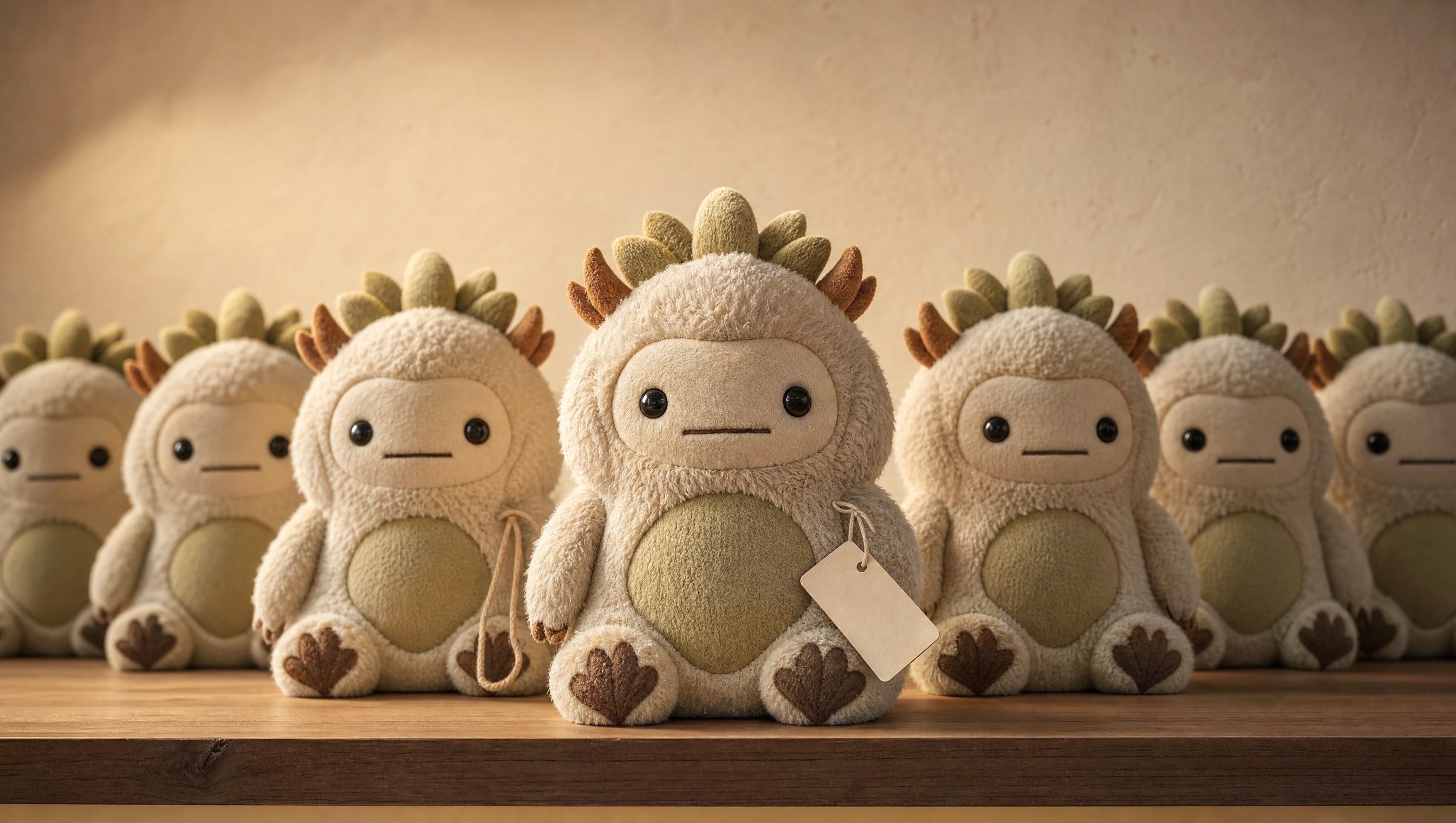
01
How to read a plush swing tag end to end
Every printed zone in the order it tells you something: maker, series, edition, date, standards, stock number.
GUIDE · 1400 WORDS
 How To: Gaming
THE HOW TO CO. — EDITION 10
How To: Gaming
THE HOW TO CO. — EDITION 10
A soft toy carries no serial number and sits in no grading slab. What it has instead is a run that closed, a tag that either survived or did not, and fibre that remembers every room it has been in.
CASE 02 · OPENED
A limited plush and a rare plush are two different objects. One is a decision taken at the factory. The other is what is left after ten years of shelves, sunlight and hands.
Scarcity on this shelf is manufactured on purpose and then written down. A run is opened, a quantity is made, the run is closed, and the tooling moves to the next line. Almost everything that happens to the price afterwards follows from that single decision — how many, and whether the maker ever went back for a second pass.
Which is why the reissue is the thing to watch, not the counterfeit. A fake is caught by stitch density, print registration and tag stock: it is a worse object trying to pass. A legitimate second run is caught by none of those, because it is the same object, made again — and for anyone who was buying the count rather than the piece, it quietly removes the reason they bought.
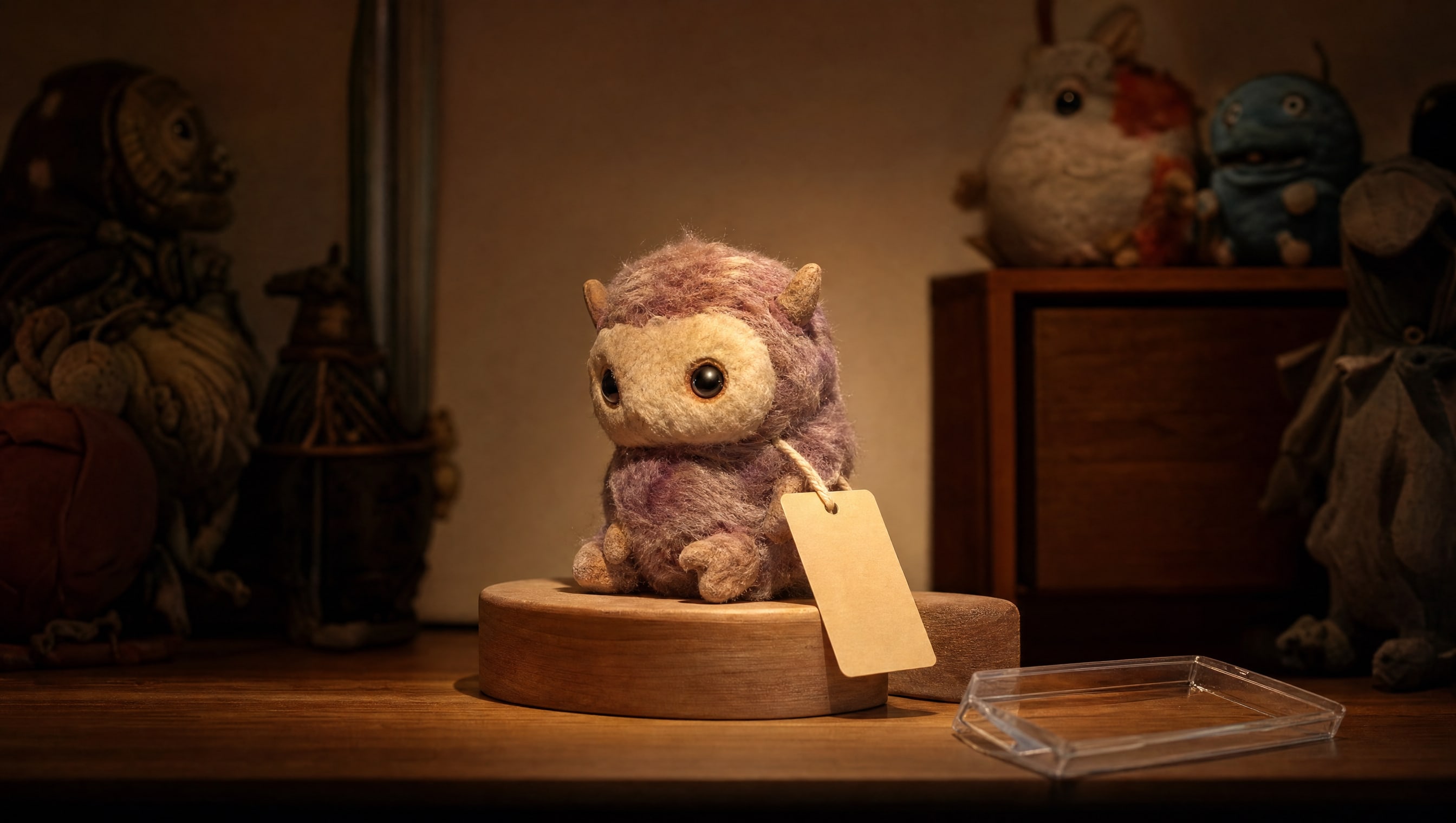
The swing tag is the run's certificate. It carries the maker's mark, the series, the edition line, the date code, the compliance block and the stock number, and it is the only part of a soft toy that states in print what the toy is. It is also the part designed to be cut off. That is why a tagged example and an untagged one are two listings, not one listing in two conditions.
Condition then splits in two, and the halves do not move together. The pile is what the room did: matting, pilling, the beige a south window leaves in white fibre. The tag is what the owner did: the crease, the biro, the missing cord. A conservator would call the first deterioration and the second loss, and would treat them as separate problems. So does the market.
THE DETAIL
A hundred millimetres of folded card on a cotton cord, and the only document a plush ever comes with. Seven zones are printed on it and six of them are structural — they say which family the piece belongs to, how many were made, when, under whose safety mark, and against which stock number it will be searched for years later. The seventh is the hole it hangs by, which is where the document fails first. Underneath, the same object graded: tag and pile scored apart, plotted by how much of the original survives.
CONDITION · TAG AND PILE, SCORED APART
FROM THE CURATOR
When two of the same piece surface in a week I barely look at the fur. I look at the cord, the crease, and whether somebody has written a price on the back of the tag in biro. Fibre can be brushed most of the way back. A tag folded into a drawer for six years cannot be unfolded, and it is the only part of a limited run that says in print what the run was.
BY POPPY — CLASS: CURATOR · THEPINKPIPER.GG
5 PIECES · IN THE ARCHIVE
The pieces commissioned for this case. Titles are set here before they are written, so the case shows its shape — nothing links yet, because a label pointing at an empty case is worse than a label that says wait.
01
Every printed zone in the order it tells you something: maker, series, edition, date, standards, stock number.
GUIDE · 1400 WORDS
02
Announcement, run size, window and region — the four things a resale listing almost never says out loud.
EXPLAINER · 1100 WORDS
03
Tag and pile counted apart, and the household light that flatters both of them in a photograph.
GUIDE · 1200 WORDS
04
Rigid protectors, cord stress at the grommet, and the one drawer that undoes all of it.
HOW-TO · 900 WORDS
05
What to do when nothing has sold in a year and the only number in front of you is somebody else’s ask.
ESSAY · 1000 WORDS
SHELF 03 / 07 · PLUSH
Every chapter in this region is a bay on this wall. This one is 03. Back to the wall to walk the rest.