01
How to tell a licensed plush from a bootleg in one photo
What to ask a seller to photograph, and the two frames that end the question before money moves.
BY POPPY · 6 MIN
 How To: Gaming
THE HOW TO CO. — EDITION 10
How To: Gaming
THE HOW TO CO. — EDITION 10
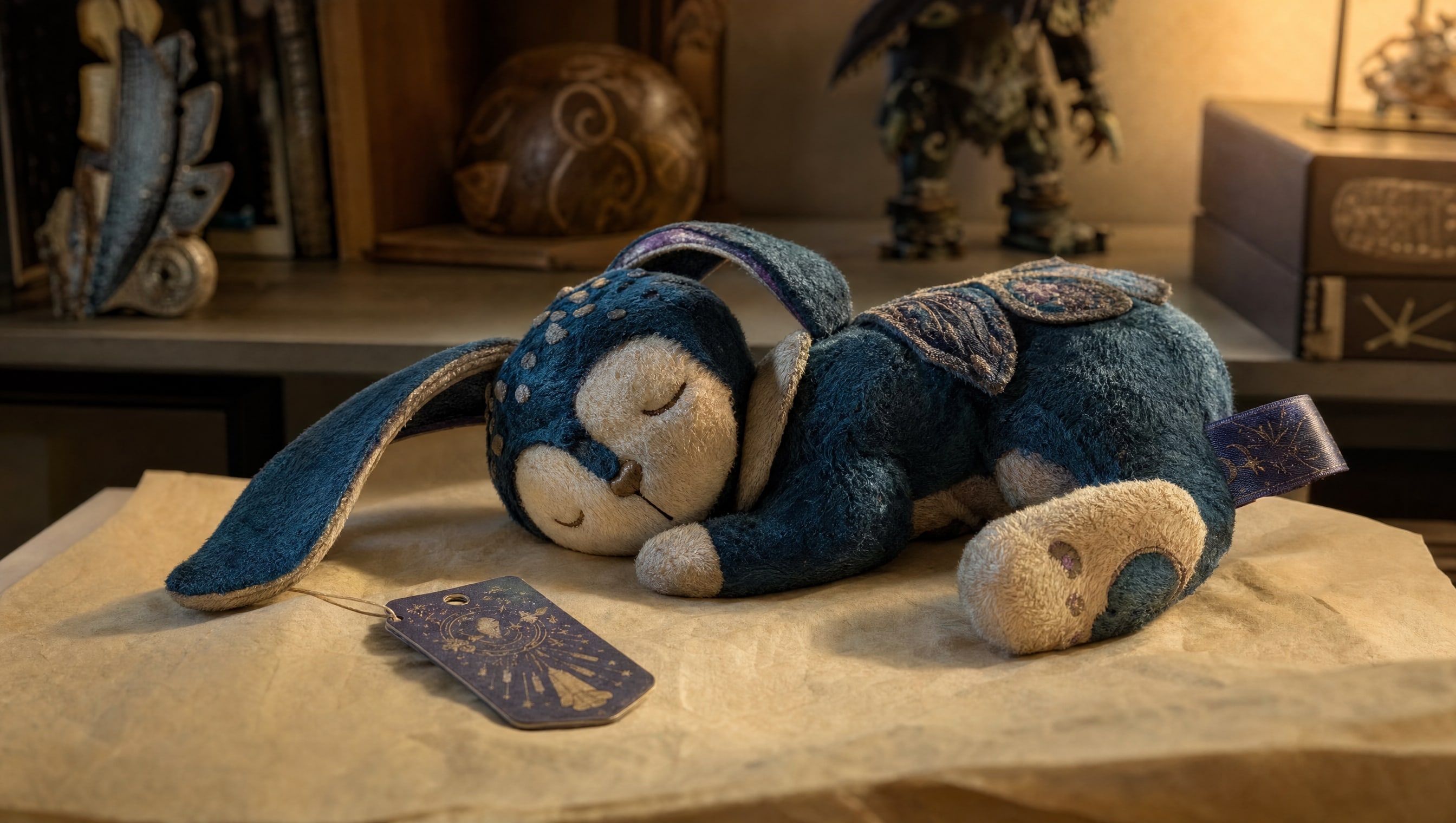
Three arrangements share this case — licensed and sold, licensed and won, and neither. The face is drawn from the same reference art in all three, which is exactly why it settles nothing.
THE INTRODUCTION
Official, prize, bootleg. Told apart by the tag, the build and the scale — never by the face.
Every soft toy in this case was made under one of three arrangements, and none of them is visible from the front. A retail line is licensed and sold. A prize line is licensed and won. A bootleg is neither, and it works from the same reference art as the other two. That is why the face decides nothing: it is the one part everybody has, and the one part every listing photograph shows.
The prize lines are the largest group here and the one collectors outside Japan meet last. They are made for crane machines, shipped to arcades, and marked as not for retail sale — genuine licensed goods that were simply never given a price. They are also built to an arcade's margin. Flatter fill, longer stitch, less work in a face than the retail figure of the same character gets. A prize plush sitting in a shop is a resale, not a fake, and it should not be priced as though the machine were the rarity.
What a bootleg cannot afford is everything behind the artwork. Tag stock runs thin and the print on it sits slightly out of register. The licence line is vague, or names a company that does not exist, or is missing entirely. Stitch density drops around the eyes and mouth, which is where a licensed factory spends its time, and the dye lot drifts off the character's own colours by enough that one honest side-by-side photograph ends the argument.
Size is the third thing, and the one a photograph destroys outright. Lines do not run at a height somebody picked per character — they run at fixed classes, and the classes repeat across the whole line. Cropped to a phone screen a prize and a jumbo are the same object. Set against a real scale they are not remotely the same purchase.
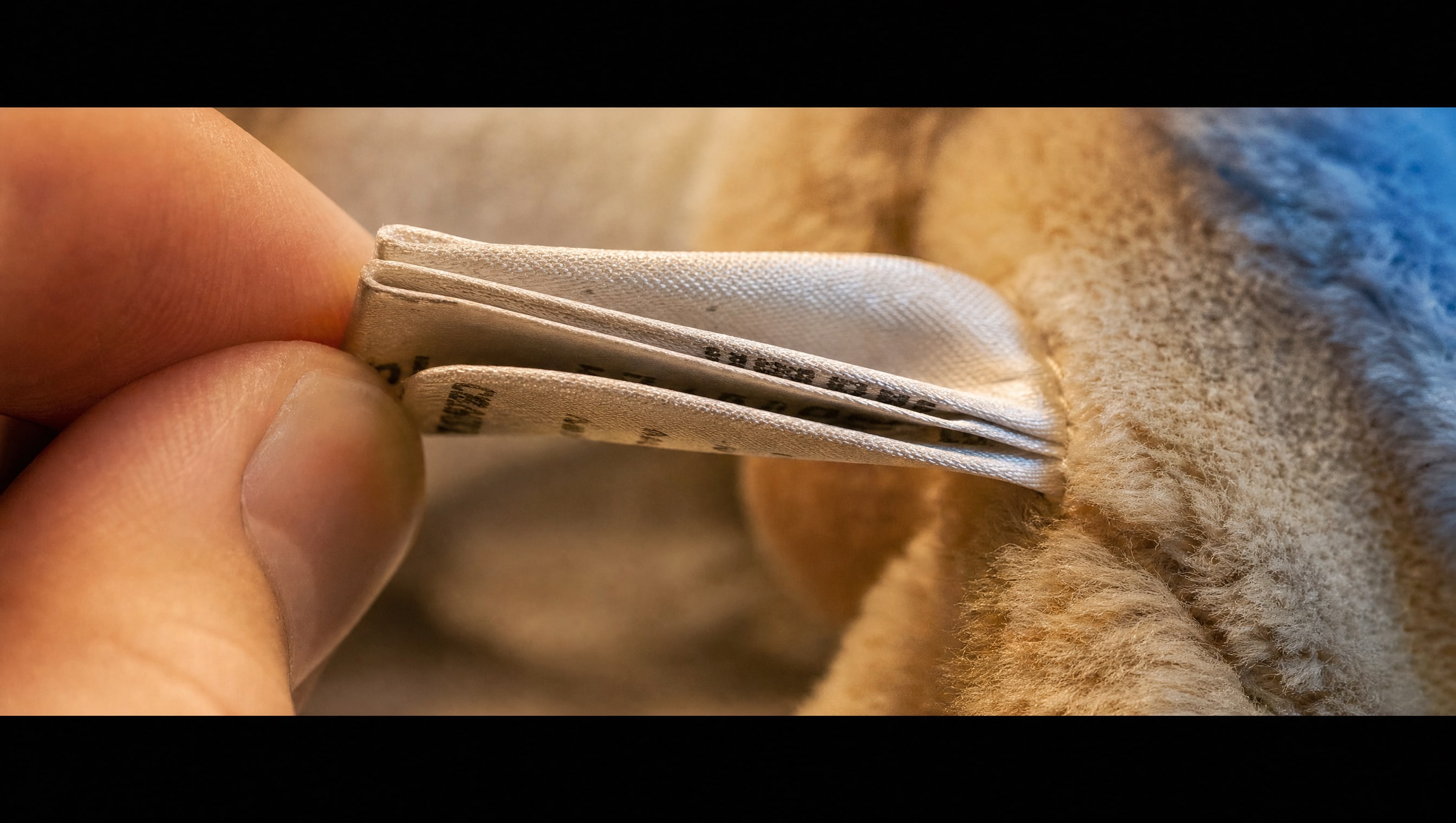
THE DETAIL
One invented character, three class heights, one centimetre axis. This is the fact a listing photograph cannot carry: every plush ever posted online is cropped to the same width, and a jumbo is very nearly three of the prize you were comparing it against.
FOUR CHECKS · IN ORDER
A licensed factory pays for the right to sew the character and then prints the proof on four millimetres of satin. Read it in this order — cheapest thing to fake last.
5 PIECES · IN THE ARCHIVE
The archive behind this label. Titles are set and the pieces are being written — nothing here links yet, because a label pointing at an empty case is worse than a label that says wait.
01
What to ask a seller to photograph, and the two frames that end the question before money moves.
BY POPPY · 6 MIN
02
The not-for-sale marking, the maker line and the run date — and which of the three actually matters.
BY IRIS · 5 MIN
03
What a machine-won toy is worth once shipping is on it, and the point where a proxy stops being cheap.
BY IRIS · 7 MIN
04
Reading a listing back to its class height, and why a measurement in the photo means nothing without one.
BY POPPY · 4 MIN
05
A re-run is a licensed run. The tell is the tag date, not the stitching — and the price should say so.
BY POPPY · 5 MIN
SHELF 03 / 07 · PLUSH · CASE 03 / 03
Every chapter in this region is a bay on this wall. Plush is bay 03, and this page is the third of its three cases: shelf 03, case 03. Back to the wall to walk the rest.