01
How to sort a big set before you open bag one
Shape first, colour second, and the tray layout that lets a hand find a part without the eye.
GUIDE · 1300 WORDS
 How To: Gaming
THE HOW TO CO. — EDITION 10
How To: Gaming
THE HOW TO CO. — EDITION 10
Three thousand pieces is not a long build. It is eight short ones, boxed together with the joins already marked — and almost all of the time you will spend on it goes on looking, not on building.
CASE 02 · OPENED
Nobody abandons a set because it was too hard. They abandon it because they spent forty minutes looking for one grey plate at half past eleven on a Tuesday.
The search is the cost. On a set of any size, the time is not going on assembly — placing a brick takes about a second and a half — it is going on finding the brick, and finding scales with the size of the pile in front of you. Which is why tipping a numbered bag straight onto the table is the most expensive thing you can do to an evening: you have just made the haystack as large as it can possibly be.
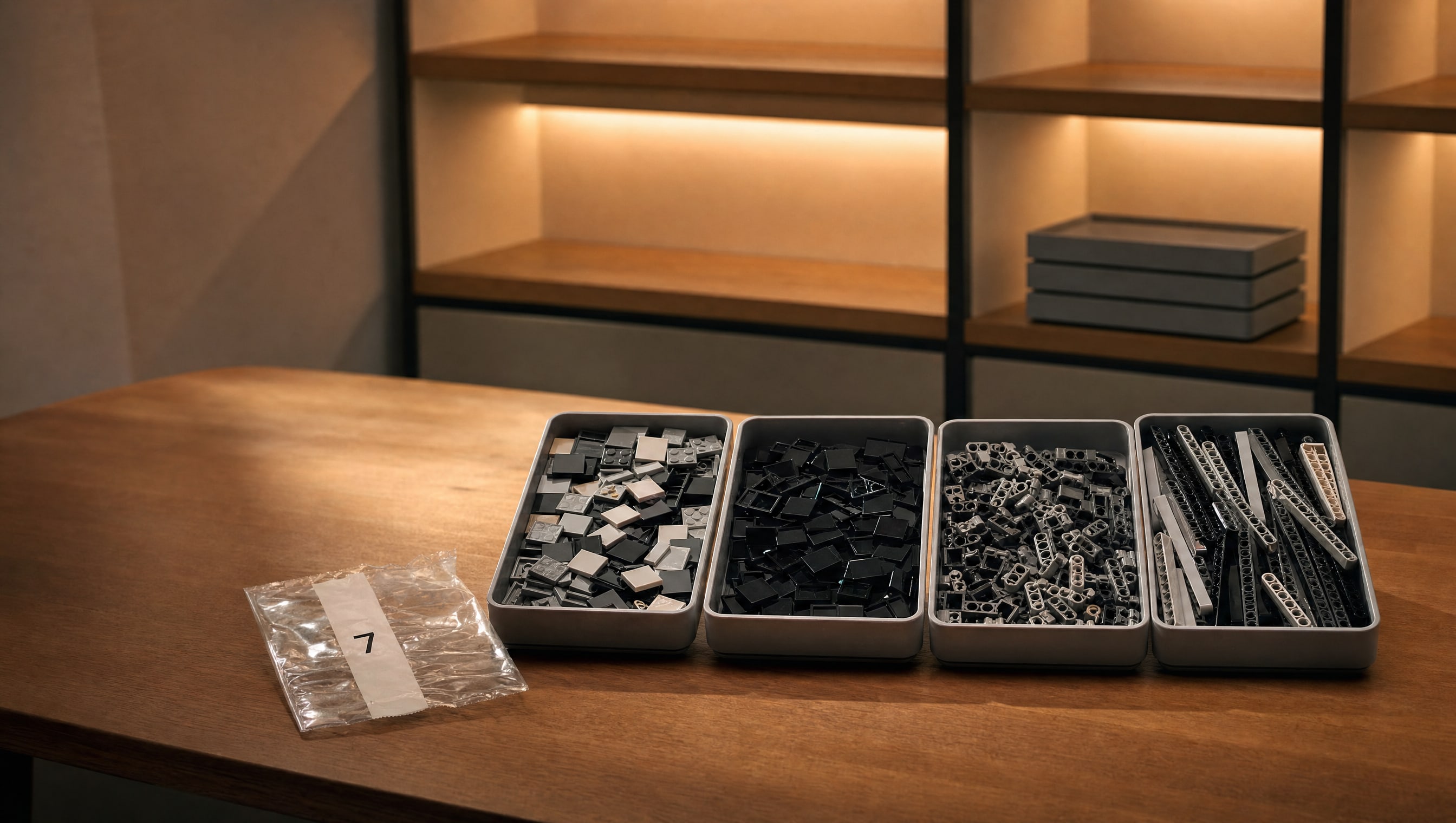
Sort by shape first and colour second. A tray holding every 1×2 in the bag can be worked by touch; a tray holding everything blue has to be read piece by piece, because blue is not a shape and your hand cannot feel it. The exception proves it — a roof bag or a baseplate frame is mostly one colour anyway, and there colour and shape are the same sort.
Sort no further than the bag you have open. The designer has already done the coarse sort for you and put a number on it; re-sorting the whole box into a rainbow before bag one is a different hobby, and a good one, but it is not this build.
Then build in the units you were given. A numbered bag is a sitting: it has a beginning, an end, and a model that stands up on its own when you get there. Stopping halfway through one is what leaves you, a week later, with a tray of unlabelled parts and a page you cannot remember starting — and that is the pause most unfinished sets never come back from.
The rest is small and unglamorous. Work over a shallow tray with a lip, never a carpet. Turn the model, not your head, so the page and the piece agree about which way is front. Check the step before you turn the page: a brick placed one stud out is always found four steps later, and it costs the four steps back, not the one.
And keep the spares. The factory adds an extra of the tiny parts because tiny parts go under sofas, and the day you want one is the day the set has been out of production for three years. They go back in the box, in their own bag, with the instruction book — which is the other thing worth more than people think.
THE DETAIL
An invented three-thousand-piece modular, unrolled as a road: one unit of length is one minute, so every stretch below is as long as the bag actually takes. The sort is hatched at the head, because it is a stage of the build and not a chore before it. Each bag carries one tick per twenty pieces, which makes the tick spacing a real reading of pace — the short dense runs are the repetitive courses, and the long sparse ones are the bags of small trim that quietly eat a Sunday. The dashed continuation along the bottom is the same build with the parts left in the bag. That hour and forty is not really spent at the end; it is spread through all eight bags as looking. Gathered up, it is a length, and a length can be measured.
THE EVENING · EVERY BAR ON ONE SCALE
SORTED · 6 H 35NOT SORTED · 8 H 15
FROM THE CURATOR
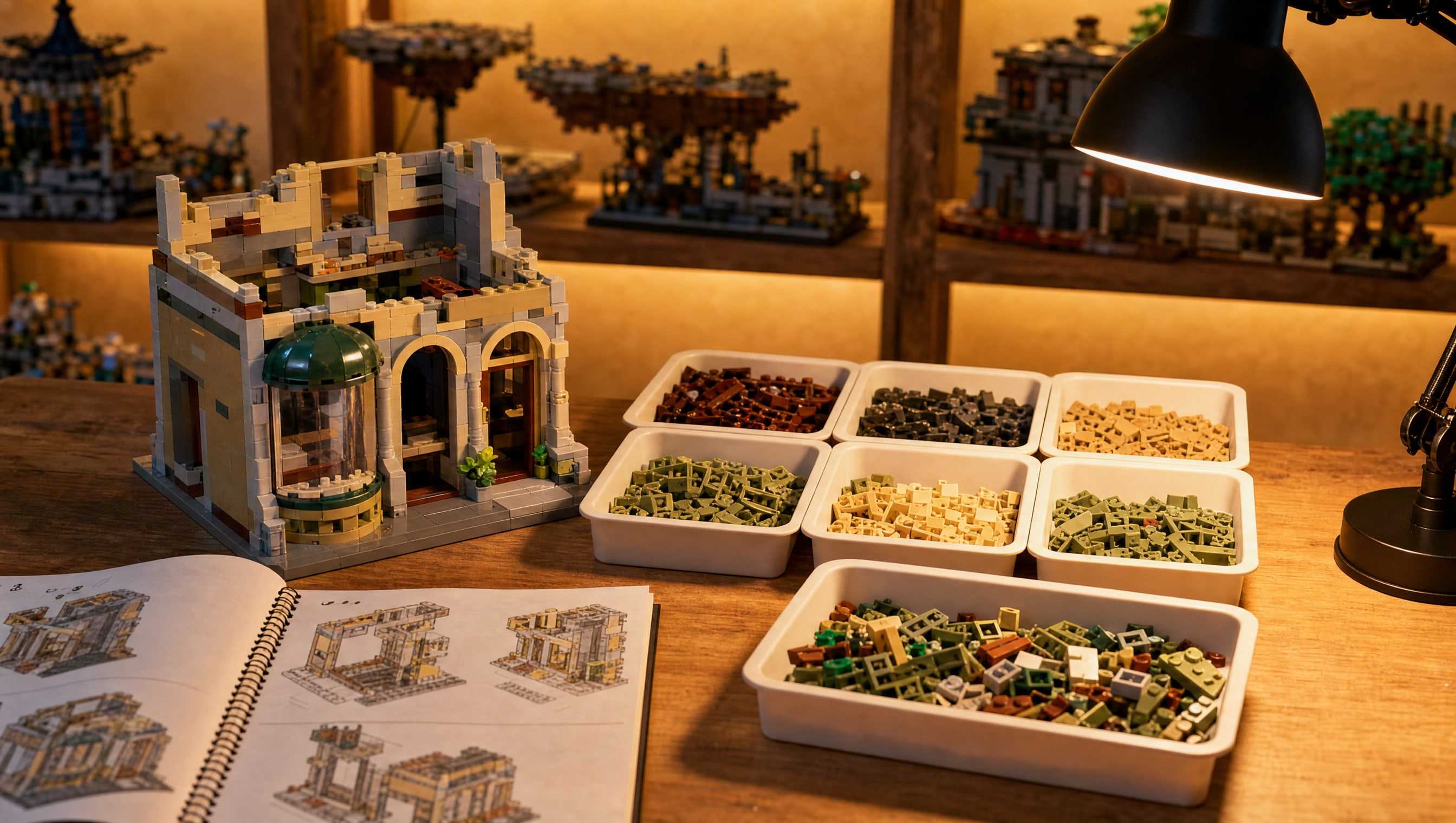
Six trays, a lamp, the book open and flat, and one bag emptied into the trays by shape before a single brick goes on. It takes twenty minutes and it feels like wasted time every single occasion, and then the bag builds in an hour instead of two. The sets I never finished are all sets I started at eleven at night with the whole box on the table, and every one of them stopped in the middle of a bag.
BY POPPY — CLASS: CURATOR · THEPINKPIPER.GG
5 PIECES · IN THE ARCHIVE
The pieces commissioned for this case. Titles are set here before they are written, so the case shows its shape — nothing links yet, because a label pointing at an empty case is worse than a label that says wait.
01
Shape first, colour second, and the tray layout that lets a hand find a part without the eye.
GUIDE · 1300 WORDS
02
Why the bag seam is the only safe pause, and what to do when the evening ends mid-page anyway.
HOW-TO · 1000 WORDS
03
Raking light along the floor, the sofa rule, and when to stop looking and use a spare.
HOW-TO · 800 WORDS
04
Overlapping courses, the hidden plate, and the joins that fail first on a wide façade.
GUIDE · 1100 WORDS
05
One bag per set, back in the box with the book — and why the book is worth more than the spares.
HOW-TO · 900 WORDS
SHELF 05 / 07 · LEGO
Every chapter in this region is a bay on this wall. This one is 05. Back to the wall to walk the rest.