01
How to read a campaign page for the parts that matter
The delivery estimate, the component list, and the one paragraph that says whether this team has ever shipped anything.
BY POPPY · 8 MIN
 How To: Gaming
THE HOW TO CO. — EDITION 10
How To: Gaming
THE HOW TO CO. — EDITION 10
Deluxe, retail, or wait. Three boxes of the same game, one of which arrives a year and a half from now — and only some of the difference between them is a difference at the table.
BEFORE YOU BACK ANYTHING
A campaign is not an edition. It is a printing, sold eighteen months early.
Nothing about crowdfunding a board game is unusual once you call it by its real name: you are pre-ordering the first print run, at roughly retail, and paying for it a year and a half before it exists. That is a perfectly reasonable thing to do — the run happens because enough people did it. What goes wrong is that the campaign page is written as though you were choosing between EDITIONS, when you are only ever choosing between PRINTINGS. Two printings of one game differ in a small number of ways that matter and a large number that photograph well, and the page you are reading is designed so you cannot tell which is which.
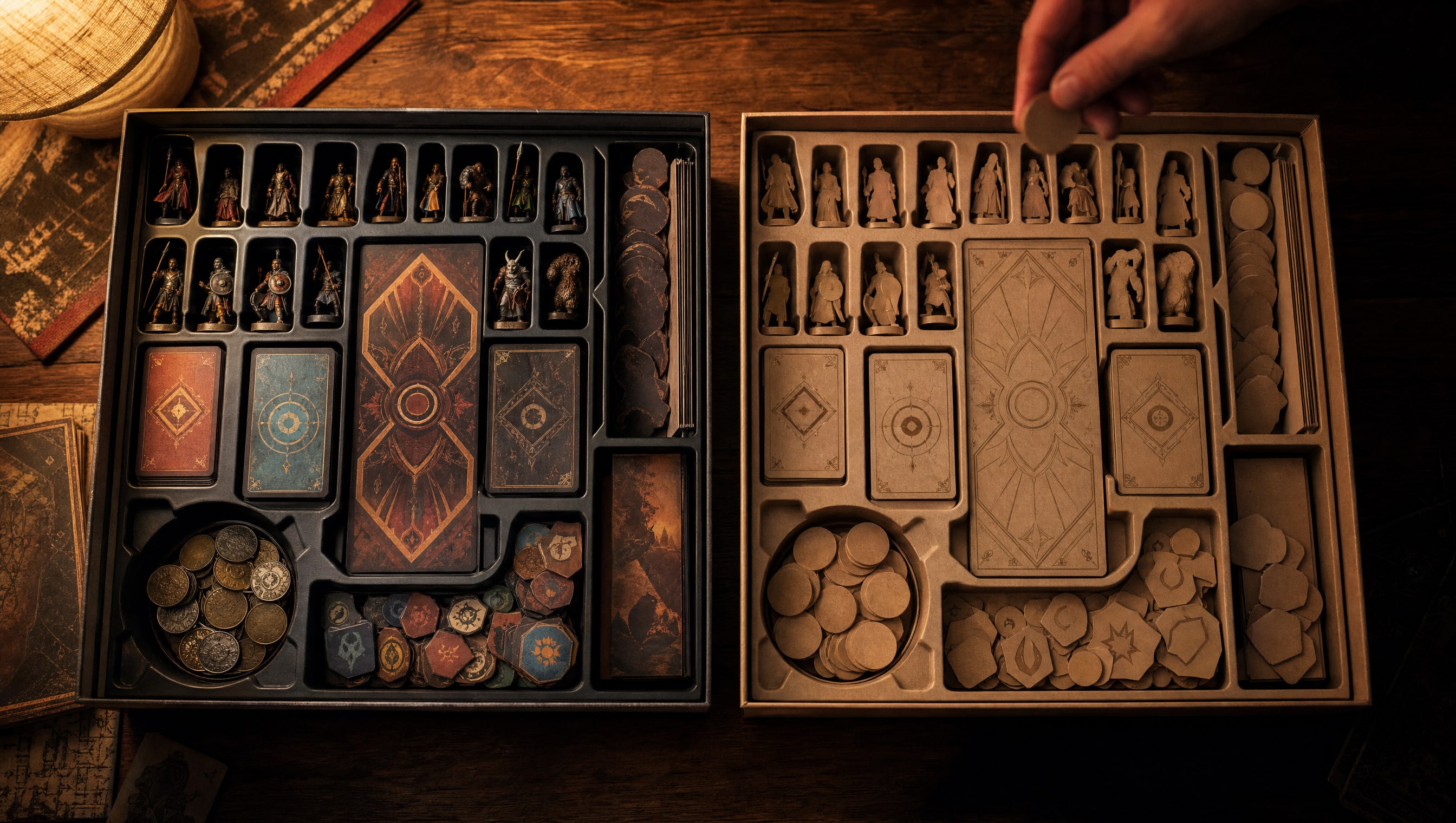
WHAT MATTERS
Errata folded into the rulebook, a card reworded, a token that stops being ambiguous. This is the only difference between two boxes that will ever change how an argument at your table ends.
A module that adds decisions — a new role, a new track, a fifth player. If it comes with a page in the rulebook it is a different game; if it comes with a sculpt it is a different photograph.
Not glamour. A tray that lets you set up in four minutes instead of eleven is the upgrade you will feel every single time the box comes off the shelf.
A game that has been printed twice is a game with a community, replacement parts and answers on the forums. A game that never reprints is a game you own alone.
WHAT IS MARKETING
The same card doing the same thing, wearing a different picture. Lovely. Worth exactly what looking at it is worth to you, which for some people is a lot and for most is nothing.
Heavier, colder, slower to count, and reliably the first component a group quietly stops using by the third play. Buy them because you want them, not because a stretch goal unlocked them.
A sculpt where a cardboard disc was. It changes the table and not one decision on it — and it is usually the single largest line in the shipping weight you paid for.
It means exclusive to that printing, not exclusive forever. A great deal of it turns up two years later in a retail box, an expansion, or a reprint campaign anyone can back.
THE DETAIL
One invented game, HARBOURWRIGHT, followed from the day its campaign went live. One axis is forty-eight months; the line running against it is what a campaign copy fetches secondhand, as a percentage of what a backer paid. For the first nineteen months it is dashed and lies flat on the hundred, because there is nothing to sell — only a promise with a delivery date on it, and a promise is worth the price on it. Then the boxes arrive, the copies are the only ones on earth, and for about seven months a backer is holding something worth close to double. The month retail lands, that stops. By month thirty-one the copy is worth less than it cost, and it stays there. The premium is real, it is short, and almost nobody who is planning to keep the game ever collects it.
5 PIECES · ON THE TABLE
What this path is holding room for. Nothing here is a link yet — these are the pieces being written for this space, and a door that opens onto nothing costs you a click to find out.
01
The delivery estimate, the component list, and the one paragraph that says whether this team has ever shipped anything.
BY POPPY · 8 MIN
02
Which upgrades change a decision at the table, and which ones only change the photograph of it.
BY POPPY · 6 MIN
03
What eighteen months costs you, what the exclusives are honestly worth, and when waiting is the better game.
BY IRIS · 7 MIN
04
Copyright lines, box codes and errata sheets — the three places a printing quietly identifies itself.
BY IRIS · 5 MIN
05
The window is narrower than the forums think, and it shuts the week the retail printing lands.
BY POPPY · 6 MIN
FROM THE CURATOR
The four I kept are the four that got played, and every one of them would have played exactly the same out of the retail box eight months later for rather less money. What I actually bought, eleven times, was the feeling of being early — which is a real thing to want and worth naming honestly rather than dressing up as value. So the rule now is short: I back a game if I would still buy it at full retail, in the plain box, with cardboard where the metal was. If the answer is no, the exclusives were doing the deciding, and the exclusives have never once changed a game I was playing.
BY POPPY — CLASS: CURATOR · THEPINKPIPER.GG
SPACE 13 · COLLECTING & CARE · PATH 03 OF 03
CHAPTERS ON THIS BOARD
This chapter is space 13, and this page is the third of its three paths — the last door on the space. Back to the board to roll for another.