 How To: Gaming
THE HOW TO CO. — EDITION 10
How To: Gaming
THE HOW TO CO. — EDITION 10
How To: Gaming
THE HOW TO CO. — EDITION 10
How To: Gaming
THE HOW TO CO. — EDITION 10
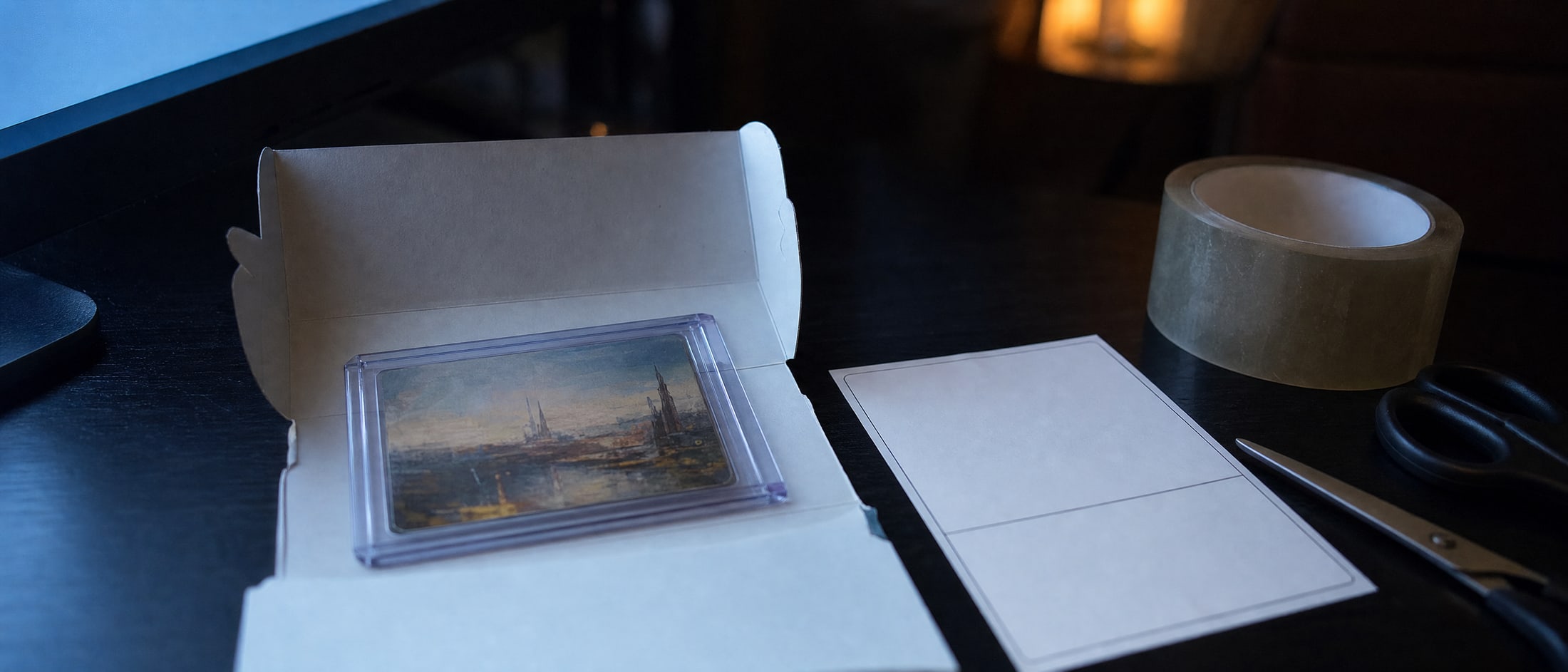
◆ CARD VALUES · THE SECOND PAIR · LISTED AGAINST LANDED
The headline figure is the last moment the whole amount is yours. Everything after it is a short, entirely public list of deductions that almost nobody adds up until the second or third time they sell something.
Selling is the only part of this hobby with an invoice at the end of it — and the invoice is the first honest valuation most people ever see.
Nothing here is hidden or sharp practice. Every deduction on this page is published, agreed to in advance and visible on a statement. What is missing is anybody adding them together in one place, in order, so that the number at the bottom can be compared with the number at the top. That comparison changes how you price, what you bother listing at all, and how much of a collection you sell as a lot.
The figure you chose, the one in the title, and the only one anybody discusses. It is also the last time in this process that the whole amount is yours.
After the platform, the payment, the postage and the packing. Nobody is hiding it — it is simply never printed anywhere as a single figure.
You set it under the run of recent sales and it goes almost immediately. The discount is real and it is the price of being finished.
You set it at the top of the range and wait for the one person who wants exactly that card. It may be months. Both of these are correct; they are answers to different questions.
Its own listing, its own photographs, its own postage. Worth it above a certain value and ruinous below it, because the cost of sending one card barely changes with the card.
A bulk lot goes for less per card and costs a fraction of the effort. For most of a collection this is not the lazy option, it is the only one that was ever worth doing.
Nobody is being cheated in any of those three rows. Every one of them is a trade somebody made on purpose without ever writing down what it cost.
NO FEE OR POSTAGE FIGURE APPEARS ON THIS PAGE. THEY ALL CHANGE. THE ORDER THEY COME OFF IN DOES NOT.
The listing price
Where every conversation about selling starts and, for most people, where it also stops.
The platform's cut
Taken from the total including whatever the buyer paid for postage, which surprises people the first time they read a statement closely.
The payment processor
A separate business from the marketplace and a separate deduction, even when the two arrive on one line of the same statement.
Getting it there safely
Postage, and the rigid mailer, the toploader and the tape that stop the card arriving in a worse condition than the one you described.
The half hour it took
Photographs, description, packing, the trip to post it. Not a cost anybody bills for, and the one that decides whether selling one card at a time was ever sensible.
What you actually keep
Work this out once, on one real sale, and you will price the next hundred differently — and you will stop listing the cheap ones individually.
◆ DO THIS ONCE, WITH REAL FIGURES, ON A SALE YOU HAVE ALREADY MADE
The ledger is short and everybody can recite it. Almost nobody has ever added it up on a card they actually sold.
A phrase with no owner. Two collectors will read it two ways and only one of them is holding the card.
Because that is what the phrase sounds like to somebody who has not seen it. Grading language exists precisely so this argument does not have to happen.
Flat light, straight on, from the angle where nothing shows. Entirely normal, entirely human, and the single commonest cause of a return.
Corners, edges, and the surface tilted against a light. Show the flaw and price it in. A disclosed flaw costs you a little; a discovered one costs you the sale and the postage both ways.
Every return I have ever heard about came from a gap between a description and a card, and not one of them came from a card that was described too harshly.
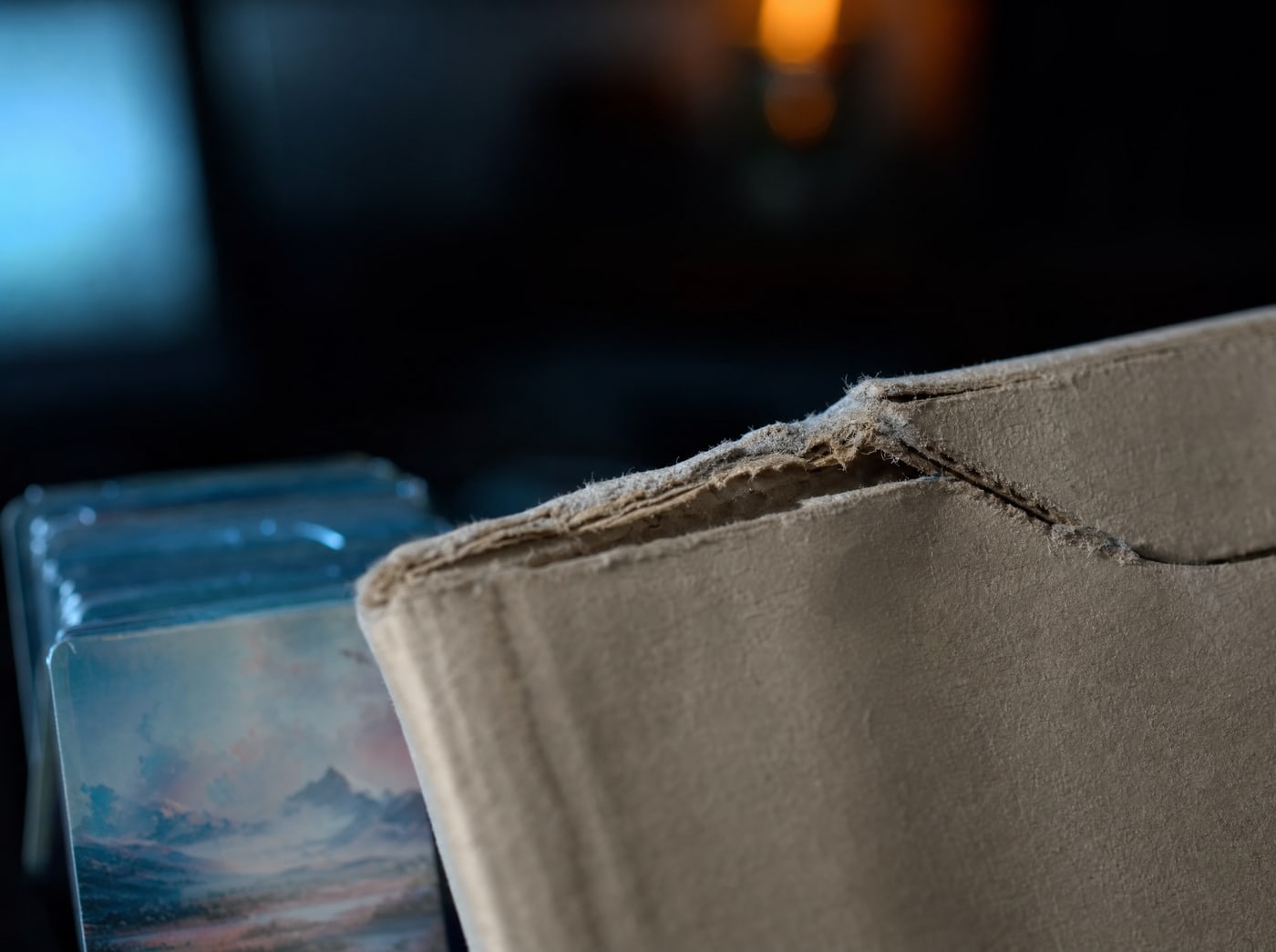
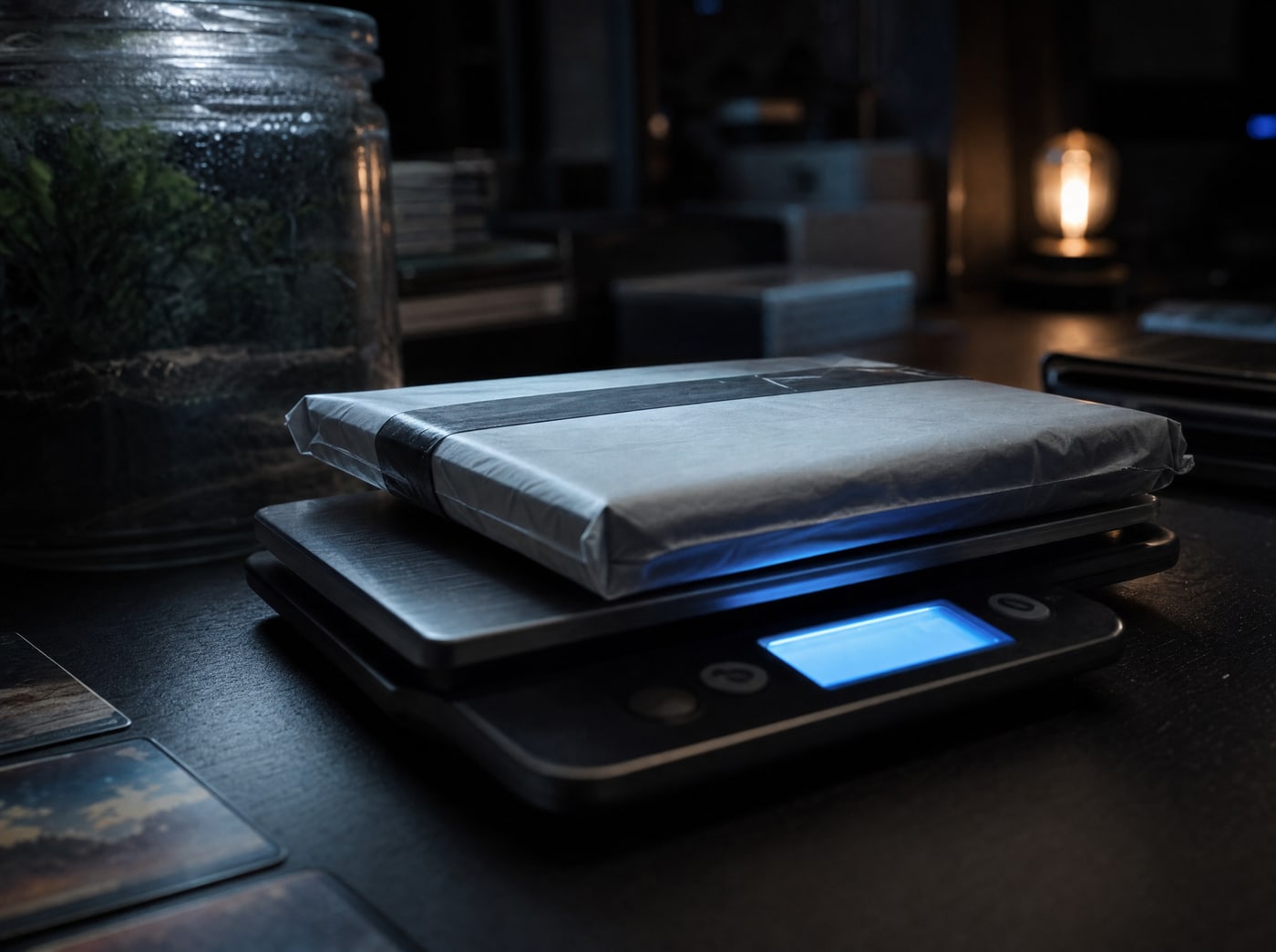

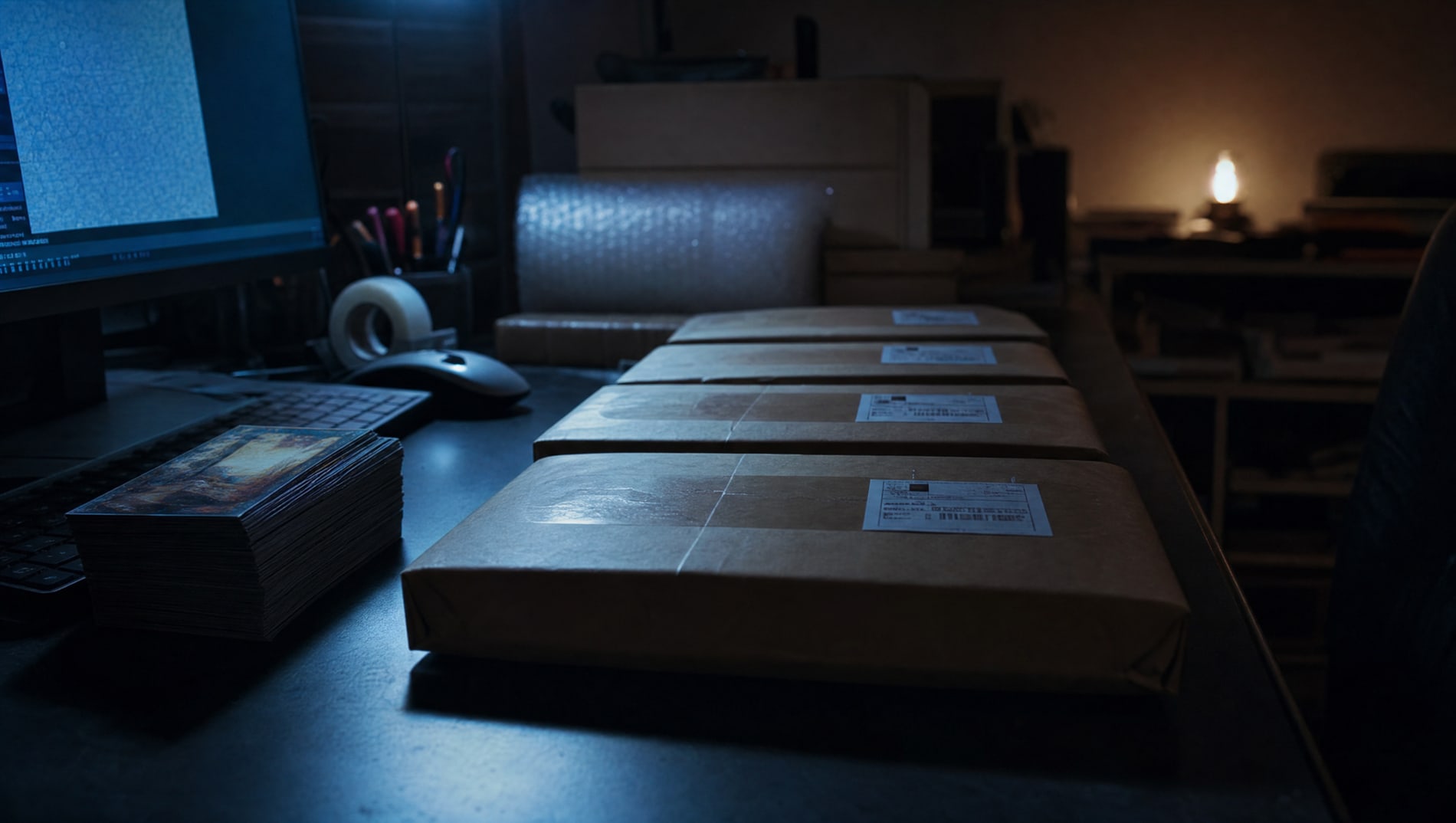
A ROW OF THESE IS ONE AFTERNOON. THE SAME CARDS SOLD ONE AT A TIME IS A MONTH OF THEM.
The first time I added the whole ledger up on a real sale, I stopped listing anything cheap on its own. Not because it was not worth money — because it was not worth the afternoon.
That is one card, one sale, one afternoon. The last page is about the thing underneath all of it — why the number moved at all.