 How To: Gaming
THE HOW TO CO. — EDITION 10
How To: Gaming
THE HOW TO CO. — EDITION 10
How To: Gaming
THE HOW TO CO. — EDITION 10
How To: Gaming
THE HOW TO CO. — EDITION 10
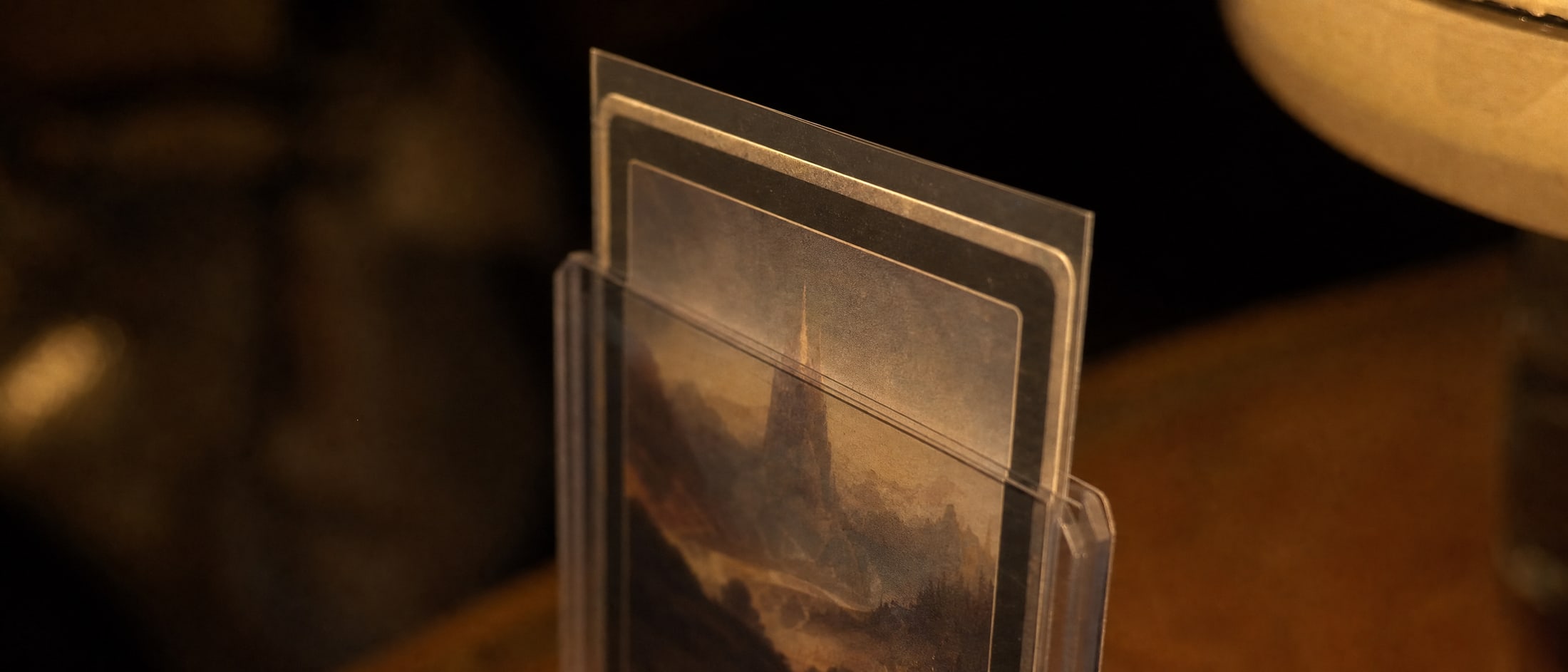
◆ CARD CARE · LAYERS 01–02 · THE THINGS THAT TOUCH
Everything else in this chapter holds many cards at once. These two hold exactly one, they are the only barriers measured in hundredths of a millimetre, and they are the two most people buy last and think about least.
A sleeve is not a bag. It is a tolerance — and the difference between the two is the difference between a card that is protected and a card that is merely covered.
Card stock is manufactured to a standard thickness and holders are rated against that same standard, which means fit is a solved problem you can get right by reading a number. Almost every avoidable injury on this page comes from one of two decisions: buying a shell rated for a thicker card than you own, or putting two sleeves on in the order that cancels the second one out.
◆ SOLID = THE CARD · HATCHED = PLASTIC · DASHED = AIR · ALL BANDS ARE THE SAME HEIGHT: THIS IS AN ORDER, NOT A MEASUREMENT
Card stock, printed and coated, made to twelve points — twelve thousandths of an inch, about a third of a millimetre. Every other layer on this page exists for this one, and it is the only layer you cannot replace.
Sized to the card itself rather than to a category, which is why it is called that and why it goes on first. It adds almost nothing to the stack and stops almost nothing on its own. What it does is seal the card off from the sleeve that will actually take the wear.
Cut larger on purpose. This is the layer that gets handled, shuffled, scuffed and replaced, and it is meant to be treated as consumable. A sleeve that still looks new after a year in a deck is a sleeve that was never doing anything.
The reason a rated holder takes a sleeved card at all. Fit is not “does it go in” — it is how much room is left once it has. Too tight abrades the sleeve; too loose lets the card travel, and travel is what rounds a corner.
Rated by the same points the card is measured in: thirty-five for an ordinary card, and higher ratings for the thick ones — relics, patches, anything with something embedded in it. Putting a normal card in a holder rated for a thick one is the commonest way to give it room it should not have.
Two of those five touch the card and three of them do not, and the two that touch are the two people buy last. Protection is bought from the outside in and it fails from the inside out.
Perfect fit in, penny sleeve on over the top, both openings at the top. It looks tidy and it is the way almost everybody does it the first time. It also leaves a single continuous path from the outside world to the card, which is the exact thing two sleeves were supposed to prevent.
Perfect fit on upside down, then the penny sleeve the usual way up, so the two openings sit at opposite ends of the card. Dust, damp and spilled anything now have to travel the length of the card and back to reach it. It takes three seconds longer and it is the whole reason to double sleeve at all.
Everybody who double sleeves is doing the work. About half of them are getting one sleeve of protection for two sleeves of effort.
The sleeve mouth flares slightly rather than lying flat against the card. It is going on under tension, and the corner is taking that tension every time it moves.
Tip it and something shifts. A card that can travel inside its holder is a card being sanded very slowly at two corners, and it will look fine right up until it does not.
A packed row of sleeved cards that bows in the middle is under compression at the ends, and compression is the one kind of damage that leaves no mark until it is permanent.
None of these needs a measurement to spot, and all three are the same failure: a tolerance that somebody decided was close enough.
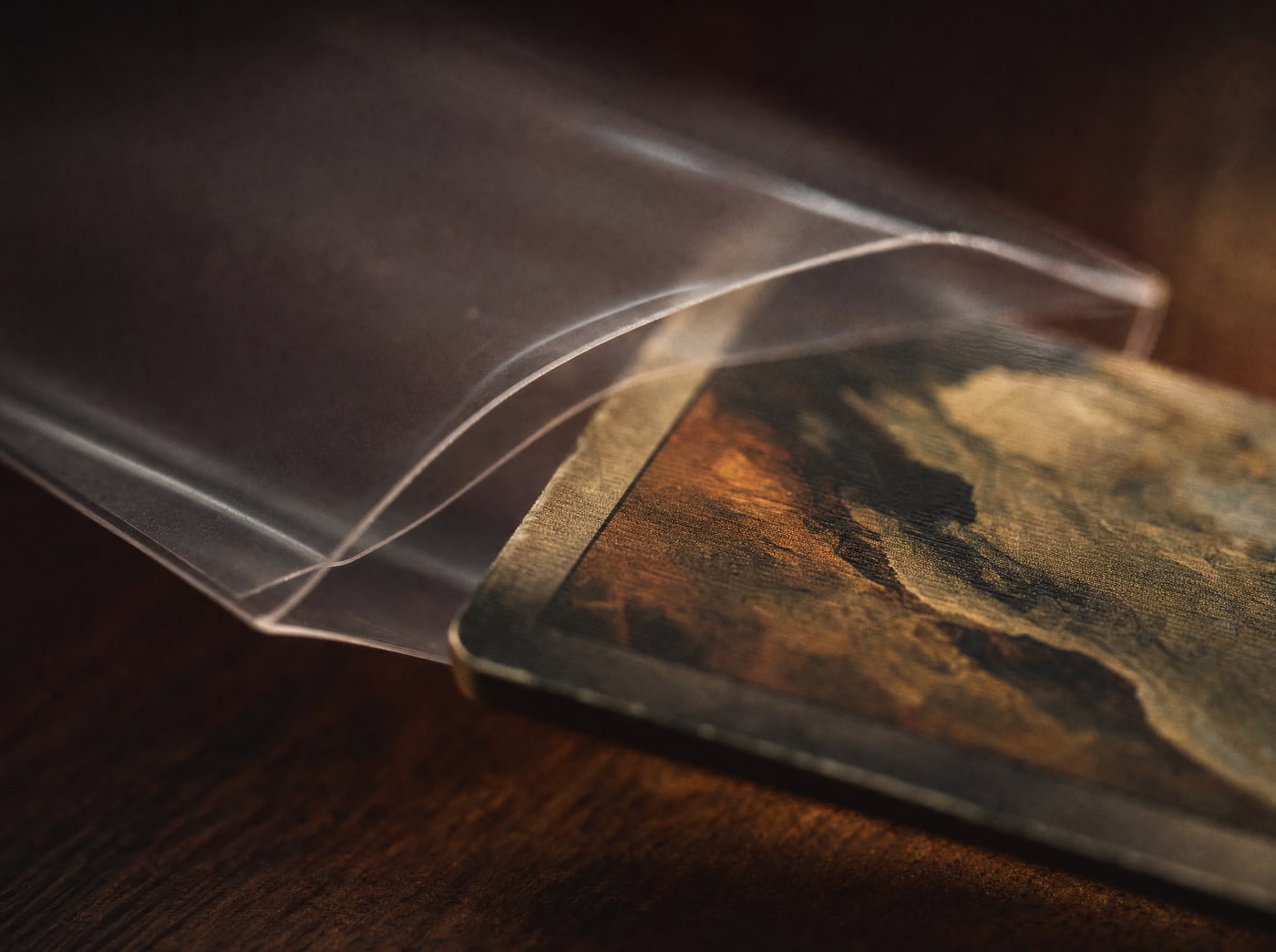
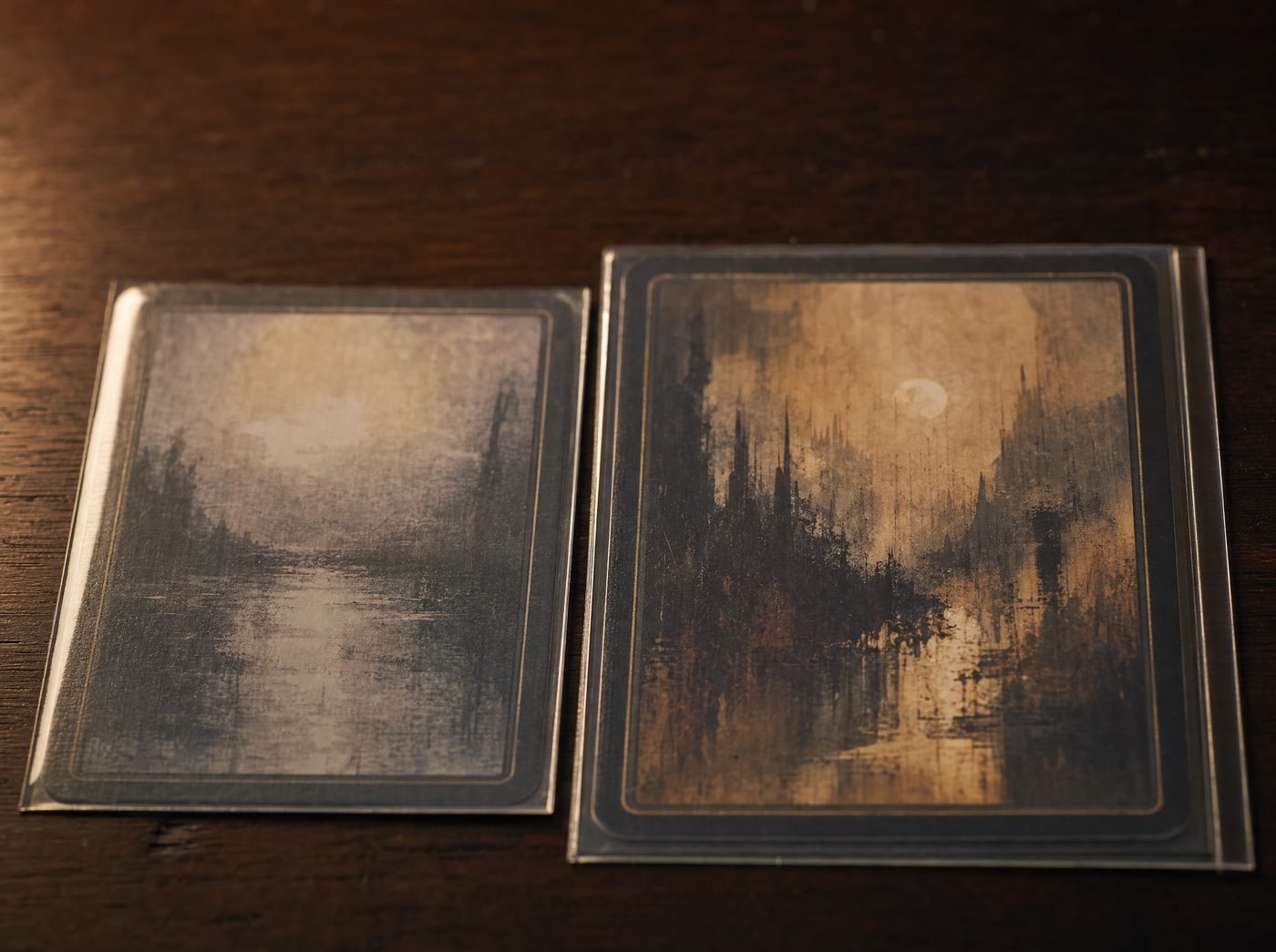
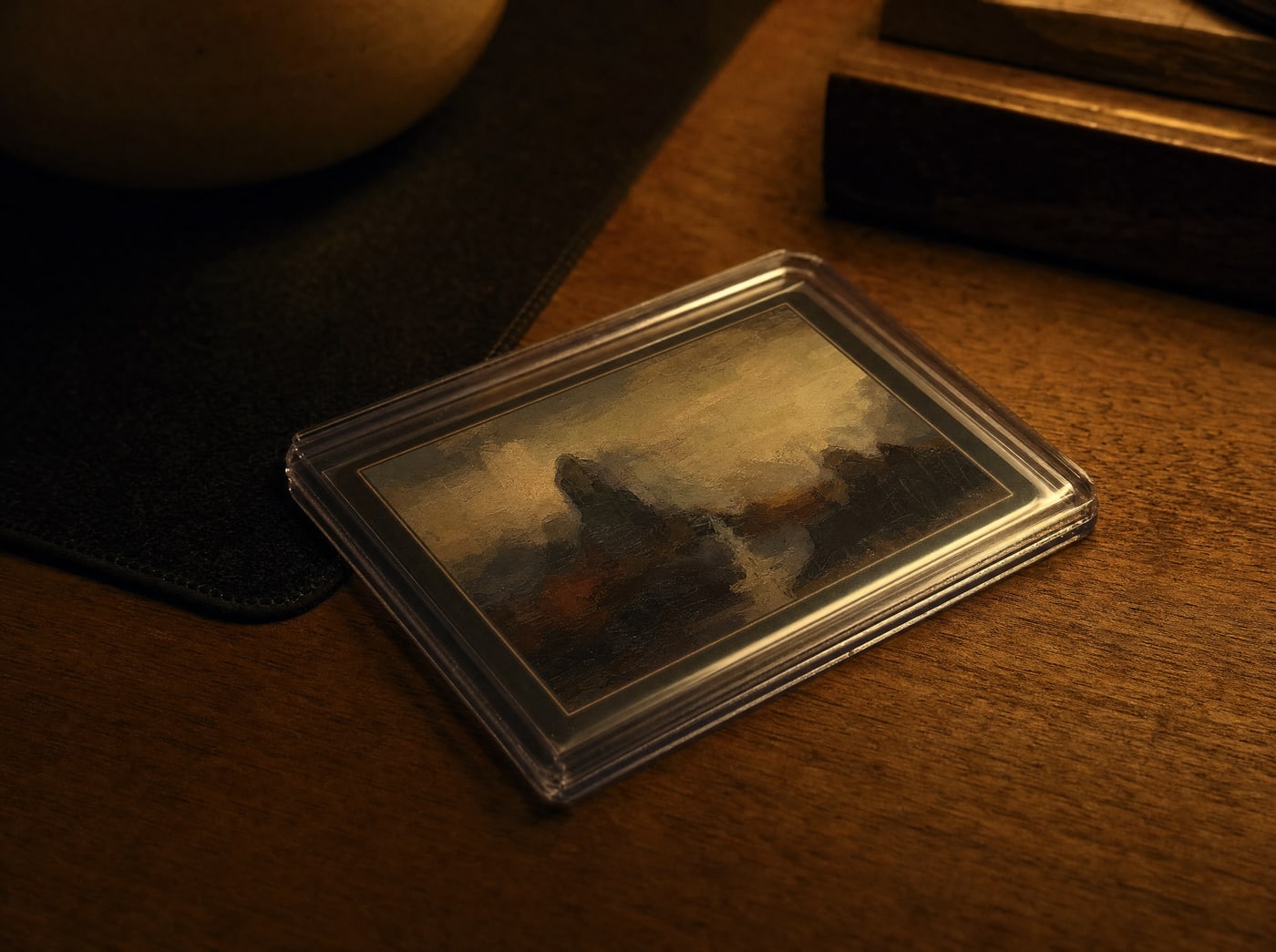
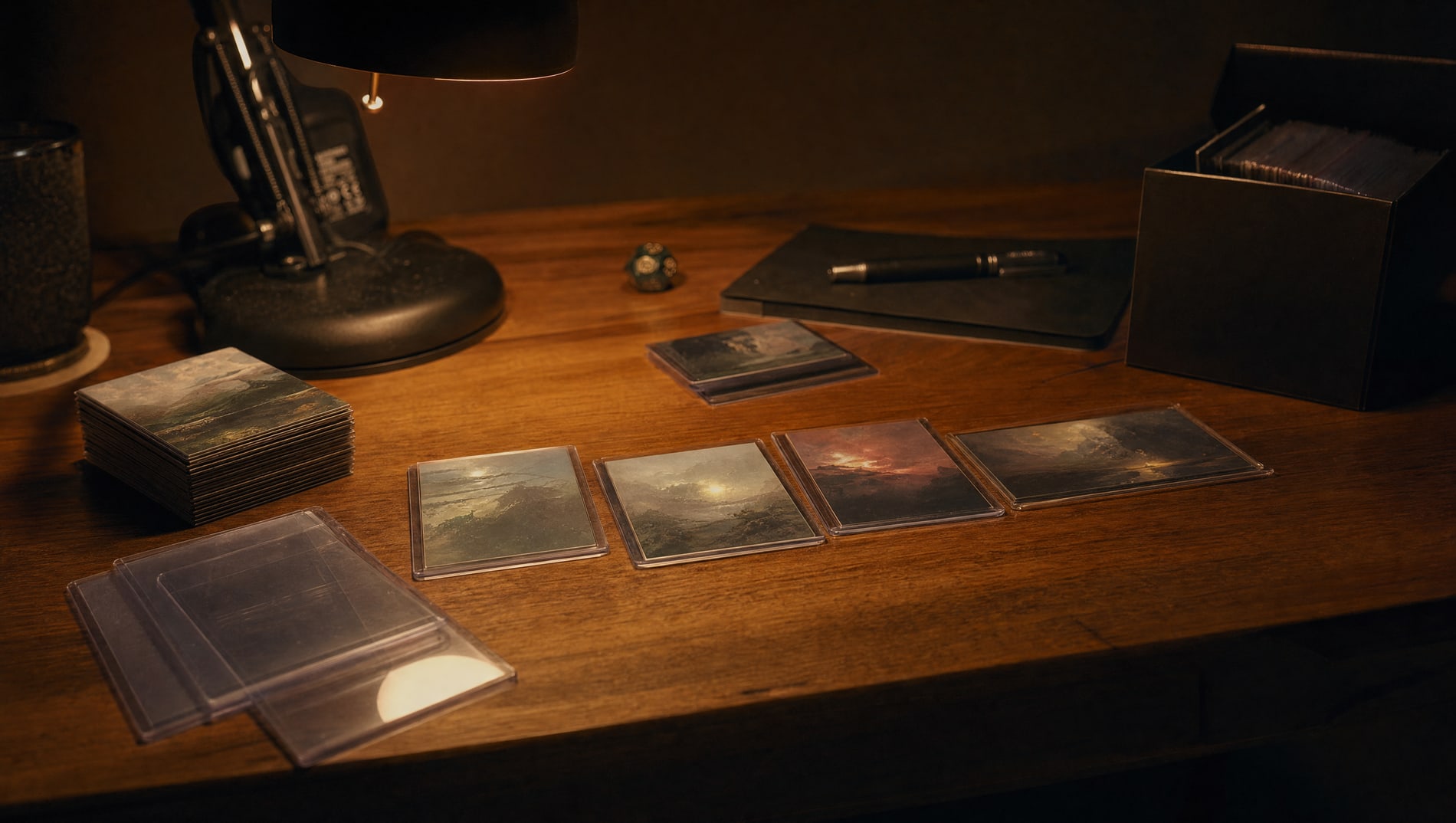
IN ORDER OF USE, LEFT TO RIGHT. NOBODY LAYS IT OUT LIKE THIS AND EVERYBODY SHOULD — THE ORDER IS THE ONLY PART THAT IS FREE.
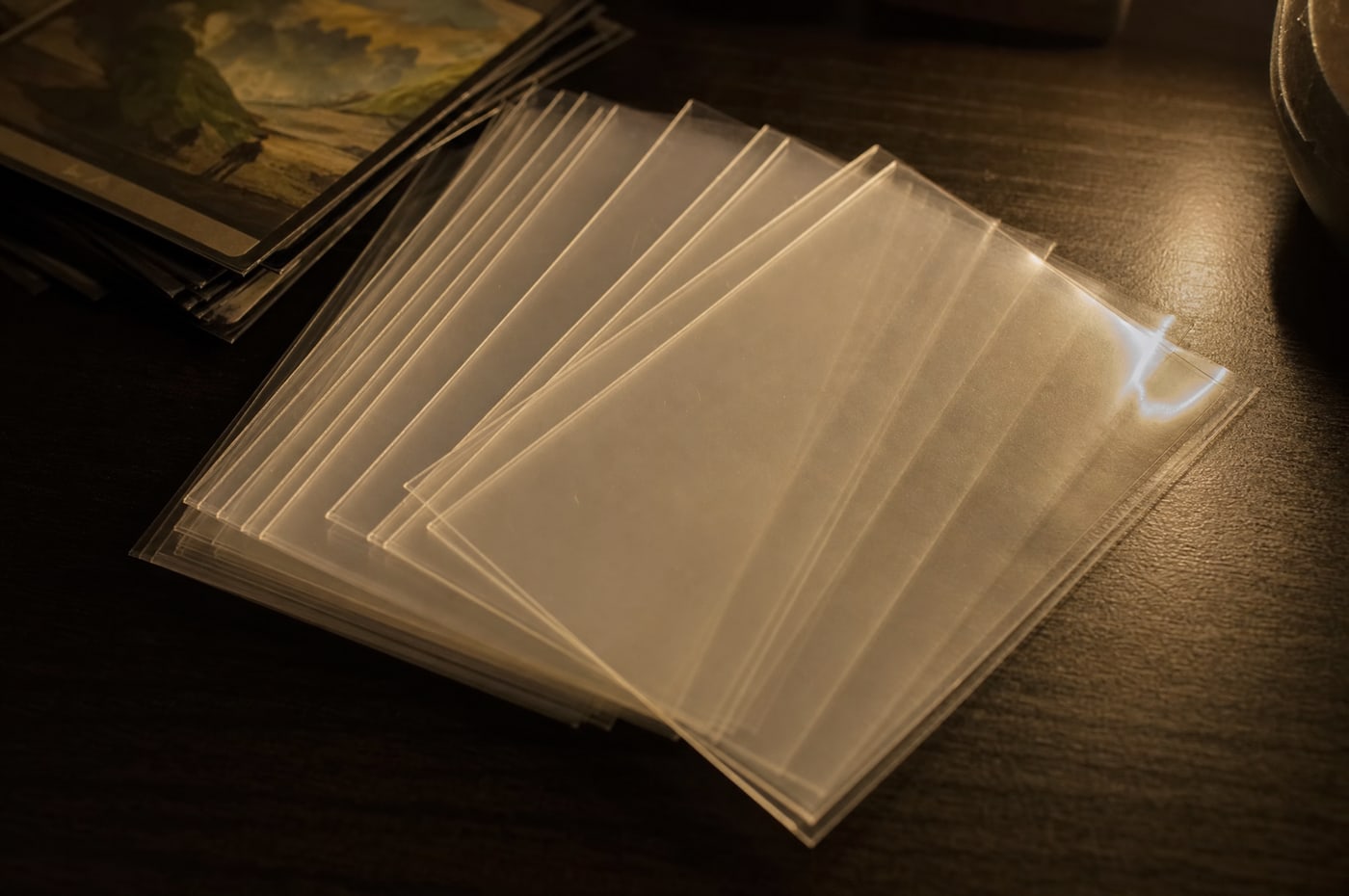
I have never once regretted the three seconds it takes to turn the inner sleeve upside down. I have regretted the corner I found six months later.
The next layer up stops holding one card and starts holding hundreds, and everything it does wrong, it does to all of them at once.