 How To: Gaming
THE HOW TO CO. — EDITION 10
How To: Gaming
THE HOW TO CO. — EDITION 10
How To: Gaming
THE HOW TO CO. — EDITION 10
How To: Gaming
THE HOW TO CO. — EDITION 10
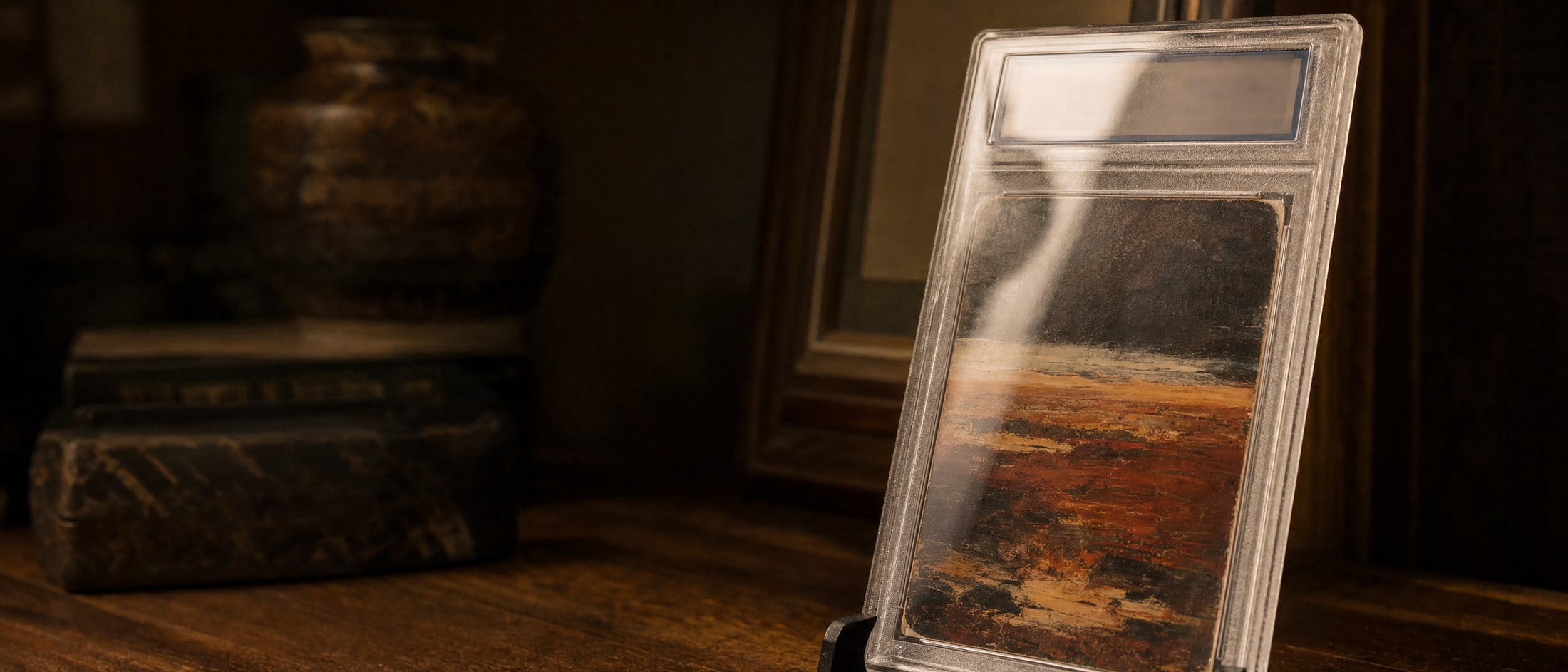
◆ CARD CARE · LAYERS 06–10 · WHERE PROTECTING MEETS LOOKING
A sealed slab is the strongest thing in this chapter and the only one that cannot defend against the thing most likely to happen. Nothing can touch the card any more. Light does not need to.
Every layer up to here was stopping something from reaching the card. This one puts it on a wall — and a wall is a place, with a window in it.
Slabs get discussed as an ending: the card is graded, sealed, finished, safe. Two of those four are true. A slab is genuinely excellent at handling, dust, damp and accidents, and it does nothing whatsoever about ultraviolet unless it was specifically made to, which most are not and none of them claim to be. The decisions that matter after sealing are not about the slab at all. They are about which wall.
◆ SOLID = THE CARD · HATCHED = STRUCTURE · DASHED = AIR · THE SAME DRAWING AS THE TWO LAYERS BELOW, RUN TO ITS END
A slabbed card is suspended, not pressed. It is held at the edges inside a sealed shell with air around it, which is why a slab survives a drop that would crease a sleeved card and why nothing you do to the outside of it reaches the card at all.
Sealed, rigid and permanent, and that is the whole of what it guarantees. A shell keeps out fingers, dust and damp. It is not a filter unless it was made as one, and most were not — the plastic is there to be optically clear, which is close to the opposite job.
The first layer whose only purpose is being looked at. It decides the angle, and the angle decides how much of the day the card spends facing a window. A stand that points a card at the brightest wall in the room has done more harm than any sleeve ever will.
The one variable up here that costs nothing to change. Light falls away sharply with distance, so a shelf on the far wall and a shelf beside the window are not the same shelf. Moving something two metres is the cheapest conservation available.
Direct sun is the obvious enemy and the boring ones do most of the work: a south-facing wall, a radiator underneath, a bathroom door that opens onto it. Steady, dim and dry beats clever every time.
Every layer below this page was stopping something from touching the card. Up here nothing touches it and it can still be ruined, because light does not need to touch anything.
The gloss.
Before any colour shifts at all, the surface stops throwing a hard reflection and starts throwing a soft one. Almost nobody catches this, because you only see it by tilting the card against a light next to one that has been in a box.
The warm colours.
Reds, oranges and yellows are carried in thinner ink films than the darks and they go first, which is why a faded card reads cold and slightly blue rather than simply pale. The card has not lost brightness. It has lost one end of its range.
Detail in the dark areas.
Fine work in shadow depends on a small difference between two dark tones, and that difference is the first casualty once the paper underneath starts to change. Nothing looks damaged. The picture just stops having as much in it.
The white border goes cream.
The last to move and the only one anybody photographs, because by then there is a straight edge to compare against — the strip that was under the frame rebate is still the colour the whole card used to be.
Every step on that list is a dose rather than an event: it is the light already spent on the card, and there is no version of this where it goes back. You are not preventing damage up here. You are choosing its rate.
Slowly, and in exchange for something real — you get to see it every day. That is a completely legitimate way to own a card, and it is worth saying plainly rather than pretending display is free.
For a person who might be you later, or might be somebody else. It costs nothing and returns nothing until the day it is opened. Most collections are almost entirely this, and almost nobody decided it on purpose.
The usual mistake is applying one answer to everything. Display the ones with a story attached and keep the ones with a price attached — and if a card has both, that is the one conversation worth actually having with yourself.
Nobody regrets the card they looked at for ten years. They regret the four hundred they never once took out of the box.
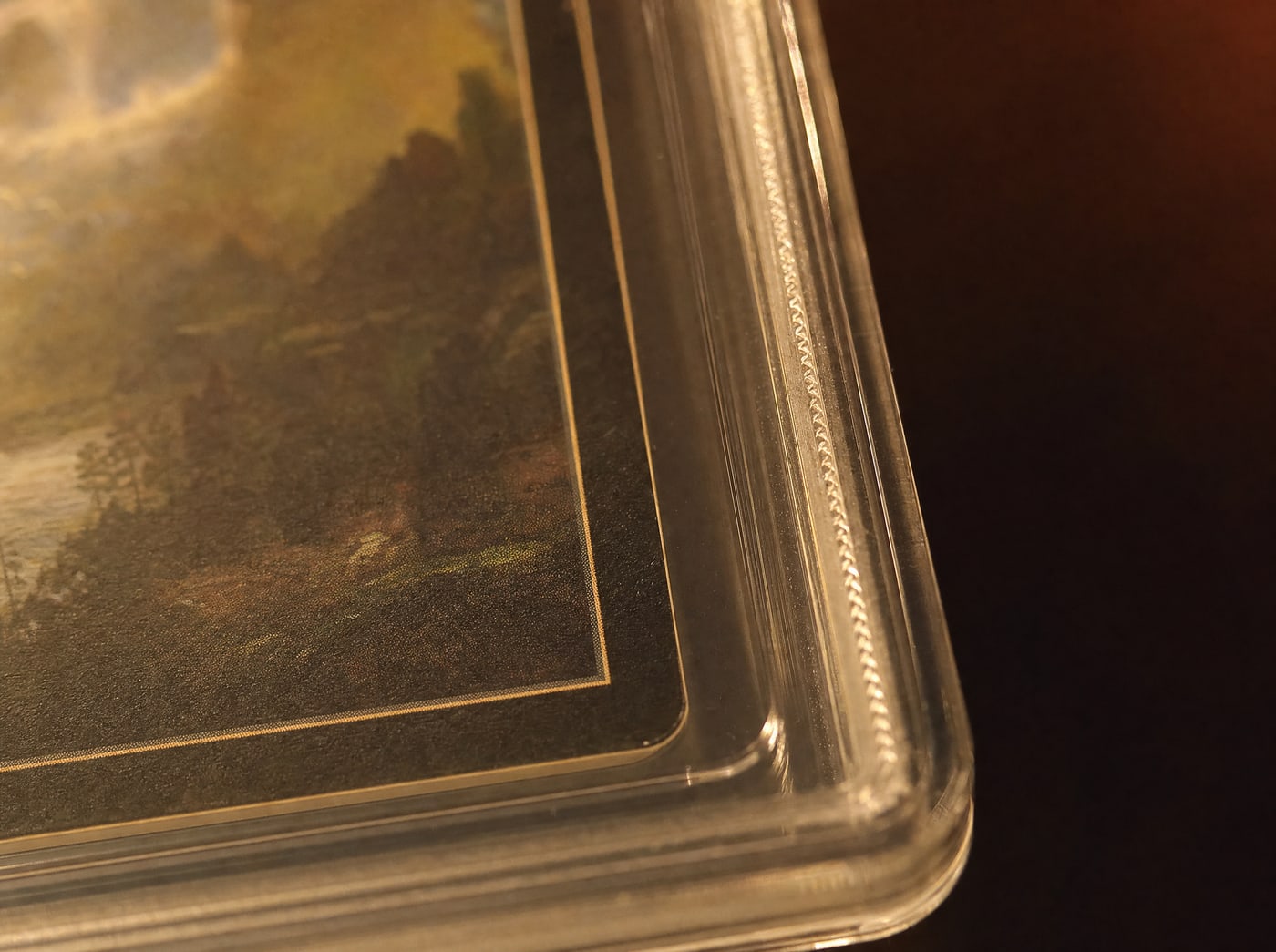
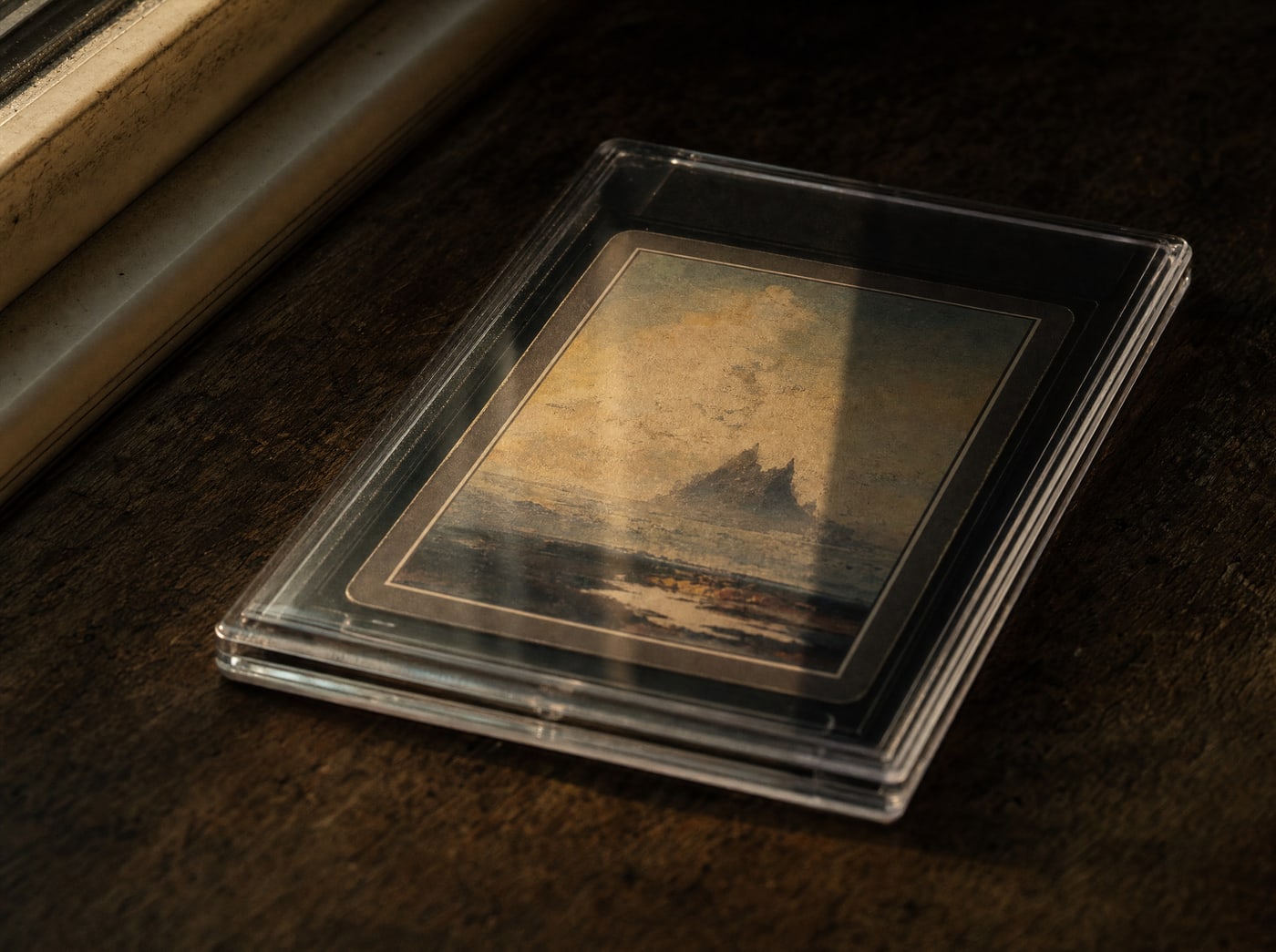
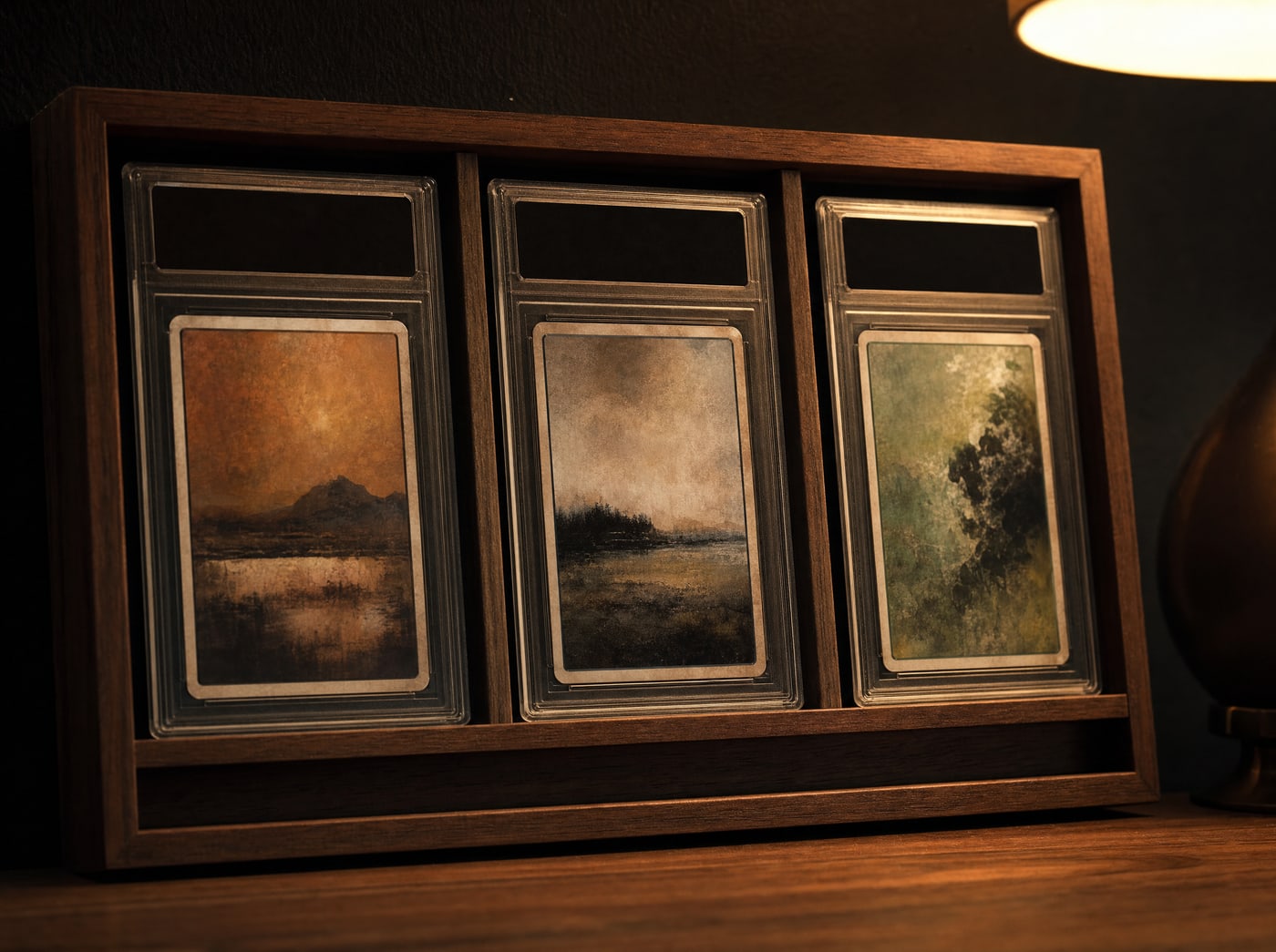
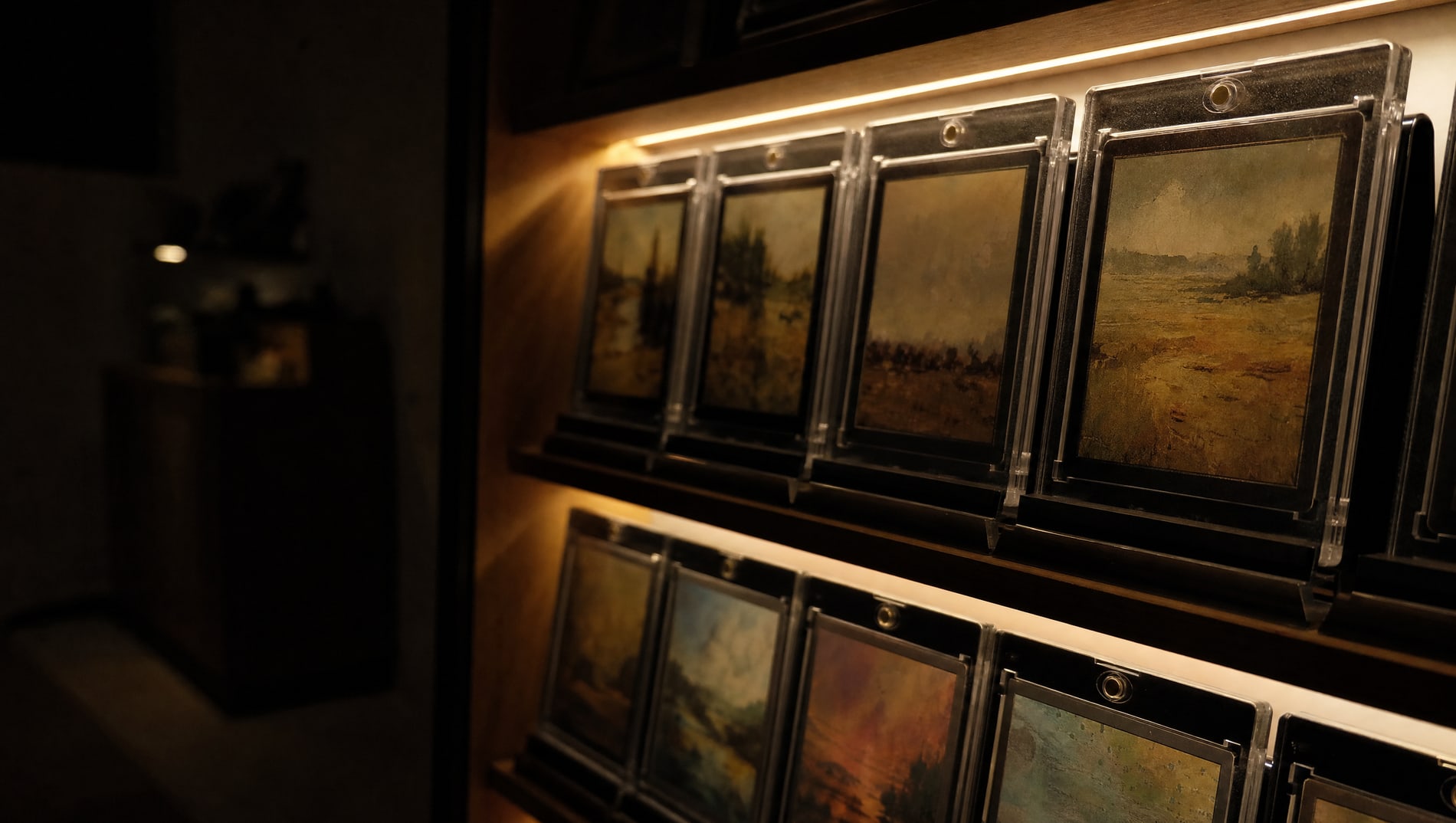
THE WHOLE ROOM IS THE LAST LAYER. IT IS ALSO THE ONLY ONE YOU CANNOT BUY.
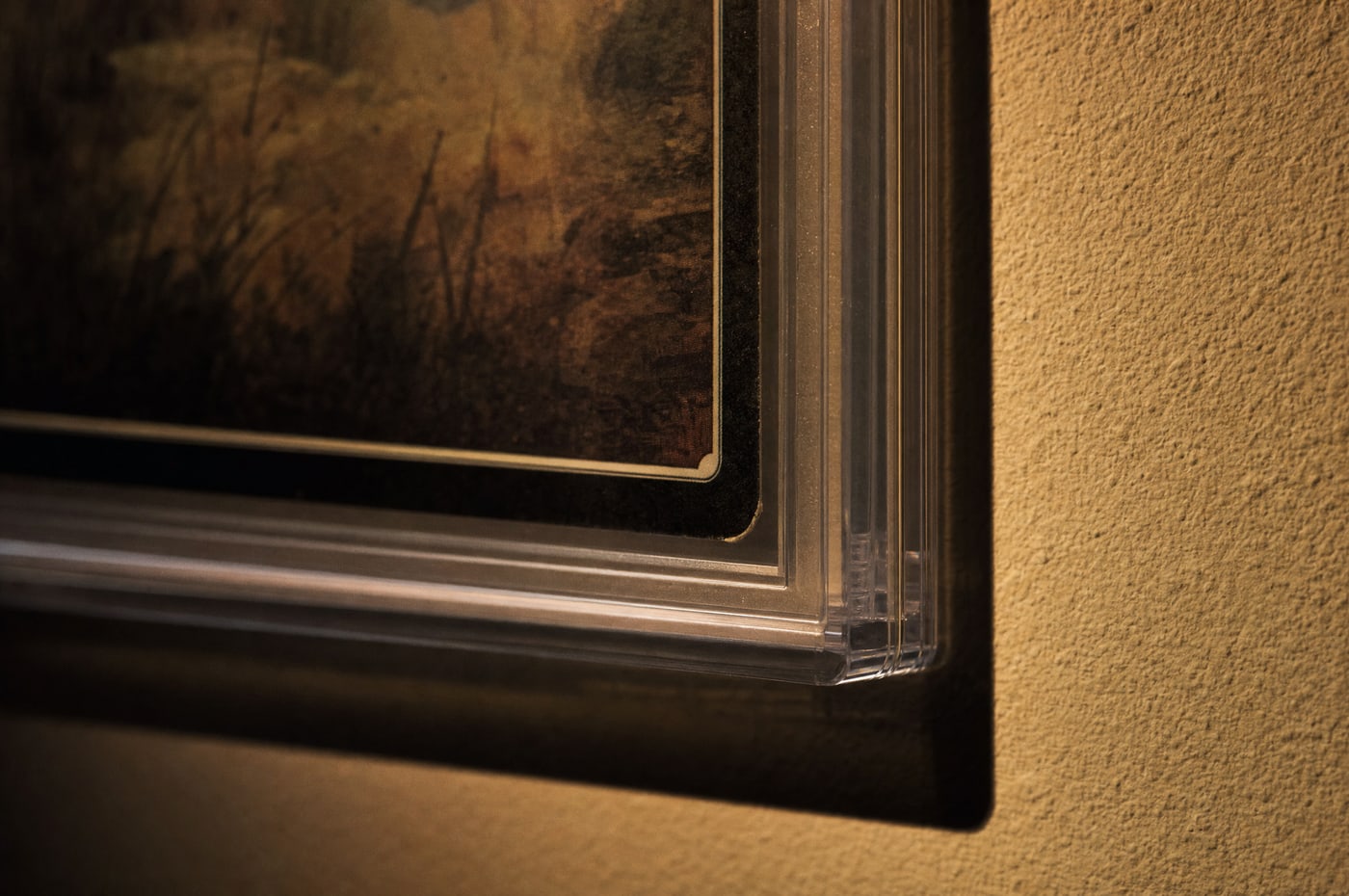
People ask me which slab protects best. They almost never ask me which wall, and that is the answer they actually needed.
That is the whole section, card to room. What none of it can tell you is what the thing inside it is worth — and that is a different chapter entirely.